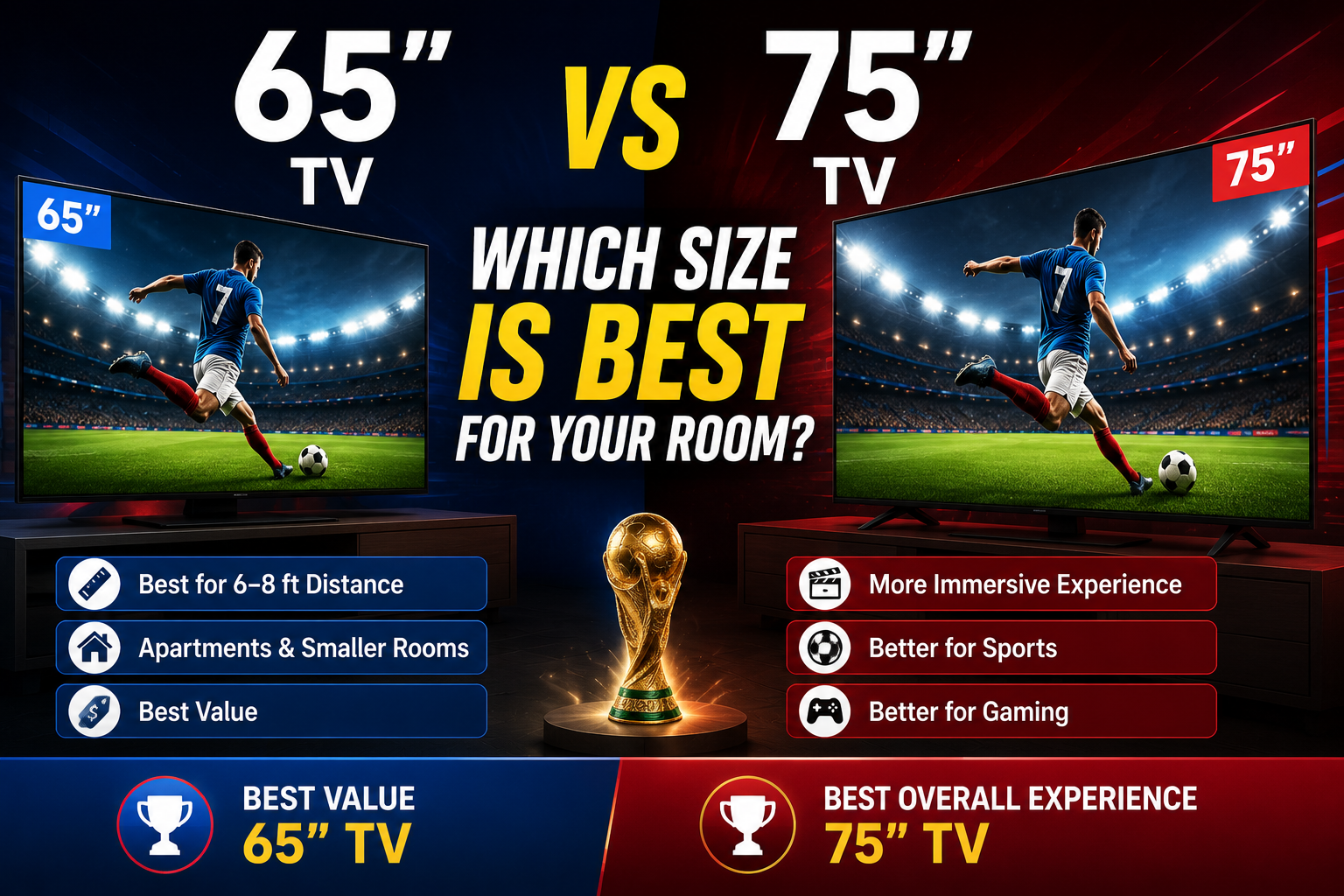
65 vs 75 Inch TV: Which Size Is Best for Your Room in 2026?
Choosing a new TV should be simple, but many shoppers find themselves stuck on one question:
Should you buy a 65-inch TV or upgrade to a 75-inch model?
As TV prices continue to fall, larger screens have become more affordable than ever. While bigger screens are attractive, the best TV size depends on your room size, viewing distance, budget, and how you actually use your television.
If you’re deciding between a 65-inch and 75-inch TV, this guide will help you understand the real differences and choose the right size for your home.
Quick Answer
If you sit less than 8 feet from your TV, a 65-inch TV is usually the better choice.
If you sit more than 8 feet away and have enough wall space, a 75-inch TV often delivers a more immersive experience and greater long-term satisfaction.
How Much Bigger Is a 75-Inch TV?
At first glance, a 10-inch difference may not seem significant.
However, a 75-inch TV provides considerably more screen area than a 65-inch model, making movies, sports, and games feel noticeably larger and more immersive.
| TV Size | Approximate Width | Recommended Viewing Distance |
|---|---|---|
| 65 Inch | 57 Inches | 6.5–9 Feet |
| 75 Inch | 65 Inches | 7.5–10 Feet |
Because screen area increases much faster than diagonal size, many buyers immediately notice the difference after upgrading.
Consider Viewing Distance First
The most important factor when choosing a TV is how far away you’ll be sitting.
A screen that’s too small can feel underwhelming, while a screen that’s too large may feel overwhelming in a smaller room.
A 65-Inch TV Is Usually Better If:
✅ Your seating distance is between 6 and 8 feet
✅ You live in an apartment or condo
✅ Your living room is relatively compact
✅ You mainly watch streaming services, news, and regular television
✅ You want the best balance between price and performance
For many households, a 65-inch TV remains the sweet spot because it delivers a large-screen experience without dominating the room.
A 75-Inch TV Is Usually Better If:
✅ You sit more than 8 feet away
✅ You have a larger living room
✅ You frequently watch movies
✅ You enjoy sports broadcasts
✅ You play video games regularly
The larger display fills more of your field of view, making entertainment feel more cinematic and engaging.
Is a 75-Inch TV Too Big?
This is one of the most common questions buyers ask.
Many shoppers worry that a 75-inch TV will overpower their room.
In reality, most owners adjust surprisingly quickly and often wish they had upgraded sooner.
If your seating distance is at least 8 feet and your room has adequate wall space, a 75-inch TV rarely feels too large.
In fact, one of the most common regrets among TV buyers is choosing a screen that feels too small after a few months.
Is the Extra Cost Worth It?
The biggest drawback of a 75-inch TV is the higher price.
Depending on the brand and display technology, a 75-inch model may cost several hundred dollars more than a comparable 65-inch TV.
However, televisions are long-term purchases.
Most households keep a TV for five to ten years, making the yearly cost difference relatively small when spread over time.
If you watch TV daily, many buyers find the larger screen well worth the additional investment.
Which Size Is Better for Gaming?
For gamers, a larger screen often creates a more immersive experience.
Modern consoles like the PlayStation 5 and Xbox Series X look fantastic on large 4K displays.
A 75-inch TV can make:
🎮 Racing games
⚽ Sports games
🗺️ Open-world adventures
feel more cinematic and engaging.
However, size isn’t everything.
When shopping for a gaming TV, also prioritize:
- 120Hz refresh rate
- HDMI 2.1 support
- Variable Refresh Rate (VRR)
- Low input lag
- Fast response time
These features often matter more than screen size alone.
Do Larger TVs Use More Electricity?
Yes.
A 75-inch TV generally consumes more electricity than a 65-inch model.
Fortunately, modern televisions are significantly more energy-efficient than older generations.
For most households, the yearly electricity cost difference is relatively small and should not be the deciding factor.
65-Inch vs 75-Inch TV at a Glance
| Category | 65 Inch | 75 Inch |
|---|---|---|
| Small Rooms | ⭐⭐⭐⭐⭐ | ⭐⭐⭐ |
| Large Rooms | ⭐⭐⭐ | ⭐⭐⭐⭐⭐ |
| Movies | ⭐⭐⭐⭐ | ⭐⭐⭐⭐⭐ |
| Sports | ⭐⭐⭐⭐ | ⭐⭐⭐⭐⭐ |
| Gaming | ⭐⭐⭐⭐ | ⭐⭐⭐⭐⭐ |
| Value | ⭐⭐⭐⭐⭐ | ⭐⭐⭐⭐ |
| Immersion | ⭐⭐⭐⭐ | ⭐⭐⭐⭐⭐ |
Common TV Buying Mistakes
Buying Based Only on Price
The cheapest TV isn’t always the best long-term value.
A slightly larger screen may provide years of additional enjoyment.
Ignoring Room Layout
Before buying, consider:
- Available wall space
- Furniture placement
- Window glare
- Viewing angles
A TV should complement the room rather than overwhelm it.
Focusing Only on Size
Picture quality matters just as much as screen size.
A premium 65-inch OLED TV may provide a better overall experience than a larger budget television.
Always evaluate:
- Resolution
- Brightness
- Contrast
- Display technology
alongside screen size.
Final Verdict
Choose a 65-Inch TV If:
✅ You sit less than 8 feet away
✅ You live in an apartment or smaller home
✅ You want the best value
✅ You have a tighter budget
Choose a 75-Inch TV If:
✅ You sit more than 8 feet away
✅ You love movies and sports
✅ You want a more immersive experience
✅ You have enough wall space
Best Choice by Category
🏆 Best Value → 65-Inch TV
🏆 Best for Apartments → 65-Inch TV
🏆 Best Overall Experience → 75-Inch TV
🏆 Best for Movies → 75-Inch TV
🏆 Best for Sports → 75-Inch TV
🏆 Best Home Theater Option → 75-Inch TV
Ultimately, the decision comes down to one simple question:
Do you have enough room and budget for the larger screen?
If the answer is yes, most buyers are happier with a 75-inch TV in the long run.
If space is limited or you’re focused on value, a 65-inch TV remains one of the smartest purchases available in 2026.