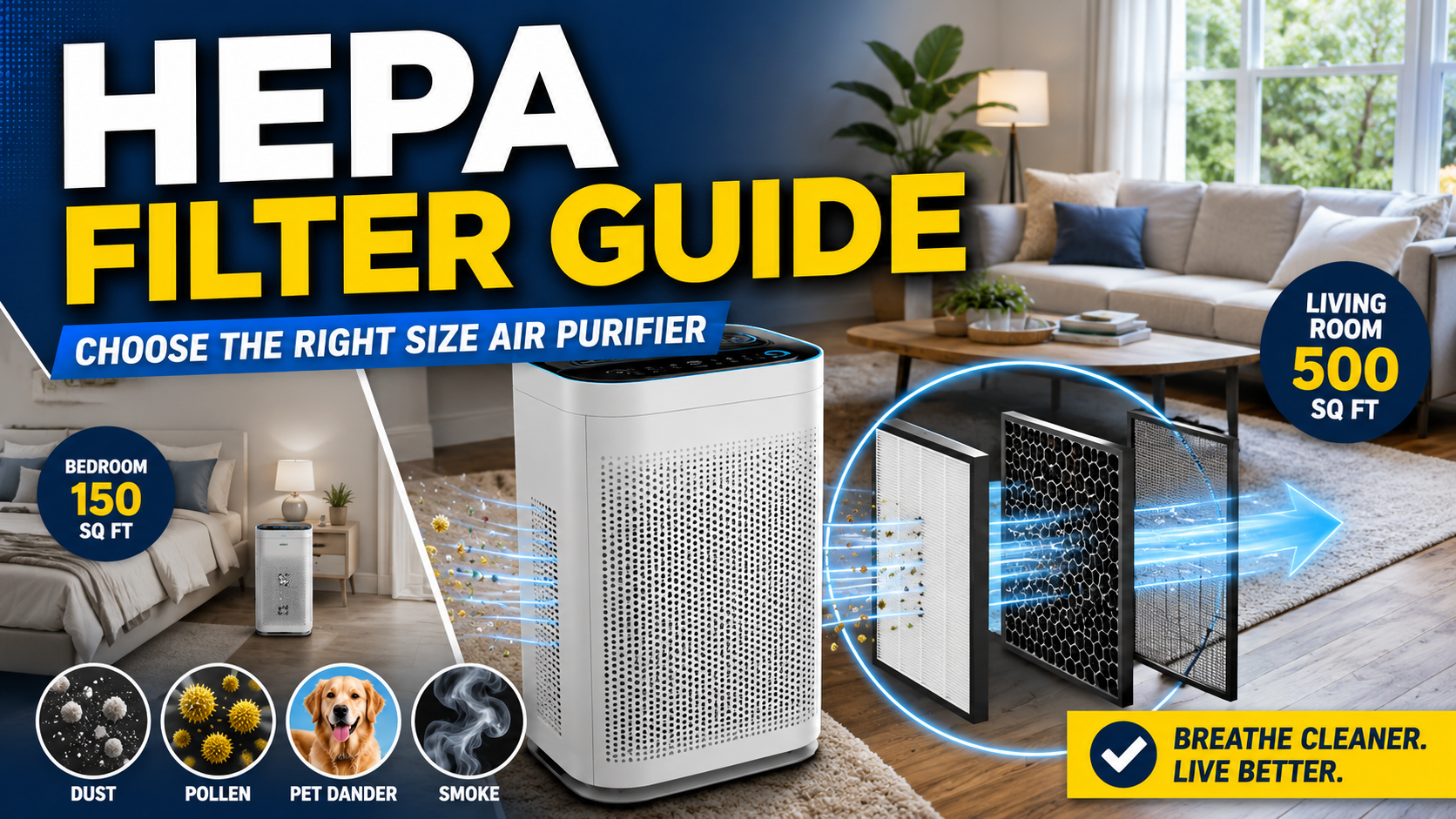
HEPA Filter Guide: How to Choose the Right Air Purifier for Your Room Size
Shopping for an air purifier sounds simple until you start comparing models. Nearly every product claims to have a HEPA filter, powerful air cleaning, and large room coverage. Yet many homeowners spend hundreds of dollars on an air purifier and still feel disappointed with the results.
The reason is usually not the filter itself.
The most common mistake is buying an air purifier that is too small for the room where it will be used. A true HEPA filter can remove dust, pollen, pet dander, and other airborne particles, but even the best filter cannot perform well if the purifier is undersized.
If you’re trying to improve indoor air quality, reduce allergies, manage pet hair, or prepare for wildfire smoke season, understanding both HEPA filtration and room size coverage will help you make a smarter purchase.
Why HEPA Filters Matter
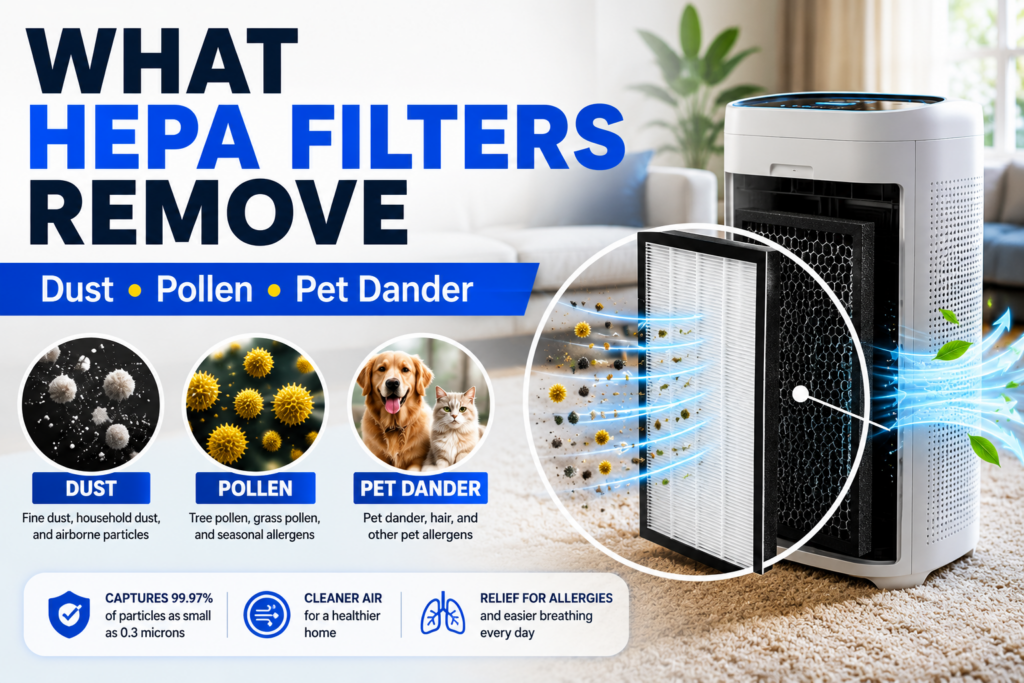
A HEPA filter, short for High Efficiency Particulate Air filter, is designed to capture extremely small airborne particles.
In everyday use, that means it can help reduce:
- Household dust
- Pollen
- Pet dander
- Mold spores
- Smoke particles
- Other common airborne allergens
Many people expect to see immediate results after turning on an air purifier. Sometimes that happens, especially during allergy season. Other times the improvement is more gradual.
The biggest benefit of a HEPA filter is often what you don’t notice. Fewer particles remain suspended in the air, which can lead to cleaner surfaces, reduced allergy symptoms, and improved overall indoor comfort.
For families with pets, children, or allergy sufferers, that difference can be significant over time.
The Room Size Problem Most Buyers Discover Too Late
One of the most overlooked air purifier specifications is room coverage.
Many shoppers focus on filter technology while ignoring the size of the space they want to clean.
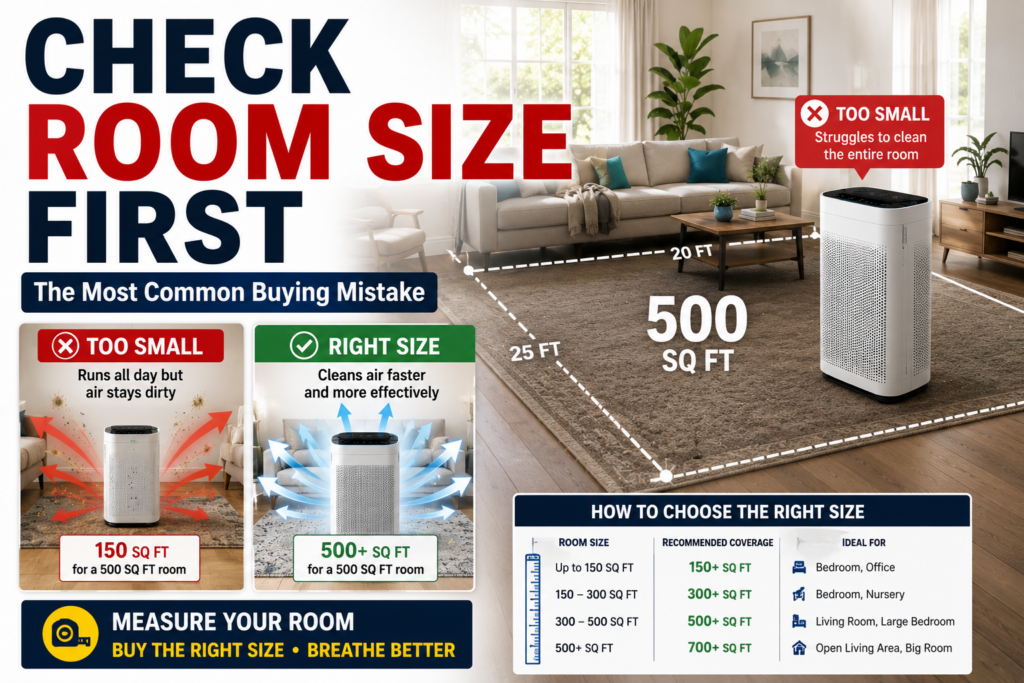
Imagine a homeowner in Arizona purchasing a compact bedroom purifier because it has thousands of positive reviews. The purifier works well in a 150-square-foot room, but it is placed in a 500-square-foot living room connected to the kitchen.
A few weeks later, dust still settles on furniture, pet odors remain noticeable, and allergy symptoms haven’t improved much.
The purifier isn’t defective.
It simply wasn’t designed for that much space.
A high-quality air purifier that is too small for the room often performs worse than a larger mid-range model with similar filtration.
This is why room size should be one of the first specifications you check before comparing extra features.

How to Choose the Correct Air Purifier Size
Start by measuring the room where the purifier will spend most of its time.
Multiply the room length by the width.
Examples:
- 10 ft × 12 ft = 120 sq ft
- 12 ft × 15 ft = 180 sq ft
- 15 ft × 20 ft = 300 sq ft
- 20 ft × 25 ft = 500 sq ft
After calculating the size, avoid choosing a purifier with coverage that barely matches the room.
A little extra capacity can make a noticeable difference.
Buying slightly larger than your minimum requirement usually results in quieter operation, better air circulation, and improved long-term performance.
This becomes especially important if:
- You own pets
- You live near a busy road
- Wildfire smoke occasionally affects your area
- You suffer from seasonal allergies
- Your home has older carpeting
Understanding CADR Without Getting Overwhelmed
Many buyers see the term CADR and immediately skip over it.
CADR stands for Clean Air Delivery Rate.
Think of it as a measurement of how quickly an air purifier can clean the air in a room.
A purifier with a higher CADR generally moves and filters air faster.
While manufacturers advertise many different features, CADR often provides a more realistic picture of actual cleaning performance than marketing claims alone.
When comparing similar products, CADR can be one of the most useful numbers to review.
A Common Pet Owner Mistake
Families with dogs or cats often assume pet hair is the primary issue they need to address.
Pet hair is actually the easy part.
The bigger challenge is pet dander.
Pet dander consists of tiny skin particles that become airborne and can trigger allergy symptoms throughout the home.
A homeowner with two Golden Retrievers may vacuum regularly and still experience indoor air quality issues because dander remains suspended in the air long after visible hair has been removed.
This is where a properly sized HEPA air purifier can make a meaningful difference.
However, even the best purifier cannot compensate for poor cleaning habits. Regular vacuuming, grooming, and HVAC filter replacement remain important.
What HEPA Filters Cannot Do
Air purifiers are helpful, but expectations should remain realistic.
A HEPA filter captures particles.
It does not automatically remove:
- Cooking odors
- Chemical fumes
- VOCs
- Excess humidity
- Mold growth sources
For odor control, an activated carbon filter is often necessary.
For mold problems, moisture control is usually more important than filtration.
For example, placing an air purifier in a damp basement may reduce airborne spores, but it will not solve the moisture issue causing mold growth in the first place.
Air purifiers work best when they are part of a broader indoor air quality strategy rather than the only solution.
The Hidden Cost of Air Purifier Ownership
The purchase price is only part of the equation.
Filter replacement costs can vary significantly between brands and models.
A purifier that costs $150 upfront may require $80 to $120 in filters every year.
Another model may cost more initially but have lower annual maintenance expenses.
Before buying, check:
- Replacement filter price
- Recommended replacement schedule
- Availability of filters
- Warranty coverage
Long-term ownership costs often determine whether a purifier remains affordable several years after purchase.
Many buyers discover this only after their first replacement cycle.
Should You Leave an Air Purifier Running All Day?
For most households, continuous operation produces the best results.
Air quality changes constantly throughout the day.
Opening doors, cooking meals, bringing in groceries, and normal daily activity all introduce new particles into the home.
Running the purifier only when symptoms appear is similar to turning on an air conditioner after the house has already become hot.
Maintaining clean air is generally easier than trying to clean heavily contaminated air later.
Fortunately, many modern air purifiers use relatively little electricity, particularly on lower fan settings.
Simple Ways to Extend Filter Life
Many homeowners replace filters sooner than necessary because the purifier is working harder than it should.
A few simple habits can reduce filter wear:
- Remove shoes indoors
- Vacuum regularly
- Change HVAC filters on schedule
- Keep windows closed during high pollen days
- Groom pets frequently
- Clean pre-filters if applicable
These small changes can reduce airborne particles before they reach the purifier.
As a result, filters often last longer and maintain better airflow.
Is a Larger Air Purifier Worth the Extra Money?
In many situations, yes.
Larger units often clean the same room while operating at lower fan speeds.
This creates several benefits:
- Lower noise levels
- Better airflow
- Less wear on internal components
- Improved overnight comfort
For bedrooms, quieter operation is often one of the most appreciated upgrades.
For large family rooms, extra capacity can help maintain more consistent air quality throughout the day.
FAQ
Do I need a HEPA filter for allergies?
A true HEPA filter is generally one of the most effective options for reducing airborne allergens such as pollen, dust, and pet dander.
Can one air purifier clean my entire house?
Usually not. Most residential air purifiers are designed for individual rooms or specific living areas. Larger homes often benefit from multiple units.
How often should HEPA filters be replaced?
Many filters require replacement every 6 to 12 months, although actual timing depends on usage, pets, local air quality, and manufacturer recommendations.
Is a larger air purifier always better?
Not always, but buying slightly larger than your minimum room requirement often improves performance and reduces noise.
Air Purifier Buying Checklist
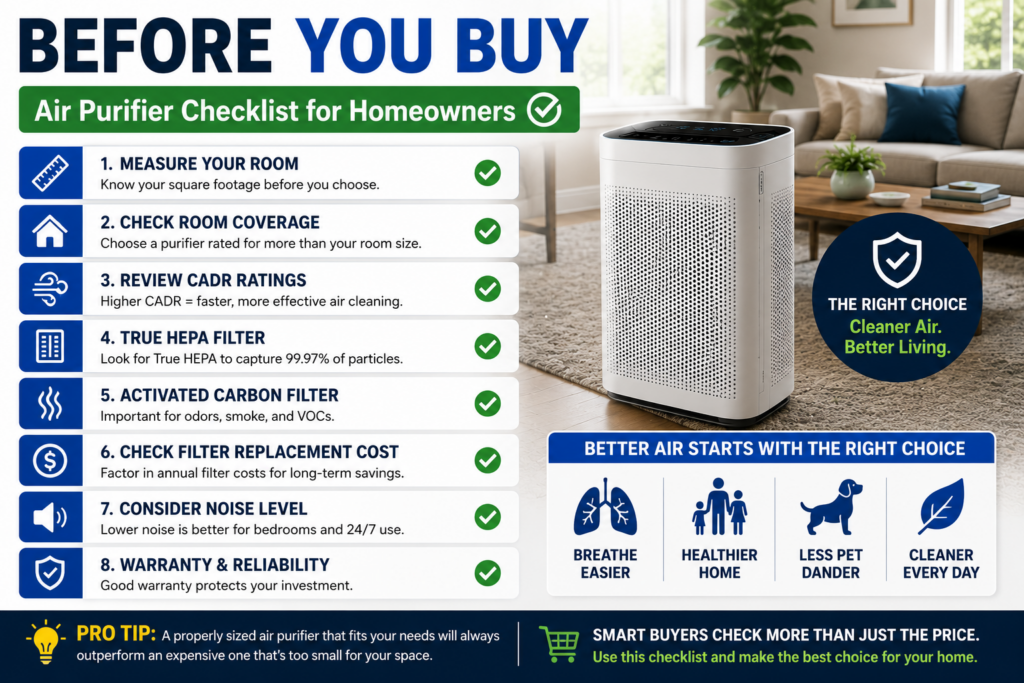
Before purchasing, ask yourself:
- Have I measured the room correctly?
- Does the purifier cover more than my room size?
- Is the CADR appropriate for my needs?
- Are replacement filters affordable?
- Does it include activated carbon for odors?
- Will noise levels be acceptable for bedrooms?
- Are replacement filters easy to find?
- Am I considering long-term ownership costs?
Choosing an air purifier isn’t just about finding a HEPA filter. The best results come from matching filtration, airflow, room size, and maintenance costs to the way you actually live. A properly sized purifier that is used consistently will usually provide better air quality than an expensive model chosen for marketing features alone.
Related Reading:
• Samsung Bespoke Cube vs LG PuriCare 360° Alpha Air Purifier Review