Is It Bad to Leave a Microwave Plugged In All the Time? Safety, Power Use, and What Homeowners Should Know
You finish reheating dinner, close the microwave door, and walk away.
Hours later, the clock is still glowing on the display. The microwave remains plugged in, just as it has been for months or even years.
That raises a common question many homeowners ask:
Is it bad to leave a microwave plugged in all the time?
For most households, the short answer is no. Modern microwaves are designed to remain plugged in continuously and can safely stay connected to power when not in use.
However, that doesn’t mean there are never situations where unplugging a microwave makes sense.
The answer depends on safety concerns, electricity usage, storm risks, appliance age, and how the microwave is being used in your home.
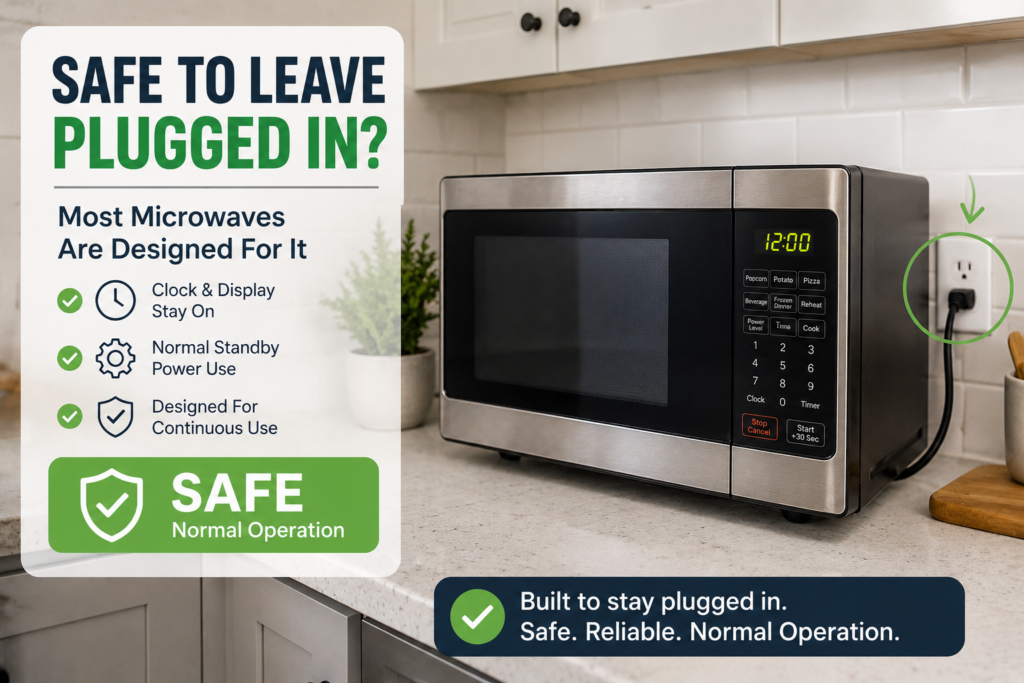
Most Microwaves Are Designed to Stay Plugged In
Many people assume unplugging appliances whenever they’re not being used helps extend their lifespan.
In reality, microwave ovens are built with the expectation that they will remain plugged in.
The display clock, electronic controls, memory settings, and internal sensors all rely on a constant power supply.
In a typical American kitchen, a microwave may stay connected to power for years without causing any issues.
Leaving a microwave plugged in is generally considered normal operation rather than misuse.
If it were harmful, manufacturers would include specific instructions recommending routine unplugging.
Most do not.
Does a Plugged-In Microwave Use Electricity?
Yes, but usually not much.
Even when not actively heating food, most microwaves consume a small amount of standby power.
This electricity powers the digital clock, control board, and display panel.
A common misconception is that a microwave continues drawing large amounts of power simply because it’s plugged in.
That’s not how it works.
For many households, standby consumption is often only a few dollars per year.
The microwave’s display uses far less electricity than most people expect.

A family worried about monthly utility bills will usually save more by improving HVAC efficiency or reducing dryer use than by unplugging a microwave.
Another factor many homeowners overlook is convenience.
Some people unplug their microwave every day to eliminate standby power, only to find themselves resetting the clock over and over again.
The inconvenience often outweighs the tiny amount of electricity saved.
In most households, keeping the microwave plugged in simply makes daily life easier.
A Situation Many Homeowners Overlook
Consider a family leaving for a two-week vacation.
The microwave won’t be used at all during that period.
In this situation, unplugging the appliance can reduce unnecessary standby power and eliminate exposure to electrical surges while nobody is home.
The savings may be small, but the reduction in risk can still be worthwhile.
This is one of the few situations where unplugging makes practical sense.
Can Leaving It Plugged In Become a Fire Hazard?
Under normal conditions, a properly functioning microwave should not become a fire hazard simply because it remains plugged in.
However, age and condition matter.
Damaged power cords, loose outlets, signs of overheating, or electrical burning smells should never be ignored.
These issues are rare but deserve immediate attention.
A microwave in poor condition presents a greater risk than a microwave that is merely plugged in.
If the appliance shows visible damage, unplugging it until repairs are completed is often the safest option.
It’s also worth noting that most microwave-related electrical problems are caused by damaged outlets, worn cords, or improper installations rather than the appliance simply remaining plugged in.
For many homeowners, the condition of the outlet matters more than whether the microwave is connected to power.
Why Power Surges Are a Bigger Concern
One issue homeowners rarely think about is surge damage.
Modern microwaves contain electronic control boards that can be sensitive to voltage spikes.
A lightning strike several blocks away can sometimes damage household electronics even when they are turned off.
This doesn’t happen frequently, but it does occur.
In areas with frequent thunderstorms, many homeowners use surge protectors for expensive electronics.
Kitchen appliances are often overlooked.
Power surges generally pose a greater threat to microwaves than simply leaving them plugged in.
Older Microwaves Deserve More Attention
Age changes the equation.
A relatively new microwave is unlikely to cause concern when left plugged in.
A microwave that is 15 years old, however, may have worn electrical components, aging insulation, or deteriorating wiring.
That doesn’t mean it is automatically unsafe.
It simply means regular inspection becomes more important.
If the unit shows signs of electrical problems, unusual noises, sparking, or overheating, continued use should be evaluated carefully.
The Mistake Some Homeowners Make
Some people unplug and reconnect their microwave every day.
Ironically, this can sometimes create unnecessary wear.
Repeatedly pulling the plug can loosen outlets, stress power cords, and increase the chance of accidental damage.
A common example occurs in small kitchens where the microwave shares an outlet with other countertop appliances.
Frequent plugging and unplugging often creates more risk than leaving the appliance connected.
When Unplugging Actually Makes Sense
There are situations where unplugging may be reasonable.
- Extended vacations
- Severe thunderstorm forecasts
- Electrical problems or burning odors
- Damaged power cords
- Appliance repairs or cleaning
Outside of these situations, most homeowners gain little benefit from routinely unplugging a microwave.
Should You Unplug It to Save Money?
Usually not.
Let’s assume a microwave consumes a few watts while idle.
Even over an entire year, the cost is typically modest compared with larger household energy users.
Air conditioners, water heaters, dryers, refrigerators, and electric ovens have a much greater impact on utility bills.
Unplugging a microwave is rarely one of the most effective ways to reduce household energy costs.
Can Staying Plugged In Shorten Lifespan?
For a properly functioning microwave, not significantly.
The factors that most influence microwave lifespan include:
- Frequency of use
- Ventilation quality
- Door switch wear
- Moisture exposure
- Electrical surges
- Maintenance habits
Remaining plugged in is generally not a major factor.
In many homes, microwaves reach the end of their useful life because of mechanical wear rather than continuous electrical connection.
A Simple Checklist Before You Decide
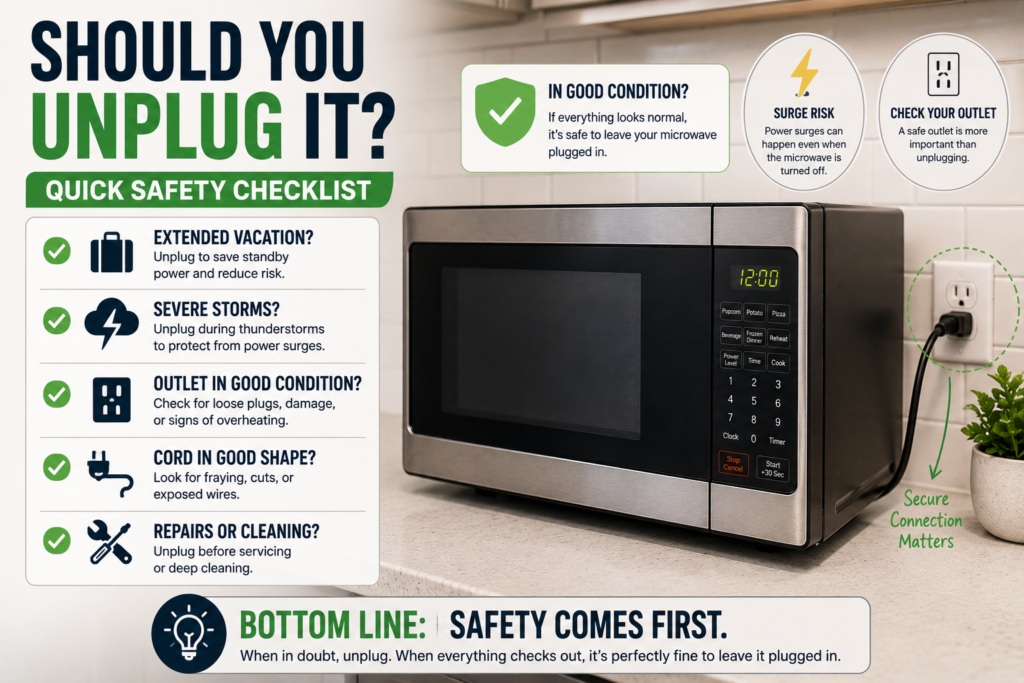
Before deciding whether to unplug your microwave regularly, ask yourself:
- Is the microwave relatively modern and in good condition?
- Is the outlet secure and undamaged?
- Are there any signs of overheating?
- Do you live in an area with frequent lightning storms?
- Will the appliance sit unused for weeks at a time?
If the answers point toward normal operation and good condition, leaving it plugged in is usually the practical choice.
If your microwave is in good condition, used regularly, and connected to a properly functioning outlet, leaving it plugged in is usually the simplest and safest option.
If you notice unusual odors, sparks, overheating, or signs of electrical damage, disconnect power immediately and investigate the issue before using the appliance again.
FAQ
Is it safe to leave a microwave plugged in all the time?
Yes. Most modern microwaves are designed to remain plugged in continuously and operate safely under normal household conditions.
Does a microwave use electricity when not in use?
Yes, but only a small amount. The display clock and electronic controls require standby power.
Should I unplug my microwave during a thunderstorm?
If severe storms are expected and surge protection is unavailable, unplugging can reduce the risk of electrical damage.
Can unplugging a microwave extend its lifespan?
In most cases, no. Electrical surges, heavy use, and component wear generally have a greater impact on lifespan than staying plugged in.
What Makes Sense for Most Homes?
For most American households, leaving a microwave plugged in all the time is completely normal.
The amount of standby electricity used is typically small, and modern microwaves are designed with continuous power connection in mind.
Rather than unplugging the appliance every day, focus on maintaining a safe outlet, inspecting the power cord occasionally, and protecting your kitchen electronics from power surges.
Those simple habits are far more likely to improve safety, reliability, and long-term appliance performance than unplugging the microwave after every use.
Related Reading:
• Why Does My Microwave Turn On But Not Heat? Common Causes, Easy Fixes, and When to Replace It