Refrigerator Water Filter Replacement Guide: When to Replace It and How to Do It Right
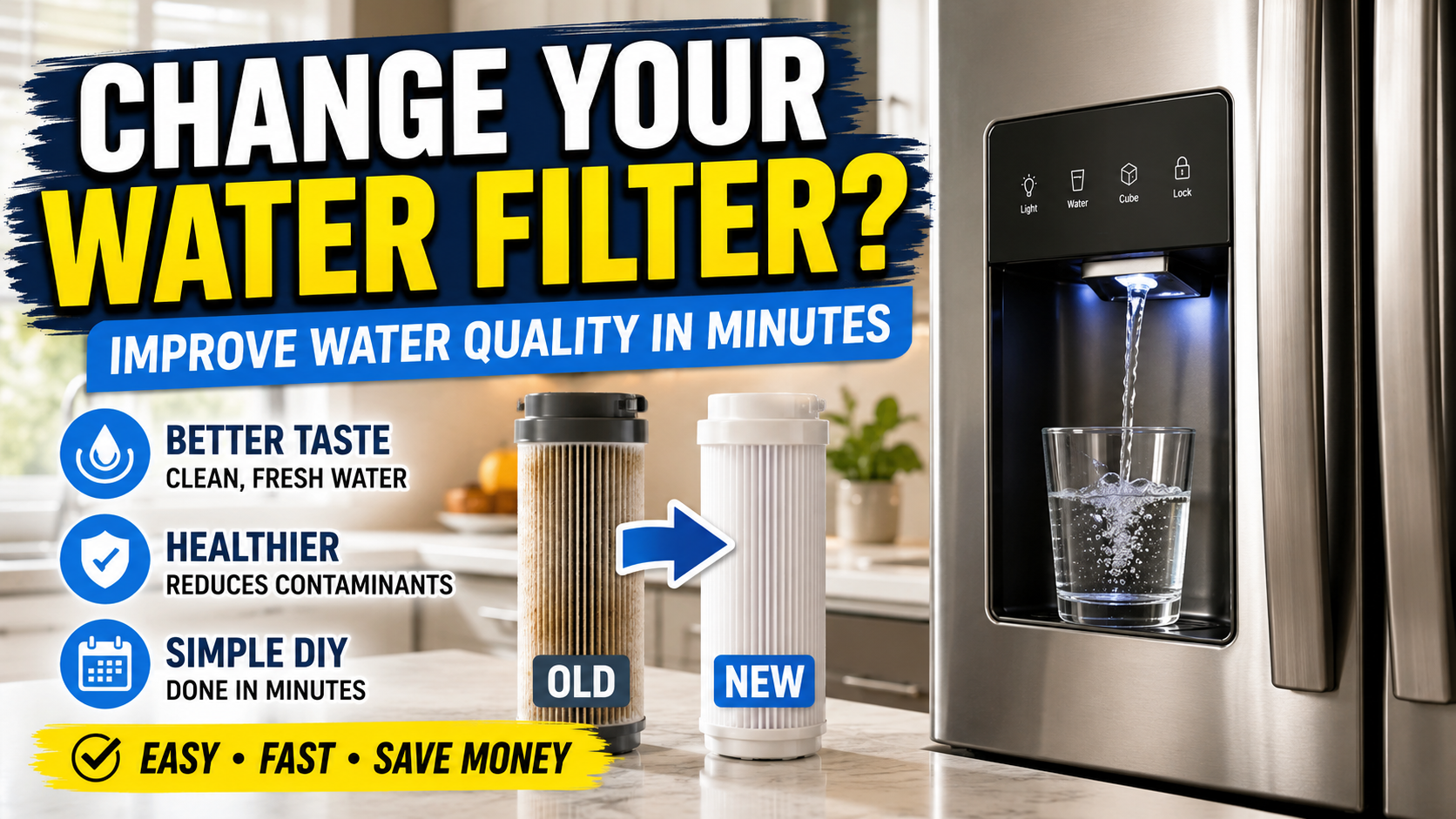
A refrigerator water filter does more than improve the taste of your drinking water. It helps reduce sediment, chlorine, and other contaminants while protecting your refrigerator’s water system from buildup. Over time, however, every filter becomes less effective.
If you’re wondering when to replace your refrigerator water filter or how to install a new one correctly, the process is usually easier than most homeowners expect. The key is replacing the filter at the right time and following a few simple steps that many people overlook.
This guide explains when to replace your refrigerator water filter, how to change it safely, common mistakes to avoid, expected costs, and how to keep your water dispenser performing at its best.
How Often Should You Replace a Refrigerator Water Filter?
Most refrigerator manufacturers recommend replacing the water filter every six months.
However, the ideal replacement schedule depends on several factors:
- How much water your household uses
- Whether you have hard water
- The quality of your local water supply
- Whether your refrigerator has a filter replacement indicator
A family that uses the dispenser frequently may need a new filter sooner than someone who rarely uses it.
Signs It’s Time to Replace Your Water Filter
You don’t always have to wait for the filter light to turn on.
Common warning signs include:
- Water flow has slowed noticeably.
- Water tastes or smells unusual.
- Ice cubes look cloudy or smaller than normal.
- The filter indicator light is on.
- It’s been more than six months since the last replacement.
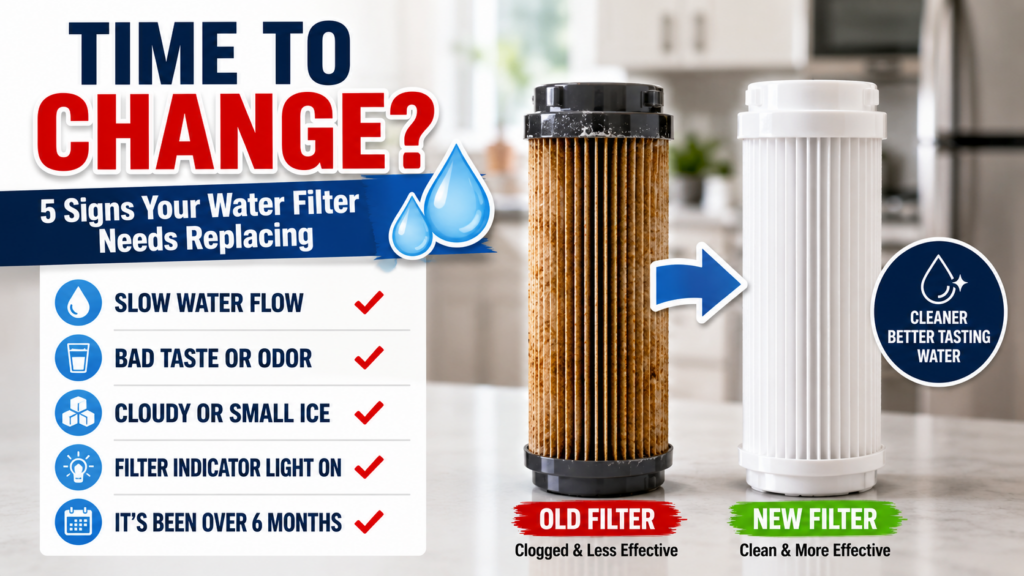
Replacing the filter before it becomes completely clogged helps maintain better water quality and prevents unnecessary strain on the refrigerator’s water system.
Choosing the Right Replacement Filter
Not every refrigerator filter is interchangeable.
Always verify:
- Your refrigerator model number
- The filter model number
- Compatibility listed by the manufacturer
Certified aftermarket filters can be a cost-effective alternative, but choose products that meet NSF certification standards whenever possible.
Avoid extremely cheap filters with no certification, as they may reduce water flow or provide inconsistent filtration.
How to Replace a Refrigerator Water Filter
Most modern refrigerators use either a twist-in or push-button filter design.
The basic process is straightforward.
Step 1
Locate the water filter compartment.
It’s commonly found inside the refrigerator, near the upper corner, behind the grille, or in the base grille.
Step 2
Remove the old filter according to your refrigerator’s instructions.
Some models require a quarter turn, while others release with a push button.
Step 3
Install the new filter securely until it locks into place.
Do not force it.
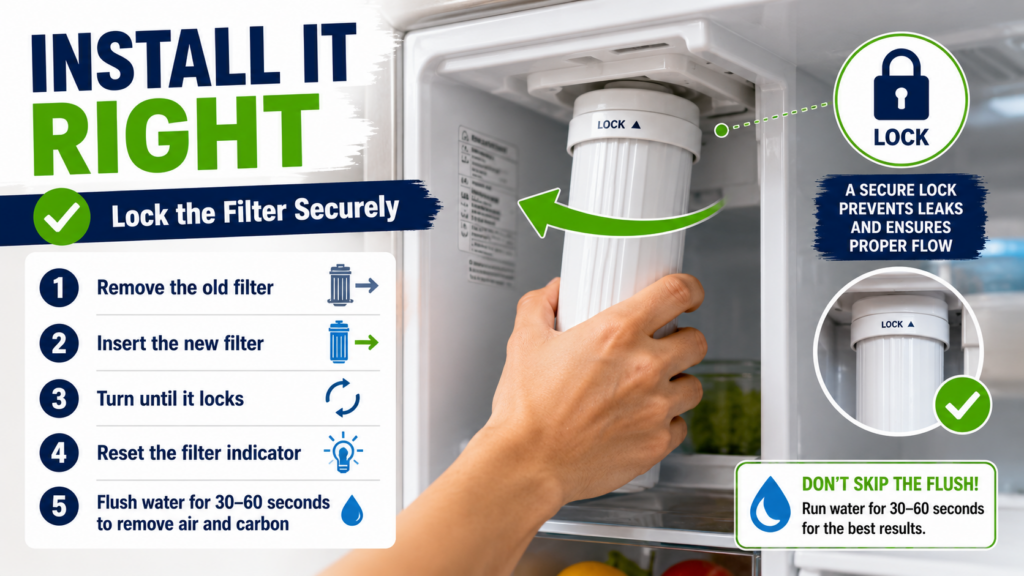
Step 4
Reset the filter indicator light if your refrigerator includes one.
Many models require holding the Filter or Reset button for three to five seconds.
Step 5
Run the water dispenser for 30–60 seconds to flush out trapped air and loose carbon particles. This helps restore normal water flow and ensures the filter performs as intended.
Common Mistakes to Avoid
Many water filter problems happen after installation rather than before.
Some of the most common mistakes include:
- Installing the wrong filter model
- Forgetting to remove the protective cap
- Not fully locking the filter into place
- Skipping the flushing process
- Ignoring the filter reset button
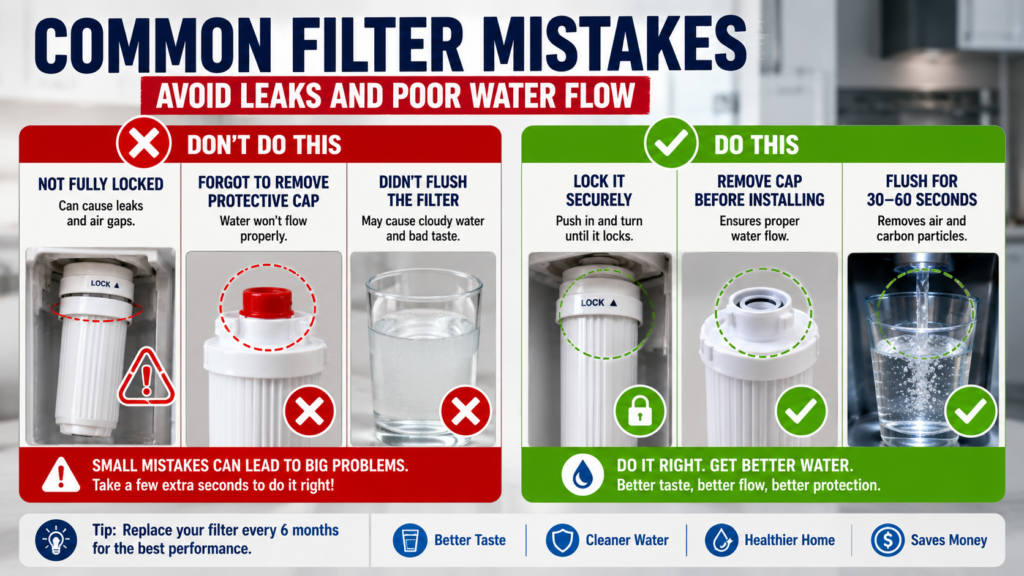
Avoiding these simple mistakes can prevent weak water flow, leaks, and unnecessary service calls.
Does Replacing the Filter Improve Water Pressure?
Sometimes.
If the old filter was heavily clogged, replacing it often restores normal water flow immediately.
However, replacing the filter will not solve problems caused by:
- Low household water pressure
- A frozen water line
- A defective inlet valve
- A failed dispenser switch
If water flow does not improve after replacing the filter, another component may need attention.
How Much Does a Refrigerator Water Filter Cost?
Replacement filter prices vary depending on the refrigerator brand and filter type.
| Filter Type | Typical Cost |
|---|---|
| OEM filter | $40–$70 |
| NSF-certified aftermarket filter | $20–$45 |
| Premium smart filter | $60–$90 |
Replacing the filter yourself usually takes less than ten minutes and requires no special tools.
How to Make Your Water Filter Last Longer
A few simple habits can help maximize filter life.
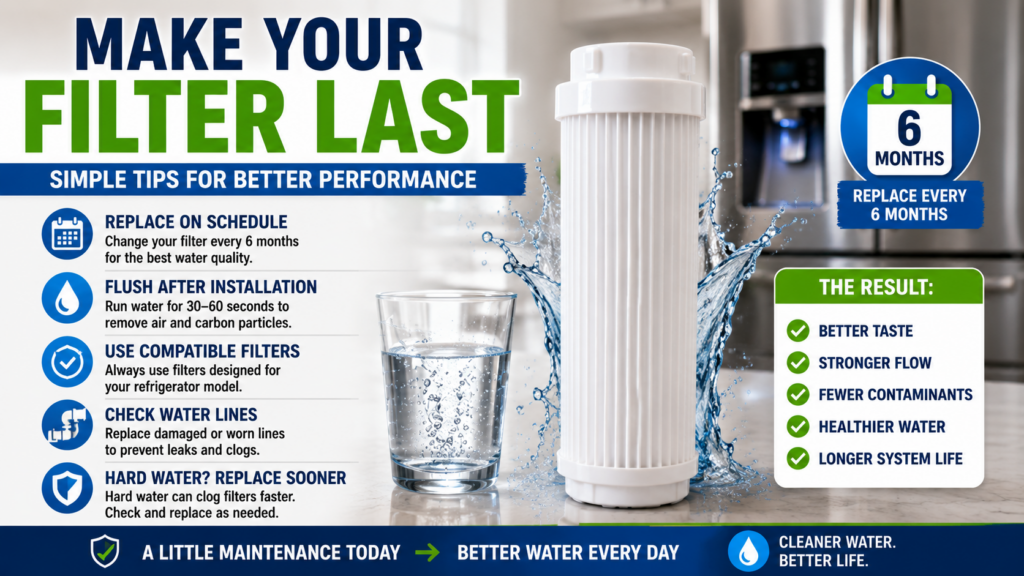
- Replace the filter on schedule.
- Flush a new filter after installation.
- Use only compatible filters.
- Replace damaged water lines promptly.
- If your home has very hard water, expect more frequent filter changes.
Proper maintenance improves water quality while reducing wear on your refrigerator’s water system.
Is It Worth Buying OEM Filters?
OEM filters are designed specifically for your refrigerator and generally provide the most consistent performance.
However, many NSF-certified aftermarket filters perform very well at a lower price.
If choosing an aftermarket option, verify that it is certified for contaminant reduction and fully compatible with your refrigerator model.
Frequently Asked Questions
Can I use my refrigerator without a water filter?
Many refrigerators allow you to bypass the filter with a bypass plug, but filtered water quality will be lost.
Why does my new filter make the water cloudy?
Tiny air bubbles are common after installation and usually disappear after flushing the system for 30–60 seconds.
What happens if I never replace the filter?
An old filter can reduce water flow, affect taste, and become less effective at removing contaminants.
Do all refrigerators use the same water filter?
No. Filter designs vary by manufacturer and refrigerator model.
Quick Water Filter Replacement Checklist
Before wrapping up, confirm each of these steps:
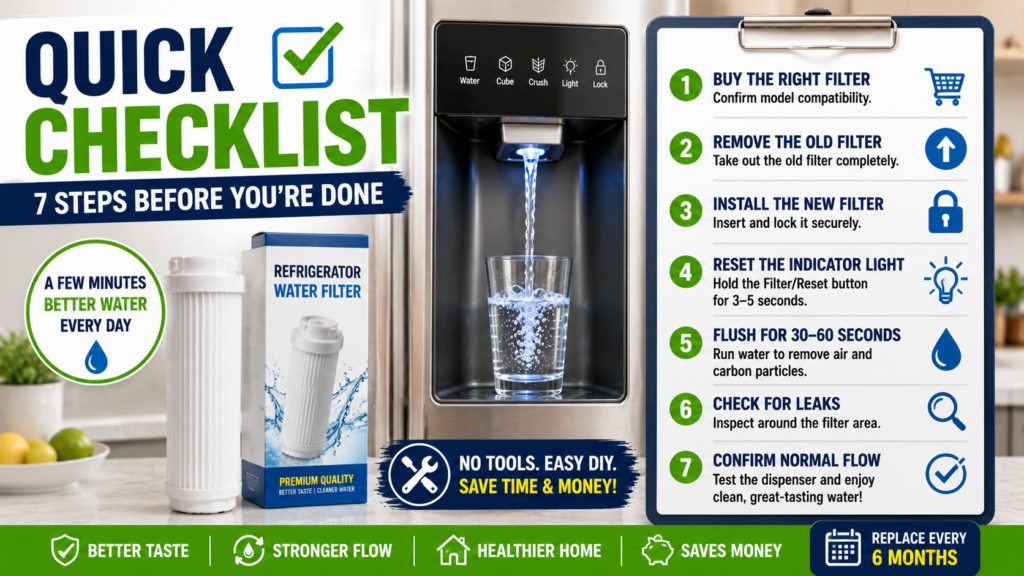
- Purchased the correct replacement filter.
- Removed the old filter completely.
- Installed the new filter securely.
- Reset the filter indicator light.
- Flushed the dispenser for 30–60 seconds.
- Checked for leaks around the filter housing.
- Confirmed normal water flow has returned.
Following this checklist helps ensure your new refrigerator water filter performs properly from day one while keeping your water tasting clean and fresh.