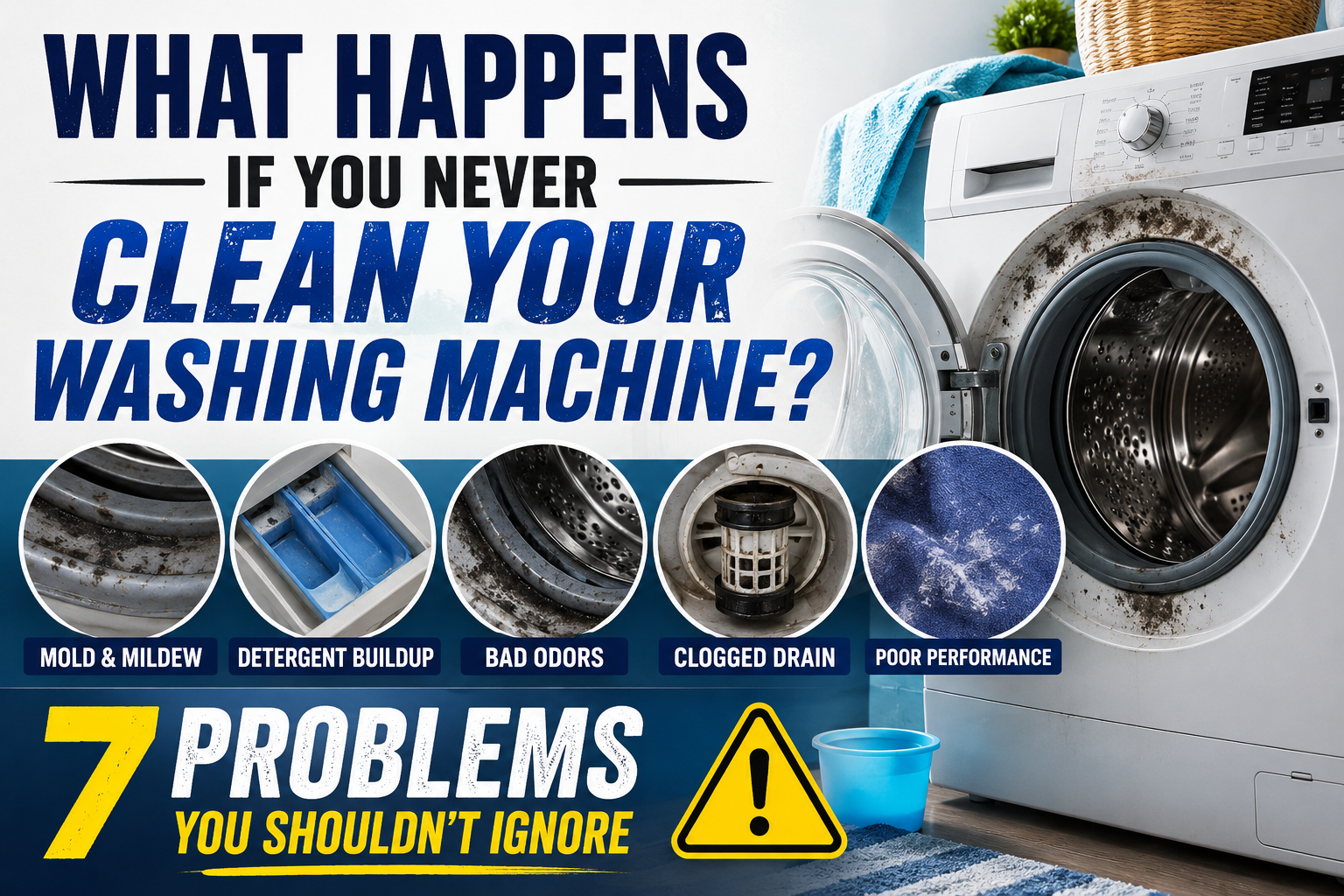
What Happens If You Never Clean Your Washing Machine? 7 Problems You Shouldn’t Ignore
Most people assume a washing machine stays clean because it’s constantly washing clothes.
Unfortunately, that’s not how it works.
Over time, detergent residue, fabric softener, lint, dirt, body oils, and moisture can build up inside the machine. Even if the drum looks clean, hidden areas may be collecting mold, mildew, and bacteria.
If you’ve ever opened your washer and noticed a musty smell, or if your clothes don’t seem as fresh as they used to, your washing machine may be trying to tell you something.
Here’s what can happen if you never clean your washing machine.
Quick Answer
A washing machine that is never cleaned can develop:
- Mold and mildew
- Unpleasant odors
- Poor washing performance
- Drainage problems
- Faster component wear
- Reduced efficiency
- Expensive repair issues
The good news is that most of these problems are completely preventable with basic maintenance.
1. Your Washer Starts to Smell

For many homeowners, this is the first warning sign.
Because washing machines regularly hold moisture, they create an ideal environment for mold and mildew growth.
At first, the smell may be mild.
Eventually, it can become strong enough that you notice it every time you open the washer door.
Front-load washers are especially vulnerable because water often remains trapped around the rubber door gasket.
2. Your Clothes May Come Out Smelling Worse
Have you ever washed a load of laundry only to find that it still smells damp or musty?
A dirty washing machine is often the reason.
When mold, bacteria, and detergent buildup accumulate inside the washer, those odors can transfer back onto your clothing during the wash cycle.
Many people replace detergents or fabric softeners when the real problem is the washer itself.
3. Mold and Mildew Can Build Up

One of the biggest problems with neglected washers is hidden mold growth.
Common trouble spots include:
- Door gaskets
- Detergent dispensers
- Drain pumps
- Filters
- Hidden drum surfaces
The longer mold remains, the harder it becomes to remove.
In severe cases, professional cleaning may even be required.
4. Washing Performance Can Decline
A dirty washer doesn’t clean clothes as effectively as a clean one.
Detergent residue and buildup can interfere with water circulation and rinsing performance.
You may begin noticing:
- Clothes that don’t feel fully clean
- White residue on fabrics
- Lingering odors
- Reduced stain removal
Many homeowners blame their detergent when the washing machine is actually the problem.
5. Parts May Wear Out Faster
Dirt and buildup don’t only affect cleanliness.
They can also place extra stress on important components such as:
- Drain pumps
- Filters
- Sensors
- Hoses
Over time, this additional workload may contribute to premature wear and more frequent repairs.
Regular cleaning is much cheaper than replacing damaged parts.
6. Drainage Problems Can Develop

Lint, hair, detergent residue, and debris can slowly accumulate inside the drainage system.
When this happens, water may not drain properly.
Common symptoms include:
- Standing water in the drum
- Slow draining
- Error messages
- Unusual noises
- Wet clothes after spinning
Ignoring these warning signs can eventually lead to costly service calls.
7. Energy Efficiency May Decrease
A clean washing machine generally operates more efficiently.
When internal components become dirty, the washer may need to work harder and run longer to complete cycles.
The difference may not be dramatic at first, but poor maintenance can reduce efficiency over time.
How Often Should You Clean Your Washing Machine?
For most households, cleaning the washer once a month is enough.
If you have pets, wash heavily soiled clothing, or run multiple loads every day, cleaning every two to three weeks may be beneficial.
Many homeowners also use washing machine cleaning tablets to help prevent odor and buildup.
A small amount of maintenance can prevent much bigger problems later.
The Easiest Way to Clean a Washing Machine
Cleaning a washing machine is easier than most people think.
A simple maintenance routine includes:
- Running a washer cleaning cycle
- Cleaning the detergent drawer
- Wiping the door gasket
- Emptying and rinsing the filter
- Leaving the door open after use
These habits can significantly reduce mold, mildew, and odor problems.
How to Keep Your Washer Fresh

The easiest way to prevent buildup is to let the machine dry between loads.
After each wash:
- Leave the door slightly open
- Remove wet clothes promptly
- Wipe moisture from door seals
- Avoid using too much detergent
- Clean the machine regularly
These small habits take only a few seconds but can make a huge difference.
Final Thoughts
Your washing machine works hard every week.
Like any appliance, it performs best when it’s properly maintained.
If you never clean your washer, mold, mildew, odors, drainage issues, and reduced washing performance can gradually develop. What starts as a minor smell can eventually become a much larger problem.
The good news is that prevention is simple.
Spending just 10 minutes each month cleaning your washing machine can help keep clothes smelling fresh, improve washing performance, and potentially save you from expensive repairs down the road.
자주 묻는 질문 (FAQ)
Q. How often should I clean my washing machine?
A. For most households, once a month is sufficient. Homes with pets or frequent laundry loads may benefit from cleaning every two to three weeks.
Q. Can a dirty washing machine make clothes smell bad?
A. Yes. Mold, mildew, bacteria, and detergent buildup inside the washer can transfer unpleasant odors back onto clothing.
Q. Do washing machine cleaning tablets really work?
A. Yes. Washing machine cleaners can help remove residue and odors when used regularly as part of a maintenance routine.
Q. Should I leave the washer door open after every load?
A. Yes. Leaving the door slightly open helps moisture evaporate and reduces the risk of mold and mildew growth.
Related Reading:
• Energy-Efficient Appliances vs Standard Appliances: Are Premium Models Worth It?