
Preparing Your Home Appliances Before Moving: A Complete Checklist to Prevent Damage
Moving into a new home comes with a long to-do list, and preparing your appliances is often overlooked until the last minute. Large appliances are expensive to replace, and even a small mistake during a move can lead to leaks, electrical problems, or costly repairs.
Taking a little extra time before moving day helps protect your refrigerator, washer, dryer, dishwasher, and other household appliances. The right preparation also makes installation much easier once you arrive at your new home.
Instead of simply unplugging everything, follow a step-by-step approach to reduce the risk of damage during transportation.
Why Appliances Need Special Preparation Before Moving
Most home appliances contain water, moving parts, compressors, or delicate electronic components. Transportation places stress on these systems, especially if an appliance is tilted or moved improperly.
For example:
- Refrigerators contain compressor oil that can shift if laid on their side.
- Washing machines can suffer suspension damage if the drum isn’t secured.
- Dishwashers may leak if water isn’t completely drained.
- Ice makers and water dispensers require water lines to be disconnected properly.
Preparing each appliance correctly can prevent expensive surprises after moving day.
Create a Moving Timeline
Rather than waiting until moving day, start preparing appliances several days in advance.
A simple schedule works well:
- 3–5 days before moving: Gather supplies and manuals.
- 48 hours before moving: Empty refrigerators and freezers.
- 24 hours before moving: Disconnect water lines and power.
- Moving day: Secure doors, cords, and loose accessories.
This approach reduces stress and gives appliances enough time to dry completely.
Preparing Your Refrigerator
A refrigerator usually requires the most preparation.
Start by removing all food several days before the move. Frozen food should be used, donated, or transported in coolers.
Turn off the ice maker and disconnect the water supply if your refrigerator has one.
Unplug the refrigerator at least 24 hours before moving to allow the freezer to thaw naturally.
Never rush the process by using sharp objects to remove ice, as this can damage the evaporator.
Once thawed:
- Clean all shelves and drawers.
- Dry every interior surface completely.
- Leave the doors open until moving day to prevent mold and odors.
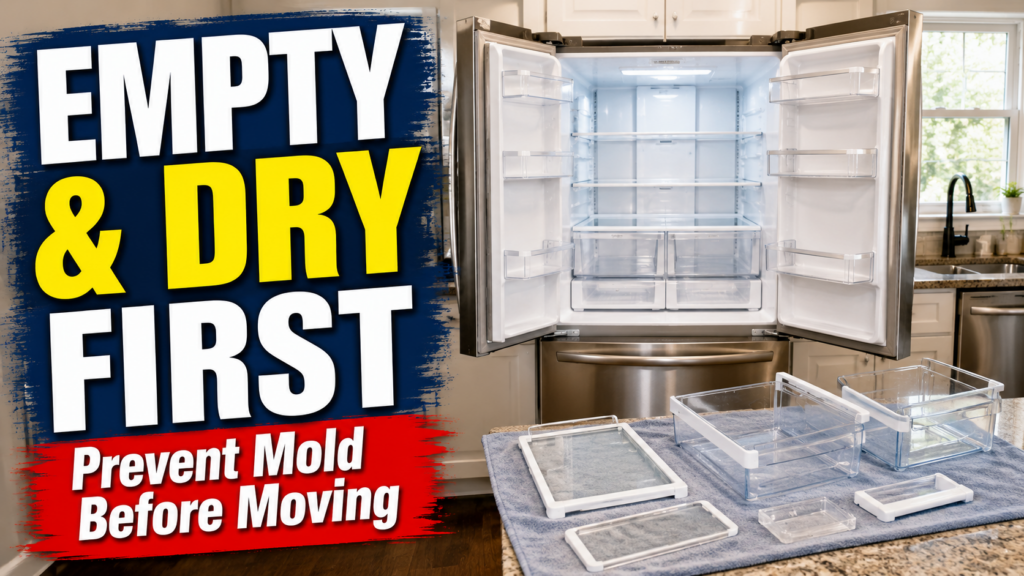
Secure shelves and drawers separately if possible. Tape refrigerator doors closed only after the interior has completely dried.
If the refrigerator must be transported on its side due to space limitations, allow it to remain upright for several hours—sometimes up to 24 hours depending on the manufacturer—before plugging it in again.
Preparing a Washing Machine
Washing machines require more than simply unplugging the power cord.
Run a short rinse cycle several hours before disconnecting the machine. This helps remove detergent residue.
Next:
- Turn off both water supply valves.
- Disconnect hot and cold water hoses.
- Drain remaining water from the hoses.
- Empty the drain hose completely.
One step many homeowners forget is reinstalling the shipping bolts.
Front-load washers originally include shipping bolts that stabilize the drum during transportation. If you saved them, reinstall them before moving.
If the original bolts are missing, many manufacturers sell replacement kits.
Without proper drum support, suspension components can be damaged during transport.
Preparing a Dryer
Electric dryers are relatively straightforward.
Disconnect power.
Clean the lint filter thoroughly.
Disconnect the exhaust vent and remove lint buildup from the duct before packing.
Gas dryers require additional care.
Turn off the gas supply valve first.
The flexible gas connector should generally be replaced during reinstallation rather than reused, depending on local codes and its condition.
If you’re uncomfortable disconnecting a gas appliance, hiring a professional is often the safest option.
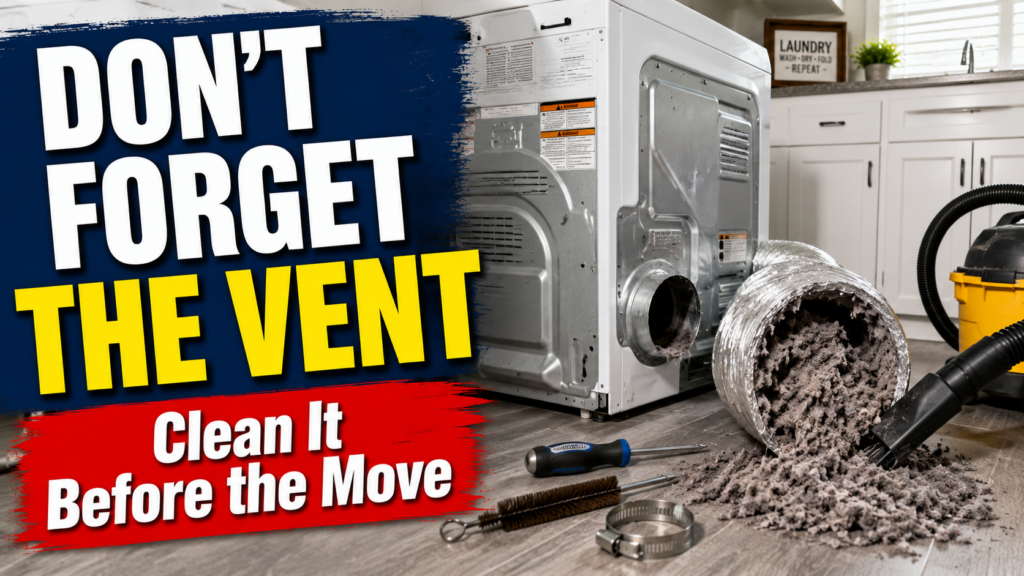
Cleaning the vent before moving also improves efficiency in your next home.
Preparing a Dishwasher
Dishwashers should be cleaned before transportation.
Run one final empty cycle.
Disconnect power.
Turn off the water supply.
Drain any remaining water from the hoses.
Secure the spray arms and utensil baskets so they don’t shift during transport.
Tape the dishwasher door closed to prevent it from opening while being moved.
Preparing a Microwave
Countertop microwaves are easy to prepare.
Remove the glass turntable and roller ring.
Wrap these separately using bubble wrap or towels.
Tape the power cord securely to the back of the microwave.
For over-the-range microwaves, removal is often a two-person job due to their weight.
Professional removal may be worthwhile if you’re unfamiliar with the mounting system.
Small Appliances Need Protection Too
Coffee makers, air fryers, toaster ovens, stand mixers, and blenders also benefit from proper packing.
Remove detachable parts.
Clean and dry every component.
Wrap glass containers separately.
Keep accessories together inside labeled boxes.
Many people lose power cords during a move.
A simple zip tie or reusable Velcro strap keeps cords attached to each appliance.
Common Moving Mistakes
Many appliance problems after moving aren’t caused by transportation itself.
They’re caused by simple mistakes such as:
- Plugging in a refrigerator immediately after transport.
- Leaving water inside hoses.
- Forgetting shipping bolts.
- Losing removable shelves.
- Transporting appliances without securing doors.
- Wrapping damp appliances before they’re fully dry.
Avoiding these small errors can save hundreds of dollars in repairs.

A Real-World Example
A family moving from a townhouse in Colorado emptied their refrigerator but forgot to dry the freezer completely.
After several days inside a moving truck, trapped moisture caused mildew and unpleasant odors that took weeks to remove.
Another homeowner moving from a Florida condo transported a front-load washer without shipping bolts.
The washing machine appeared fine externally but later developed excessive vibration because the suspension had been damaged during transport.
Both problems could have been avoided with a little extra preparation.
DIY vs. Professional Help
| Task | DIY | Professional Recommended |
|---|---|---|
| Unplug electric appliances | Yes | No |
| Disconnect washer hoses | Yes | No |
| Clean refrigerator | Yes | No |
| Disconnect gas dryer | Sometimes | Yes |
| Remove built-in appliances | Sometimes | Often |
| Transport heavy appliances | No | Yes |
Estimated Costs
If professional appliance services are needed, typical U.S. costs include:
- Refrigerator water line disconnect: $100–$200
- Washer installation or reconnection: $100–$200
- Dishwasher disconnect: $100–$250
- Gas dryer connection: $150–$300
- Appliance moving service: $150–$500+, depending on distance and size
Prices vary by region, appliance type, and labor rates.
FAQ
Should I unplug my refrigerator the night before moving?
Yes. Unplugging it at least 24 hours before moving gives enough time for defrosting and drying.
Can I transport a refrigerator lying down?
Only if absolutely necessary. Always follow the manufacturer’s guidance, and let the refrigerator stand upright before turning it on again.
Do I need shipping bolts for a washing machine?
Yes, especially for front-load models. They help protect the drum and suspension during transportation.
Should I disconnect a gas dryer myself?
Only if you’re comfortable doing so safely. Many homeowners choose professional service because improper gas connections can create safety risks.
Moving Day Appliance Checklist
- Empty all appliances.
- Disconnect power.
- Shut off water supplies.
- Drain hoses completely.
- Clean and dry interiors.
- Secure shelves and loose parts.
- Tape doors closed.
- Bundle power cords safely.
- Keep manuals and accessories together.
- Allow refrigerators to rest upright before plugging them in after the move.
Final Thoughts
Preparing your appliances before moving takes some planning, but it greatly reduces the chances of damage, leaks, and unexpected repair costs. A careful checklist, a few basic tools, and enough drying time can make the transition much smoother.
Whether you’re moving into an apartment, condo, townhouse, or single-family home, protecting your appliances before they leave your old house is one of the easiest ways to avoid expensive problems after you settle in.
Related Reading:
• 10 Appliances That Waste Electricity Without You Knowing (And How to Lower Your Power Bill)
• Not Every Clicking Sound Means Something Is Broken
• Should You Repair or Replace Your Appliance? A Homeowner’s Decision Guide
• Do Smart Appliances Actually Save Money? The Truth Most Homeowners Don’t Hear
• Why Do New Appliances Connect to Wi-Fi? Do You Really Need It?