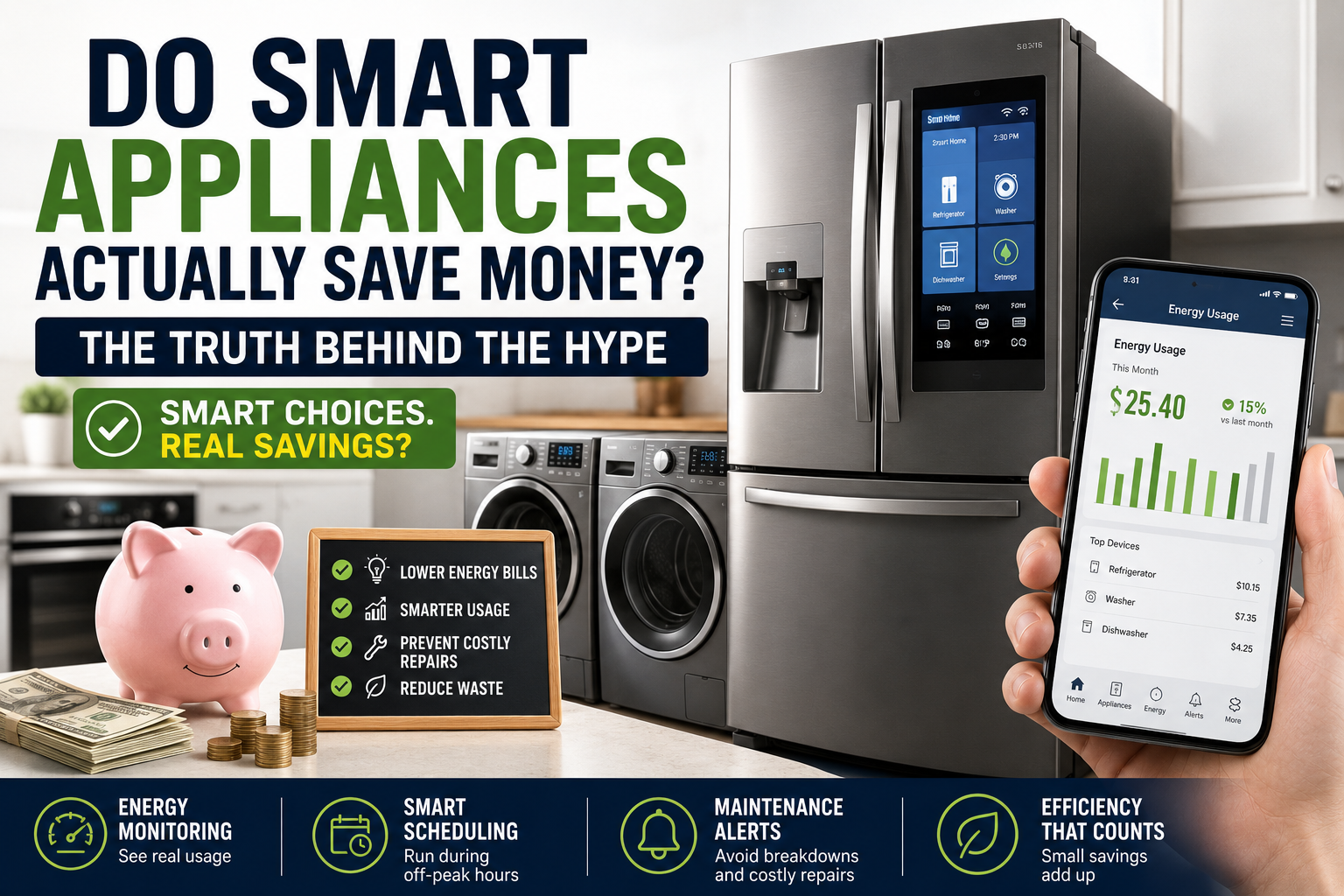
Do Smart Appliances Actually Save Money? The Truth Most Homeowners Don’t Hear
Smart refrigerators.
Smart washers.
Smart ovens.
Smart dishwashers.
Walk through any appliance store today and you’ll see “smart” features everywhere.
Manufacturers often suggest these connected appliances can help homeowners save money through better energy management and smarter operation.
But do smart appliances actually reduce your utility bills?
Or are they simply another feature designed to justify a higher price tag?
The truth falls somewhere in the middle.
Smart appliances can save money, but probably not in the way most people expect.
Quick Answer
Yes, smart appliances can help reduce costs.
However, the savings usually come from better habits, improved efficiency, and reduced waste rather than the Wi-Fi connection itself.
If you’re expecting your electric bill to suddenly drop by 50%, you’ll probably be disappointed.
For most households, the savings are relatively small month-to-month.
The bigger benefit is convenience, energy awareness, and better control over how appliances are used.
How Smart Appliances Can Save Money
Modern smart appliances often include features designed to improve efficiency and reduce unnecessary energy use.
Common examples include:
- Energy monitoring
- Remote controls
- Maintenance reminders
- Automatic efficiency settings
- Smart scheduling
- Usage reports
None of these features create savings on their own.
Instead, they help homeowners make smarter decisions.
Energy Monitoring Helps You Understand Your Usage
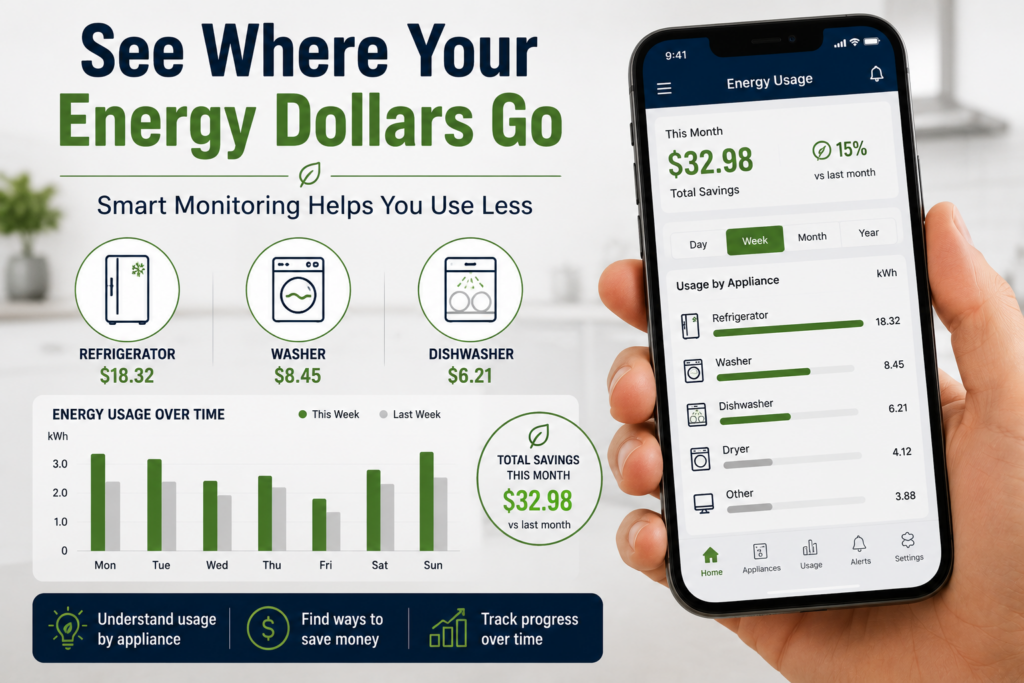
One of the most useful smart features is energy monitoring.
Most homeowners have no idea how much electricity individual appliances actually use.
A smart appliance can show detailed energy reports through a mobile app.
You might discover that:
- Your dryer runs longer than necessary
- Certain wash cycles use more energy
- Your refrigerator door is frequently left open
- Peak-hour electricity rates are increasing costs
Simply seeing this information often leads to more efficient habits.
Smart Scheduling Can Lower Electricity Costs
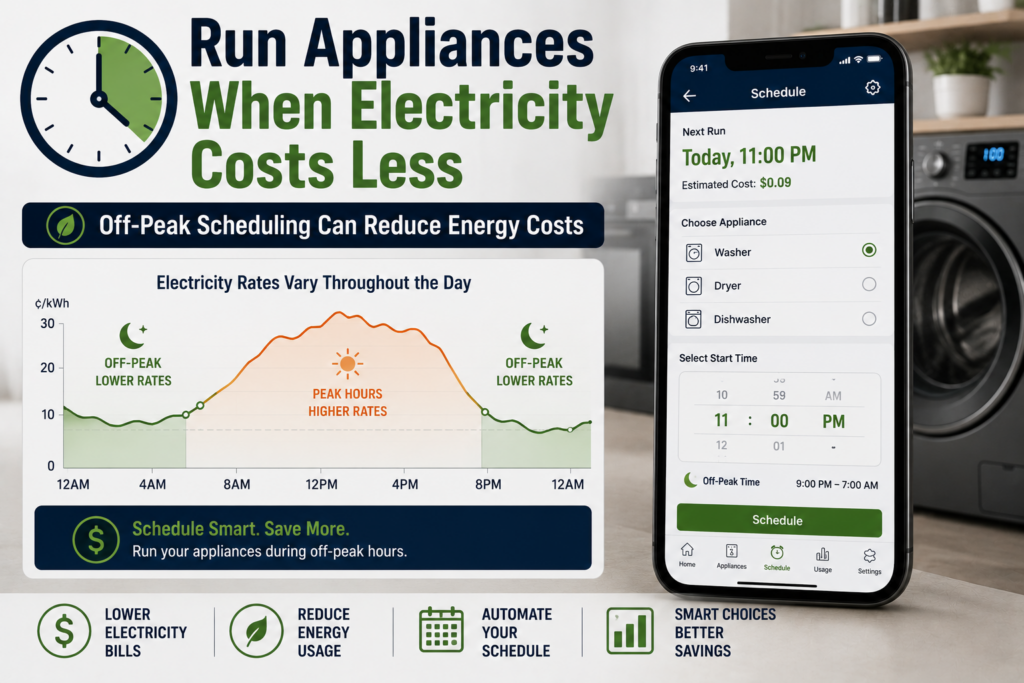
In many parts of the United States, electricity prices vary throughout the day.
Utility companies may charge higher rates during peak demand hours and lower rates overnight.
Some smart appliances allow users to schedule operation during off-peak periods.
For example:
- Running the dishwasher overnight
- Delaying laundry until lower-cost hours
- Scheduling appliance operation automatically
The savings won’t make anyone rich, but they can reduce energy costs over time.
Maintenance Alerts Can Prevent Costly Repairs
This is one of the most overlooked benefits of smart appliances.
Many connected appliances can send alerts when:
- Filters need replacement
- Cleaning cycles are overdue
- Performance issues are detected
- Maintenance is required
A neglected appliance often becomes an expensive appliance.
Catching small problems early can help avoid larger repair bills later.
Smart Refrigerators Can Reduce Food Waste
Food waste costs the average family more money than most people realize.
Smart refrigerators can send notifications when:
- Doors are left open
- Internal temperatures rise unexpectedly
- Cooling performance changes
For example, models such as Samsung Family Hub and LG ThinQ refrigerators can provide alerts directly to your phone.
Will that save hundreds of dollars every year?
Probably not.
But preventing spoiled groceries a few times a year can certainly help offset costs.
Smart Washers and Dryers Can Improve Efficiency
Modern laundry appliances have become surprisingly intelligent.
Some models can:
- Detect load size automatically
- Adjust water usage
- Recommend efficient cycles
- Send notifications when laundry is finished
These features help prevent unnecessary water and electricity consumption.
The savings are generally modest, but every small improvement adds up over the lifespan of the appliance.
Do Smart Appliances Save Enough Money to Pay for Themselves?
This is where many marketing claims become misleading.
If you’re paying several hundred dollars extra simply for Wi-Fi connectivity, the math often doesn’t work.
Most homeowners won’t save enough on utility bills to recover a large price difference.
However, if a smart model also includes:
- Better insulation
- More efficient motors
- Advanced sensors
- Improved energy-saving technology
then the overall value becomes much more attractive.
The real money-saving feature isn’t Wi-Fi.
It’s energy efficiency.
What Actually Saves the Most Money?
When comparing appliances, these factors matter far more than smart features.
Energy Star Certification
Energy-efficient appliances typically have a much bigger impact on utility costs than Wi-Fi features.
Proper Appliance Size
Buying an appliance that matches your household needs can prevent wasted energy.
Regular Maintenance
Clean filters, coils, vents, and drainage systems regularly.
Even the smartest appliance performs poorly when maintenance is ignored.
Efficient Usage Habits
How you use an appliance often matters more than the technology inside it.
The Hidden Benefit Most People Overlook
Ironically, the biggest advantage of smart appliances may not be saving money at all.
It’s convenience.
Being able to monitor appliances remotely, receive maintenance alerts, and manage devices from a smartphone can save time and reduce frustration.
For many homeowners, that’s worth more than the actual energy savings.
Are Smart Appliances Worth Buying?
For most people, smart features should be viewed as a bonus rather than the primary reason to purchase an appliance.
Reliability, performance, warranty coverage, and energy efficiency should always come first.
If a model you already like happens to include smart features, they can certainly add value.
Just don’t expect a Wi-Fi connection alone to dramatically lower your monthly utility bill.
Final Thoughts
Here’s the bottom line.
Smart appliances can save money.
But the savings are usually smaller than many advertisements suggest.
If you’re buying a smart appliance expecting massive reductions in your electric bill, you’ll likely be disappointed.
However, if you value maintenance reminders, remote monitoring, energy tracking, and better control over household appliances, smart features can absolutely be worthwhile.
Focus on energy efficiency first.
Think of smart features as the bonus.
That’s the approach most homeowners will be happiest with in the long run.
Q. Do smart appliances lower electric bills?
A. They can help reduce energy usage through monitoring, scheduling, and efficiency features, but the savings are usually modest rather than dramatic.
Q. Is Wi-Fi required for a smart appliance to work?
A. No. Most smart appliances continue to operate normally even without an internet connection.
Q. Are smart appliances worth the extra cost?
A. They can be, especially when combined with energy-efficient technology. However, Wi-Fi alone rarely justifies a large price increase.
Q. What saves more money: Energy Star certification or smart features?
A. In most cases, Energy Star certification and overall efficiency have a greater impact on long-term operating costs.
Related Reading: