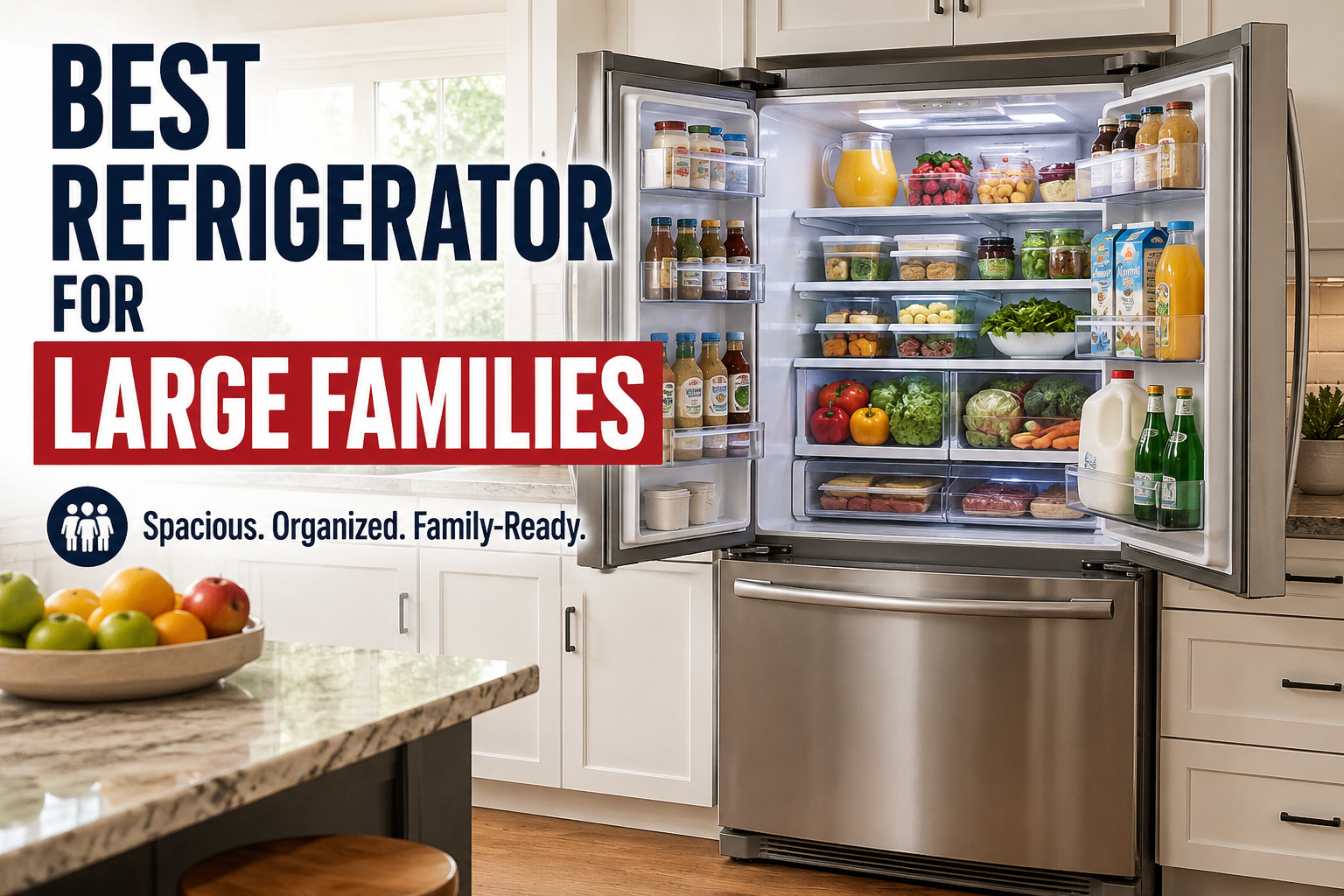
Best Refrigerator for Large Families: A Practical Buying Guide for Busy Households
A refrigerator that works well for a couple may quickly become frustrating for a household with four, five, or more people. Extra groceries, meal prep containers, school lunches, and oversized beverage storage all compete for space. Choosing the right refrigerator isn’t simply about buying the biggest model available—it’s about finding one that matches the way your family shops, cooks, and stores food.
Quick Answer
For most large families, the best refrigerator offers at least 25–30 cubic feet of storage, flexible shelving, a spacious freezer, and reliable temperature control. A French door refrigerator usually provides the best balance of capacity, organization, and everyday convenience, while side-by-side and four-door models may better suit specific storage needs.

Alt Text: Modern large-capacity French door refrigerator stocked with groceries for a large family in an American kitchen.
What Matters Most When Buying a Refrigerator for a Large Family
Bigger isn’t always better. Interior organization often matters more than total capacity.
Families that cook at home several nights a week typically benefit from adjustable shelves, wide door bins, and multiple produce drawers. These features make it easier to organize groceries instead of stacking everything on top of one another.
If your household buys groceries in bulk from warehouse clubs, wide shelves that fit party platters, beverage packs, and large containers are often more valuable than a few extra cubic feet of storage.
A family of five or six may also appreciate a full-width pantry drawer for deli meats, cheese trays, and prepared meals.
Comparison Table
| Feature | Why It Matters for Large Families |
|---|---|
| Capacity | 25–30+ cubic feet provides comfortable storage for weekly groceries. |
| Refrigerator Layout | French door models usually offer easier access to fresh food. |
| Freezer Space | Deep freezer drawers help organize frozen meals and bulk purchases. |
| Adjustable Shelves | Makes room for tall bottles and oversized containers. |
| Energy Efficiency | Helps reduce electricity costs despite frequent door openings. |
| Flexible Storage | Convertible drawers add versatility during holidays and parties. |
| Reliability | Consistent cooling reduces food waste over time. |
| Best For | Families of four or more who shop weekly or buy in bulk. |

Alt Text: Interior view of a spacious family refrigerator with organized food storage.
Choosing the Right Refrigerator Size
Many homeowners assume that everyone needs the largest refrigerator available. In reality, your shopping habits matter just as much.
A family of four that shops every few days may be comfortable with a 24- to 26-cubic-foot refrigerator. On the other hand, a family of six that shops once a week will usually appreciate 28 cubic feet or more.
General guidelines include:
- 22–24 cu. ft.: Small families or limited kitchen space
- 25–27 cu. ft.: Most families of four
- 28–30+ cu. ft.: Larger households and bulk shoppers
Kitchen measurements are equally important. Measure the available width, depth, and height, then leave enough clearance for ventilation and fully opening the doors.
Which Refrigerator Style Works Best?
Different refrigerator layouts solve different problems.
French Door
French door refrigerators remain one of the most popular choices for large American families.
Wide shelves easily accommodate pizza boxes, sheet cakes, meal-prep containers, and party trays. Fresh food stays at eye level, making daily access more convenient.
The bottom freezer drawer works well for frozen vegetables, meat, and family-sized frozen meals.
Side-by-Side
Side-by-side refrigerators work well in kitchens with limited clearance because both doors require less space to open.
They’re also convenient for households that use frozen foods frequently since both refrigerator and freezer compartments remain easily accessible.
However, narrow shelves may make storing large serving platters more difficult.
Four-Door Models
Some premium refrigerators include a flexible middle drawer that switches between refrigerator and freezer temperatures.
For families hosting frequent gatherings or preparing meals ahead of time, this additional storage flexibility can be especially useful.

Alt Text: Comparison of French door, side-by-side, and four-door refrigerator layouts for family kitchens.
Features Worth Paying For
Not every premium feature justifies the added cost.
Adjustable shelving is one upgrade that nearly every large family will appreciate. It allows taller containers, pitchers, and bulk grocery items to fit without wasting valuable space.
Humidity-controlled crisper drawers also help fruits and vegetables stay fresh longer, reducing food waste.
Another helpful feature is a dual ice maker, especially in households that entertain often or regularly fill reusable water bottles.
Smart connectivity can be convenient, but many families may find that reliable cooling performance is more valuable than additional app features.
Typical Price Range in the U.S.
Refrigerator prices vary depending on size, finish, and included features.
| Type | Typical Price Range |
|---|---|
| Basic Top-Freezer | $700–$1,100 |
| French Door | $1,500–$3,000 |
| Side-by-Side | $1,200–$2,500 |
| Premium Four-Door | $2,500–$4,500+ |
Installation, delivery, and optional extended warranties may increase the total purchase price.

Alt Text: Large family preparing groceries in a modern American kitchen with a spacious refrigerator.
Which Families Benefit Most From Each Refrigerator Style?
The best refrigerator depends on how your household shops, cooks, and uses kitchen space rather than on capacity alone.
French Door: Best Overall for Most Large Families
A French door refrigerator is usually the easiest recommendation for households with four or more people.
The wide refrigerator compartment makes organizing fresh groceries simple, and the lower freezer drawer works well for frozen dinners, meat, and bulk purchases. Families who cook most evenings often appreciate having frequently used foods at eye level.
Side-by-Side: Best for Frequent Freezer Access
If frozen foods are used every day, a side-by-side layout may be a better fit.
Because both fresh and frozen foods remain within easy reach, family members can quickly grab what they need without bending to a lower freezer drawer. This design can also work well in kitchens where there isn’t enough room for wide French doors to swing fully open.
Four-Door Models: Best for Maximum Flexibility
Premium four-door refrigerators are ideal for households with constantly changing storage needs.
Convertible drawers can temporarily hold beverages for a party, fresh produce after a warehouse shopping trip, or extra freezer space during the holidays. While these models cost more, some large families find the added flexibility worthwhile.
Common Buying Mistakes Large Families Should Avoid
Buying the wrong refrigerator often creates daily frustration for years.
One common mistake is choosing based only on exterior size. Two refrigerators with similar outside dimensions can have very different interior layouts, and one may hold significantly more usable food.
Another mistake is overlooking freezer organization. A large freezer that lacks dividers or baskets quickly becomes difficult to manage, especially after several grocery trips.
Many homeowners also forget to measure doorways, hallways, and kitchen entrances before delivery. A refrigerator that fits the kitchen may still be difficult—or impossible—to move into the house.
Finally, don’t overlook energy efficiency. Large refrigerators naturally consume more electricity, so choosing an efficient model can reduce long-term operating costs over the life of the appliance.
Overall Recommendation
There isn’t one refrigerator that’s perfect for every family.
For most households of four or more, a 25- to 30-cubic-foot French door refrigerator offers the best balance of storage, accessibility, and flexibility.
Families that rely heavily on frozen foods may prefer a side-by-side design, while shoppers who regularly buy in bulk or host gatherings may benefit from the additional organization offered by premium four-door models.
Instead of focusing only on capacity or smart features, prioritize a refrigerator that matches your shopping habits, kitchen layout, and long-term household needs.
Final Thoughts
A refrigerator is one of the most frequently used appliances in any home, and large families place even greater demands on it every day.
Choosing a model with thoughtful storage, dependable cooling, and enough room for your weekly routine will likely provide more value than simply selecting the largest refrigerator within your budget. A little planning before buying can help you avoid wasted space, reduce food waste, and make everyday meal preparation much easier.
FAQ
What size refrigerator does a family of five need?
Most families of five are comfortable with a refrigerator that offers 25 to 30 cubic feet of storage. The ideal size depends on how often you shop, whether you buy groceries in bulk, and how much freezer space you use.
Is a French door refrigerator better than a side-by-side model?
For many households, yes. French door refrigerators typically provide wider shelves and more flexible fresh-food storage, while side-by-side models offer easier access to frozen foods and work better in tighter kitchen layouts.
Are smart refrigerator features worth paying for?
Smart features can be convenient for inventory management, maintenance alerts, and temperature monitoring. However, reliable cooling performance, storage flexibility, and energy efficiency are generally more important for most families.
How long should a family refrigerator last?
A quality refrigerator typically lasts 10 to 15 years with proper maintenance. Cleaning the condenser coils, replacing water filters when needed, and avoiding overloaded shelves can help extend its lifespan.
Buying Checklist
- Measure your kitchen space, including doorways and clearance for fully opening refrigerator doors.
- Estimate the storage capacity your household actually needs based on family size and shopping habits.
- Compare refrigerator layouts to find the one that best matches your daily routine.
- Prioritize adjustable shelving, organized freezer storage, and energy efficiency over unnecessary premium features.
- Review warranty coverage, expected maintenance requirements, and local service availability before purchasing.
- Compare the total ownership cost, including purchase price, delivery, installation, and long-term electricity usage.
Related Reading:
• LG vs GE Refrigerators: Which Brand Is More Reliable for Long-Term Use?
• LG vs Whirlpool Refrigerators: Which Brand Is Better for American Homes?
• Best Refrigerator for Garage Use: How to Choose One That Works Year-Round
• Can a Refrigerator Stay in a Hot Garage? What Every Homeowner Should Know