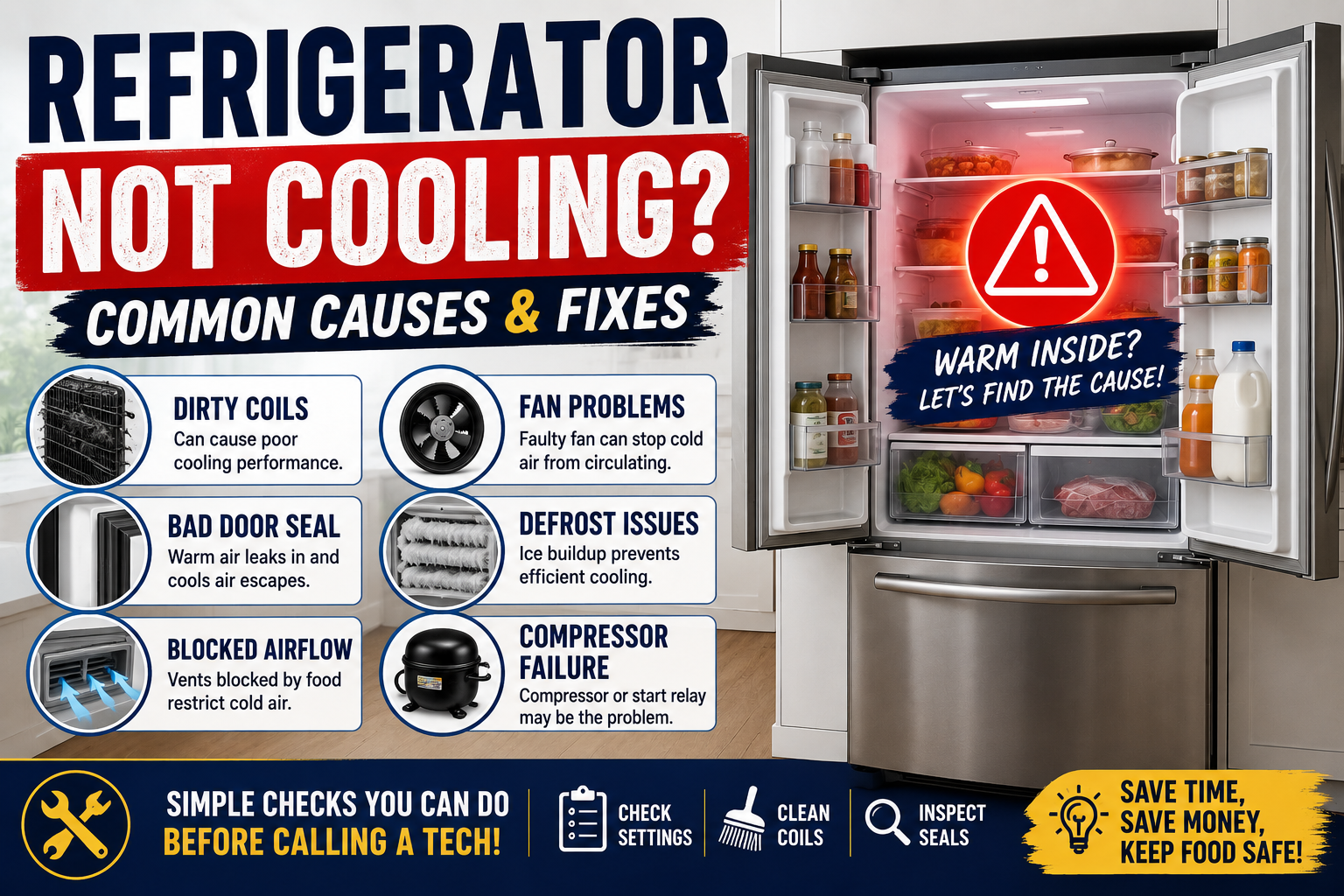
Why Is My Refrigerator Not Cooling? Common Causes and Fixes (2026 Guide)
A refrigerator that suddenly stops cooling can quickly turn into a major problem.
Whether your refrigerator is not cooling, your fridge feels warm, or your freezer seems to be working while the refrigerator section is not, identifying the cause early can save you from costly repairs and food spoilage.
The good news is that many refrigerator cooling problems have simple explanations and may not require immediate professional repair.
In this guide, we’ll cover the most common reasons a refrigerator stops cooling and what you can do to fix the problem.
Quick Summary
Check These First
✅ Refrigerator temperature settings
✅ Dirty condenser coils
✅ Blocked air vents
✅ Door seal problems
✅ Overloaded refrigerator compartments
Call a Technician If
❌ The compressor is not running
❌ The refrigerator is completely warm
❌ You hear repeated clicking noises
❌ Cooling stops after power cycling
1. Incorrect Temperature Settings
This may sound obvious, but accidental temperature changes are surprisingly common.
Children, cleaning activities, or accidental button presses can change refrigerator settings without anyone noticing.
Recommended refrigerator temperature:
- Refrigerator: 37°F (3°C)
- Freezer: 0°F (-18°C)
If the temperature is set too high, cooling performance may appear weak even though the refrigerator is functioning normally.
2. Dirty Condenser Coils
Dirty condenser coils are one of the most common causes of poor cooling performance.
Over time, dust, pet hair, and debris accumulate around the coils, making it harder for the refrigerator to release heat.
Common signs include:
- Refrigerator feels warm
- Compressor runs constantly
- Higher energy bills
- Reduced cooling efficiency
In many cases, cleaning dirty condenser coils is one of the easiest DIY refrigerator maintenance tasks homeowners can perform.
Cleaning the coils every six to twelve months can significantly improve performance.
3. Blocked Air Vents
Modern refrigerators rely on airflow to distribute cold air evenly.
Large food containers, boxes, or bags can block internal vents and prevent proper circulation.
When airflow becomes restricted, some areas may remain cold while others become noticeably warmer.
Always leave a small amount of space around internal air vents.
4. Refrigerator Door Not Sealing Properly
A damaged or dirty door gasket can allow warm air to enter the refrigerator continuously.
This forces the cooling system to work harder and may prevent temperatures from reaching the desired level.
Signs of a bad door seal:
- Visible cracks in the gasket
- Moisture around the door
- Excessive frost buildup
- Door not closing tightly
Cleaning or replacing the gasket often solves the problem.
5. Overloading the Refrigerator
Many people assume a full refrigerator cools better.
In reality, overloading can block airflow and reduce cooling efficiency.
When shelves are packed too tightly, cold air cannot circulate properly between items.
Try removing some contents and allowing air to move freely throughout the refrigerator.
6. Faulty Evaporator Fan
The evaporator fan circulates cold air from the freezer into the refrigerator compartment.
If the fan stops working, the freezer may remain cold while the refrigerator section becomes warm.
Common symptoms include:
- Freezer works normally
- Refrigerator compartment is warm
- Weak airflow inside the refrigerator
This issue often requires professional diagnosis and repair.
7. Defrost System Problems
Many modern refrigerators use an automatic defrost system.
If the system fails, ice can build up around the evaporator coils and block airflow.
Signs of a defrost issue include:
- Excessive frost inside the freezer
- Cooling performance gradually declines
- Ice buildup behind interior panels
Defrost heater or control board failures may require service.
8. Compressor or Start Relay Failure
The compressor is the heart of the refrigerator’s cooling system, but in some cases the start relay may fail before the compressor itself.
When either component stops working properly, cooling performance can drop significantly or stop altogether.
Warning signs include:
- Loud clicking noises
- Compressor extremely hot to the touch
- Refrigerator completely warm
- No cooling in either compartment
Compressor repairs can be expensive and may influence whether repair or replacement makes more financial sense.
Refrigerator Not Cooling: Troubleshooting Checklist
Before scheduling service, check the following:
✓ Verify temperature settings
✓ Clean condenser coils
✓ Inspect door seals
✓ Remove items blocking air vents
✓ Confirm the refrigerator has power
✓ Listen for fan operation
✓ Check for unusual frost buildup
Many cooling issues can be identified using these simple steps.
When Should You Replace Instead of Repair?
Repair is often worthwhile if:
- Refrigerator is less than 8 years old
- Repair costs are relatively low
- The unit is otherwise in good condition
Replacement may be the better option if:
- Refrigerator is more than 10–15 years old
- Compressor replacement is required
- Multiple components are failing
New refrigerators are significantly more energy efficient than older models, which can help offset replacement costs over time.
Common Mistakes Homeowners Make
Ignoring Dirty Coils
Many owners never clean condenser coils throughout the life of the appliance.
Regular cleaning can prevent many cooling issues.
Blocking Airflow
Packing shelves too tightly often reduces cooling performance.
Waiting Too Long
Small cooling issues can become larger and more expensive repairs if ignored.
Final Verdict
If your refrigerator isn’t cooling properly, don’t immediately assume the appliance has failed.
Most cooling problems are caused by dirty condenser coils, blocked airflow, incorrect temperature settings, or door seal issues.
Start with the simple checks first before calling a technician.
However, if the compressor, start relay, evaporator fan, or defrost system has failed, professional repair may be necessary.
The sooner you identify the problem, the better chance you have of preventing food loss and avoiding costly repairs.
Refrigerator Not Cooling But Freezer Works?
This is often a sign of an airflow problem, evaporator fan failure, or excessive frost buildup inside the freezer compartment.
Refrigerator and Freezer Both Not Cooling?
If both compartments are warm, the problem may involve the compressor, start relay, condenser fan, or power supply.
Diagnosing the issue early can help prevent a complete refrigerator failure and reduce repair costs.
Related Reading: