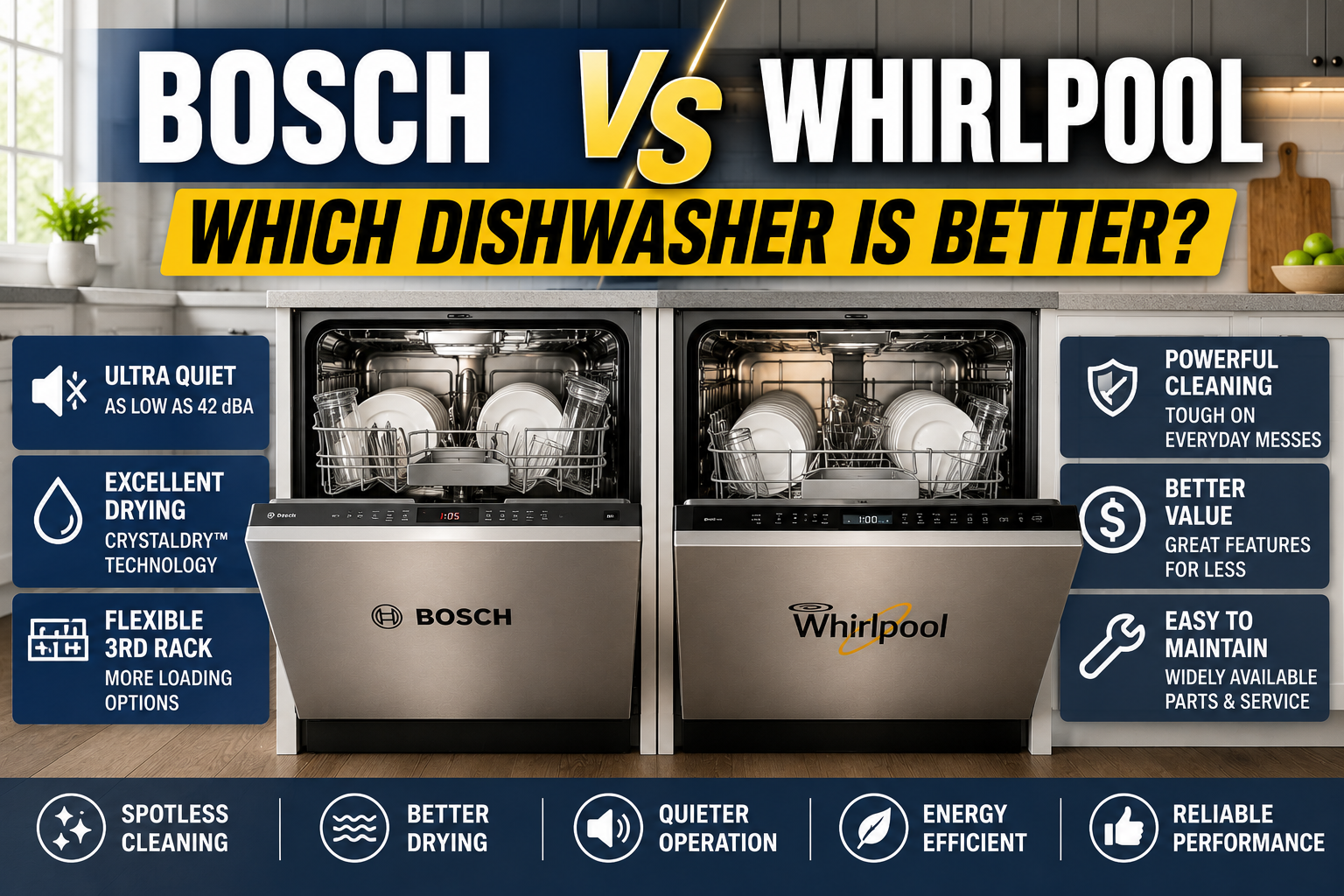
Keep your dishes spotless with the right dishwasher. This detailed Bosch vs Whirlpool dishwasher comparison explores cleaning performance, drying ability, reliability, operating costs, noise levels, repair considerations, and overall value to help American homeowners choose the best dishwasher for everyday use.
For many American households, the dishwasher runs at least once every day. Whether you’re cleaning breakfast dishes before work or tackling a full dinner load after a busy evening, reliability matters just as much as cleaning performance. That’s why Bosch vs Whirlpool dishwashers is one of the most searched appliance comparisons among homeowners planning a kitchen upgrade.
Bosch has built a reputation for whisper-quiet operation and premium engineering, while Whirlpool focuses on practical features, straightforward controls, and competitive pricing. Neither brand is automatically better for every home. The right choice depends on your budget, kitchen layout, family size, and expectations for long-term ownership.
Quick Answer
For everyday use, Bosch dishwashers generally offer quieter operation, better energy efficiency, and superior drying on premium models, while Whirlpool dishwashers provide excellent cleaning performance, easier maintenance, and better overall value for budget-conscious families. If noise and premium features matter most, Bosch is usually the stronger choice. If affordability and simple operation are higher priorities, Whirlpool remains an excellent option.
Comparison Table
| Category | Bosch | Whirlpool |
|---|---|---|
| Cleaning Performance | Excellent | Very Good to Excellent |
| Drying Performance | Excellent (CrystalDry on select models) | Very Good with Heated Dry |
| Noise Level | Extremely Quiet | Moderate to Quiet |
| Energy Efficiency | Excellent | Very Good |
| Interior Design | Flexible Rack Systems | Practical Adjustable Racks |
| Repair Costs | Slightly Higher | Usually Lower |
| Ease of Maintenance | Good | Very Good |
| Smart Features | Available on many models | Available on selected models |
| Warranty | Standard Limited Warranty | Standard Limited Warranty |
| Best For | Quiet kitchens and premium buyers | Families seeking strong value |
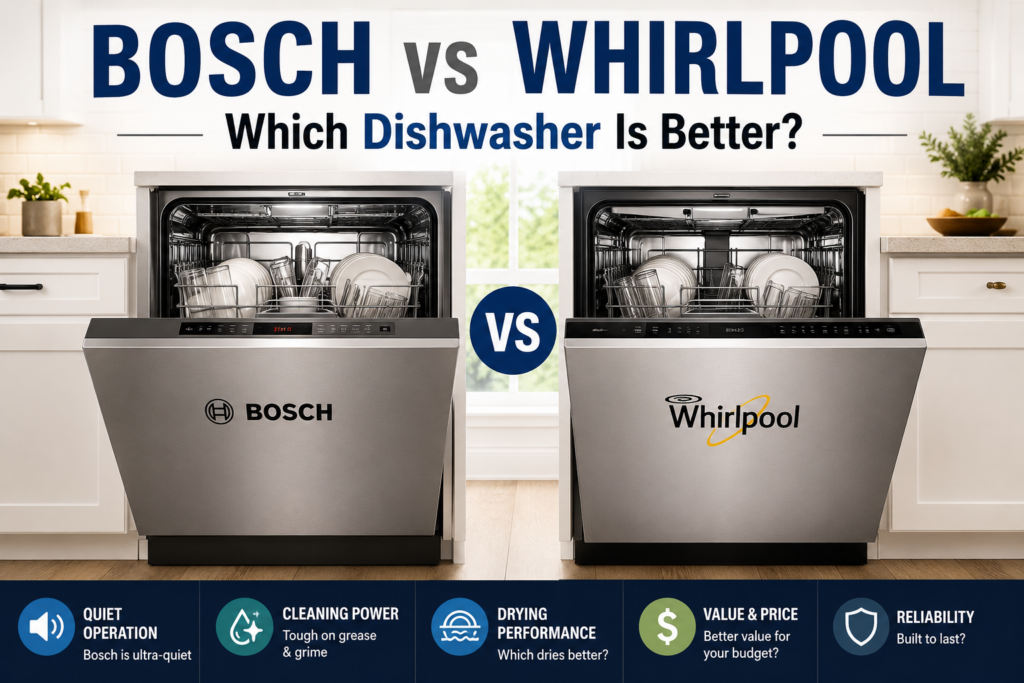
Alt Text: Side-by-side Bosch and Whirlpool dishwashers installed in a bright modern American kitchen.
Cleaning Performance in Real Daily Use
The biggest reason people replace an older dishwasher isn’t because it stops working—it’s because it no longer cleans consistently.
Bosch has earned a strong reputation for producing exceptionally clean results, especially when dealing with baked-on food residue, glassware, and mixed loads. Modern Bosch dishwashers rely on precision spray arms, efficient water circulation, and intelligent sensors that adjust each cycle based on how dirty the dishes actually are.
Whirlpool takes a slightly different approach. Rather than emphasizing ultra-premium engineering, many Whirlpool models use targeted spray zones and heated wash cycles that perform especially well with pots, pans, and heavier cookware.
In real kitchens, both brands clean exceptionally well when loaded correctly and used with quality detergent.
The difference is usually consistency rather than capability. Bosch tends to produce more uniform cleaning across every rack, while Whirlpool often excels when handling heavily soiled everyday cookware.
Which Brand Dries Better?
Drying performance is one area where shoppers often notice meaningful differences.
Plastic containers remain challenging for nearly every dishwasher because plastic doesn’t retain heat like ceramic or glass. However, Bosch has invested heavily in drying technology.
Premium Bosch models equipped with CrystalDry use natural mineral technology that improves moisture removal without relying on a traditional exposed heating element.
Whirlpool instead relies on heated drying systems found in many American-style dishwashers.
For families who regularly wash plastic lunch containers, reusable storage bins, and children’s dishes, Bosch often leaves fewer water droplets behind after the cycle finishes.
For households primarily washing plates, bowls, mugs, and stainless cookware, Whirlpool’s drying performance is more than adequate.
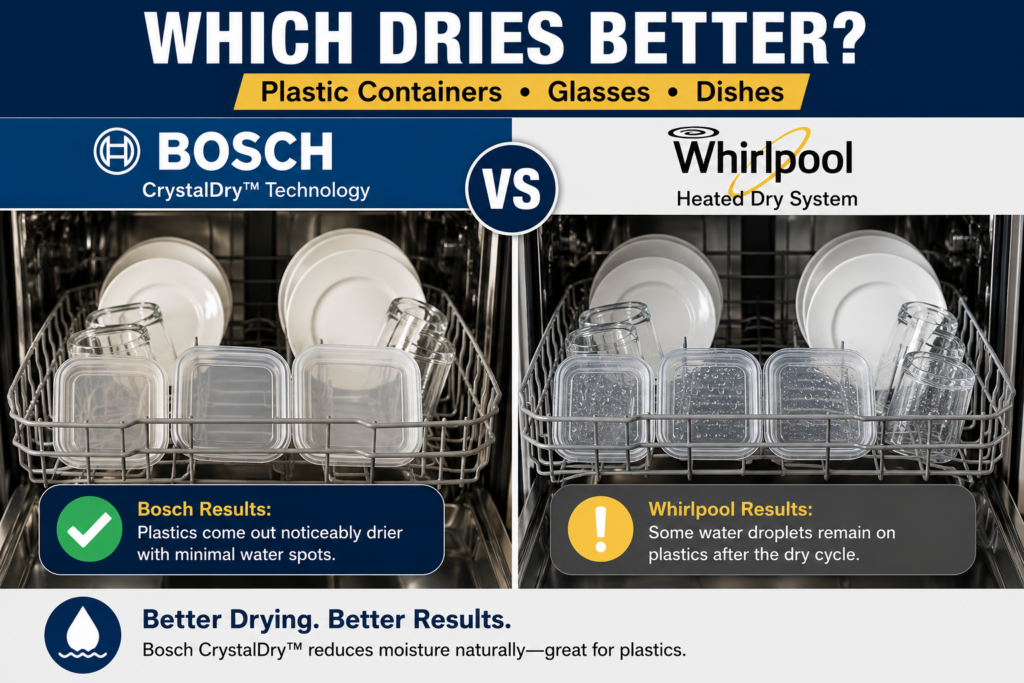
Alt Text: Freshly washed dishes drying inside two dishwasher interiors with different rack layouts and drying systems.
Noise Levels Matter More Than Many Buyers Expect
Dishwasher noise rarely feels important until you own one.
Open-concept homes have become increasingly common throughout the United States, making quiet appliances more valuable than ever.
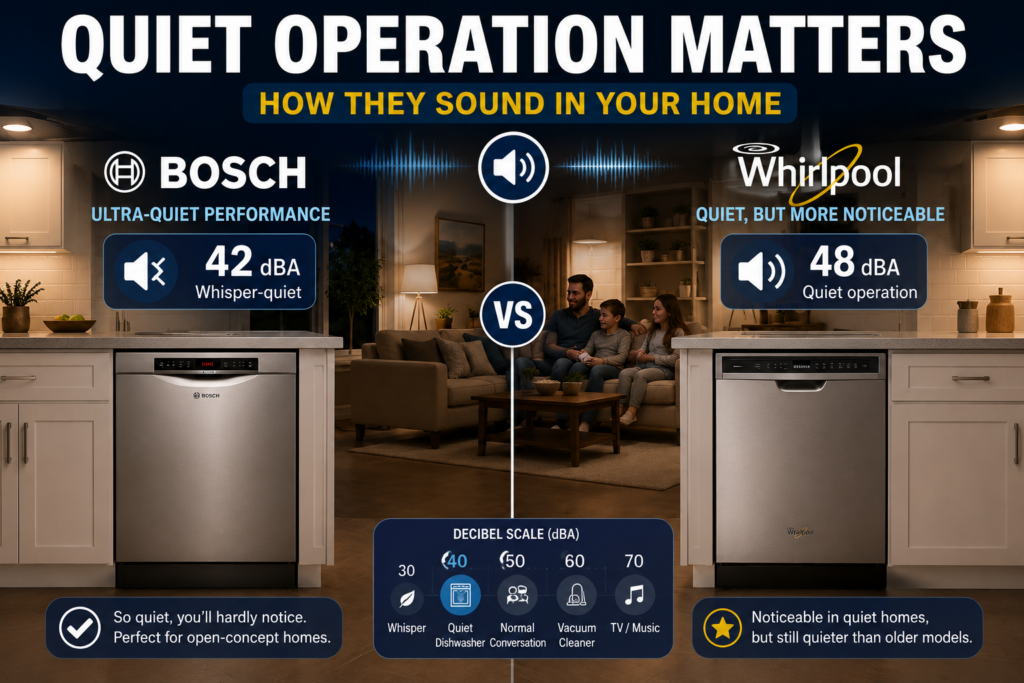
Bosch has long been considered one of the quietest dishwasher manufacturers available.
Many models operate below 45 decibels, making them difficult to hear from an adjacent room.
That makes a noticeable difference if you:
- Run the dishwasher overnight
- Watch television near the kitchen
- Work from home
- Have an open kitchen connected to the living room
Whirlpool also offers quiet models, but entry-level units generally produce more noticeable operating sounds.
For homeowners replacing an older, louder dishwasher, either brand may feel like a significant improvement, though Bosch maintains the advantage in overall sound reduction.
Interior Design and Loading Flexibility
Daily convenience often comes down to how easily dishes fit inside the machine.
Bosch is known for flexible third racks, adjustable upper racks, foldable tines, and efficient space utilization. These features make loading awkward utensils, serving spoons, measuring cups, and small bowls easier.
Whirlpool emphasizes straightforward organization rather than maximum customization.
Its rack layouts are intuitive, making them simple for families who don’t want to spend time adjusting shelves before every cycle.
Neither approach is objectively better.
People who enjoy organizing loads efficiently often appreciate Bosch’s flexibility, while households that simply want to load dishes quickly may prefer Whirlpool’s uncomplicated layout.
Alt Text: Different dishwasher rack configurations showing cookware, plates, glasses, and utensils arranged for everyday family use.
Long-Term Reliability and Maintenance
No dishwasher lasts forever, but reliability is one of the biggest ownership costs over time.
Bosch has consistently maintained a strong reputation for dependable performance when routine maintenance is performed. Cleaning the filter regularly and keeping spray arms clear helps maintain optimal results.
Whirlpool also performs well over many years, particularly because replacement parts are widely available throughout the United States.
Service availability is another practical consideration.
Because Whirlpool has a large nationwide service network, homeowners in smaller cities may find repairs slightly easier and less expensive.
Bosch repairs can sometimes cost more depending on model complexity and local technician availability.
However, neither brand experiences widespread reliability concerns when properly maintained.
Typical Price Comparison
| Model Type | Bosch | Whirlpool |
|---|---|---|
| Entry-Level | $650–$900 | $500–$750 |
| Mid-Range | $900–$1,200 | $700–$1,000 |
| Premium | $1,200–$1,800+ | $1,000–$1,500 |
Purchase price tells only part of the story.
Bosch often costs more upfront but may appeal to buyers who prioritize quiet operation, premium features, and refined design.
Whirlpool generally delivers a lower initial investment while still offering dependable everyday performance.
Depending on local utility rates and usage habits, the difference in annual operating costs between similarly rated Energy Star models is typically modest.
계속
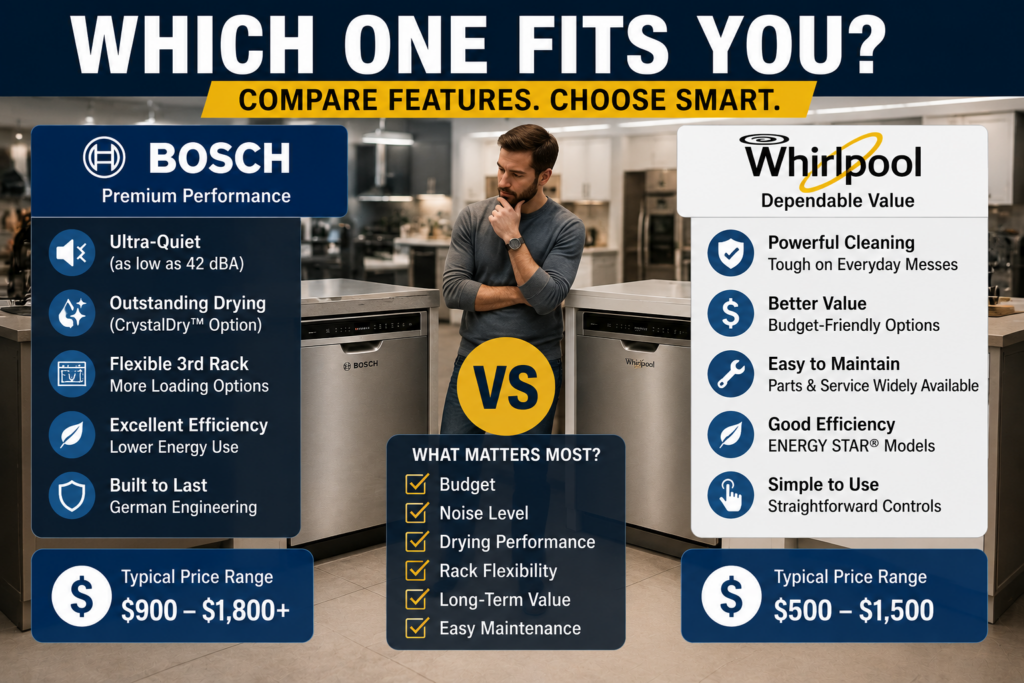
Alt Text: Homeowner choosing between Bosch and Whirlpool dishwashers while comparing features and price tags in a retail showroom.
Winner by Category
Choosing a winner depends on what matters most in your kitchen rather than selecting one brand across every category.
| Category | Winner |
|---|---|
| Quiet Operation | Bosch |
| Drying Performance | Bosch |
| Cleaning Tough Food | Tie |
| Budget Value | Whirlpool |
| Easy Maintenance | Whirlpool |
| Rack Flexibility | Bosch |
| Repair Affordability | Whirlpool |
| Premium Features | Bosch |
| First-Time Buyers | Whirlpool |
| Open-Concept Homes | Bosch |
Instead of asking which brand is universally better, think about which strengths align with how your household actually uses a dishwasher. A family that runs one cycle every evening may value different features than someone washing multiple loads every day.
Who Should Buy Each Brand?
Choose Bosch if:
- You want one of the quietest dishwashers available.
- Your kitchen is open to the living or dining area.
- Energy efficiency is a long-term priority.
- You frequently wash wine glasses, delicate dishes, or plastic containers.
- You’re comfortable paying more upfront for premium features.
Choose Whirlpool if:
- You’re working within a tighter renovation budget.
- You want dependable daily cleaning without paying for premium extras.
- Easy access to replacement parts and local service is important.
- You prefer familiar controls and simple cycle selection.
- You need a reliable family dishwasher with a lower purchase price.

Alt Text: Family kitchen after dinner with a loaded dishwasher ready to start the evening wash cycle.
Overall Recommendation
For shoppers looking for the best overall ownership experience, Bosch earns the edge thanks to its exceptionally quiet operation, flexible interior design, and premium drying technology. Those advantages become more noticeable over years of daily use, especially in open-concept homes where appliance noise can be distracting.
Whirlpool, however, remains one of the strongest values in the American dishwasher market. It delivers dependable cleaning, practical features, and typically lower purchase and repair costs. Many households simply don’t need the extra refinement Bosch provides.
Rather than paying more for features you’ll rarely notice, consider how your family uses a dishwasher every day. The better choice is the one that fits your kitchen, budget, and expectations—not necessarily the one with the longest feature list.
Comparison Summary
Bosch stands out for buyers who prioritize quiet performance, premium engineering, flexible loading options, and excellent drying results. It’s particularly well suited to homeowners planning to keep their dishwasher for many years and who value a quieter kitchen environment.
Whirlpool shines as a practical, cost-effective option that offers reliable cleaning, simple operation, and easier access to parts and service. For many families, it delivers everything needed for everyday dishwashing without stretching the budget.
Frequently Asked Questions
Is Bosch more reliable than Whirlpool?
Both brands have strong reputations for reliability when maintained properly. Bosch is often praised for long-term build quality, while Whirlpool benefits from a broad service network and widely available replacement parts.
Which dishwasher is quieter?
Bosch is generally quieter across its lineup. Many models operate below 45 dBA, making them ideal for open kitchens or households that run the dishwasher overnight.
Does Bosch clean better than Whirlpool?
Both clean exceptionally well. Bosch tends to provide more consistent results across mixed loads, while Whirlpool performs especially well with heavily soiled cookware and everyday dishes.
Are Bosch dishwashers more expensive to repair?
In many areas, yes. Bosch replacement parts and specialized service can cost more than comparable Whirlpool repairs, although actual costs depend on the model and local technician availability.
Everyday Dishwasher Buying Checklist
Before making your final decision, work through these steps:
- Measure your cabinet opening carefully and verify the dishwasher dimensions before ordering.
- Think about when you usually run the dishwasher. If it often runs at night or during family activities, prioritize a quieter model.
- Compare rack layouts using the dishes and cookware you use most often rather than focusing only on advertised capacity.
- Check the availability of authorized service providers in your local area before purchasing.
- Estimate both the purchase price and the long-term ownership costs, including detergent, maintenance, and potential repairs.
- Choose the model that best matches your daily routine instead of paying extra for features you are unlikely to use.
Related Reading:
• Top-Control vs. Front-Control Dishwashers: Which Is Better for Convenience and Cleaning Performance?
• Samsung vs KitchenAid Dishwashers: Which Cleans Better?
• Why Is My Dishwasher Not Draining? Common Causes and Easy Fixes
• Why Does My Dishwasher Leave a White Film on Glasses? How to Fix Hard Water Stains for Good