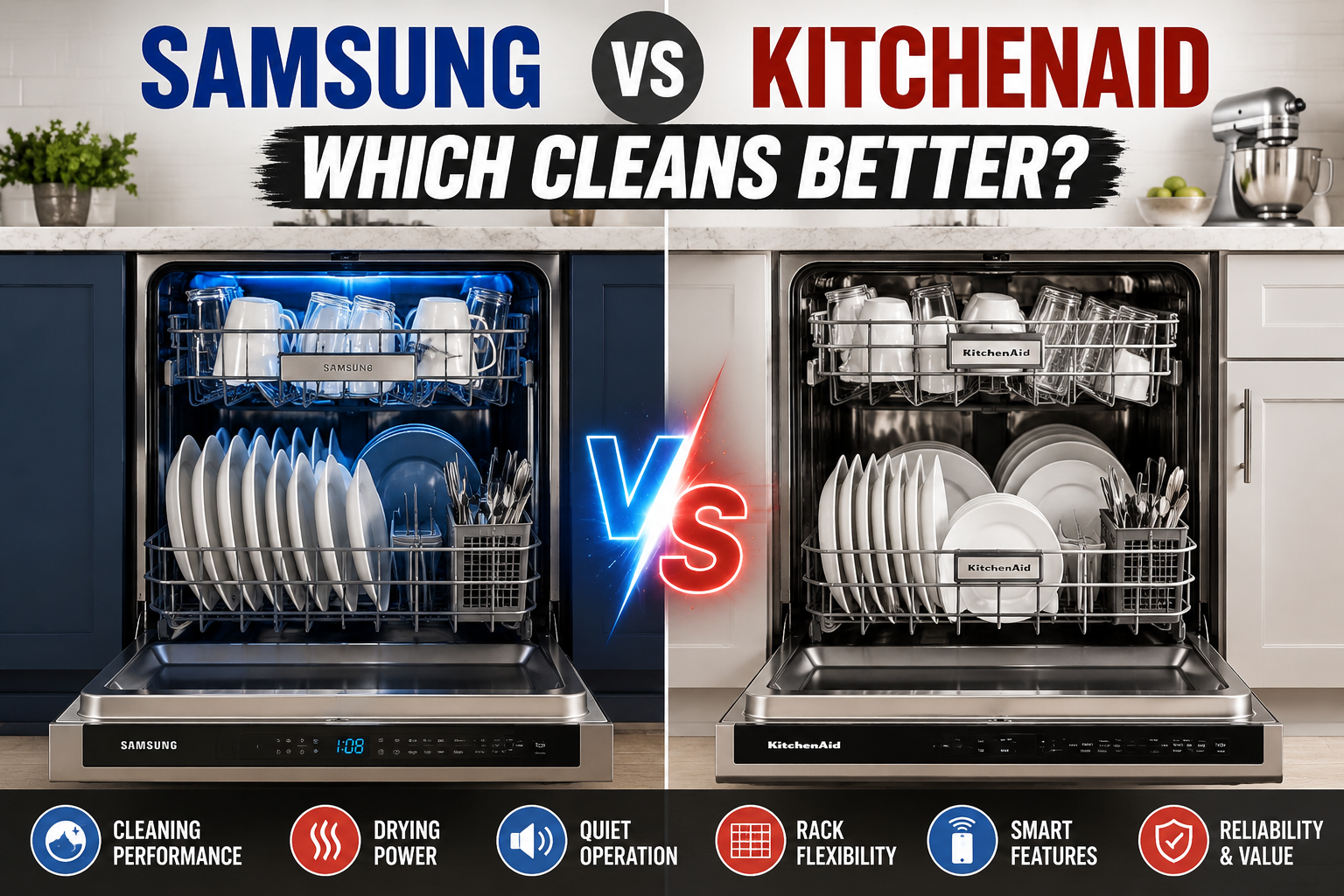
Samsung vs KitchenAid Dishwashers: Which Cleans Better?
Find out whether Samsung or KitchenAid offers the better dishwasher for your kitchen. This comparison looks beyond marketing claims to evaluate real-world cleaning performance, drying ability, reliability, noise levels, ownership costs, and overall value for American families. Whether you’re replacing an aging dishwasher or remodeling your kitchen, understanding the strengths of each brand will help you make a smarter purchase.
Samsung vs KitchenAid dishwashers both deliver excellent cleaning, but they excel in different areas. KitchenAid generally performs better on heavily soiled cookware thanks to its powerful wash system, while Samsung offers strong everyday cleaning, modern smart features, and competitive pricing. The better choice depends on your cooking habits, budget, and preferred features.
Quick Answer
KitchenAid is the better choice if your priority is maximum cleaning power for pots, pans, and baked-on food. Samsung performs exceptionally well for everyday dishes, operates quietly on many models, and usually costs less. Most average households will be satisfied with either brand, but frequent home cooks may appreciate KitchenAid’s stronger wash performance.
| Feature | Samsung | KitchenAid |
|---|---|---|
| Cleaning Performance | Excellent | Excellent+ |
| Drying Performance | Very Good | Excellent |
| Heavy Cookware Cleaning | Very Good | Excellent |
| Noise Level | Very Good | Very Good |
| Smart Features | Excellent | Good |
| Third Rack | Available on many models | Larger and more versatile |
| Reliability | Very Good | Excellent |
| Best For | Tech-focused families | Serious home cooks |
Typical Price Comparison
- Samsung Entry Models: $500–$700
- Samsung Mid-Range: $700–$950
- Samsung Premium Models: $950–$1,300
- KitchenAid Entry Models: $800–$1,000
- KitchenAid Mid-Range: $1,000–$1,300
- KitchenAid Premium Models: $1,300–$1,700
KitchenAid typically costs more, although seasonal sales often narrow the gap.

Alt Text: Samsung and KitchenAid dishwashers displayed side by side in a bright American kitchen.
Cleaning Results in Everyday Use
For daily loads of plates, glasses, bowls, and silverware, both brands perform exceptionally well when the dishwasher is loaded correctly and quality detergent is used.
Samsung emphasizes multiple spray zones, sensor-controlled wash cycles, and efficient water usage. Most food residue—including dried sauces, cereal, and greasy dinner plates—is removed without requiring pre-rinsing.
KitchenAid approaches cleaning differently. Instead of relying primarily on optimized water distribution, many models deliver stronger wash pressure and targeted spray coverage that helps remove stubborn food baked onto cookware.
Families that mostly wash everyday dishes may notice little practical difference between the two.
However, households that frequently prepare large dinners, casseroles, or roasted meals often find KitchenAid slightly more effective on difficult loads.

Alt Text: Dirty casserole dishes compared with spotless cookware after a KitchenAid dishwasher cycle.
Which Brand Handles Tough Messes Better?
One area where KitchenAid often earns praise is its ability to clean cookware without soaking.
Large stockpots, baking trays, roasting pans, and mixing bowls benefit from the stronger spray system found in many KitchenAid models.
Samsung also performs well but may occasionally require heavier cookware to be positioned more carefully for the best results.
If your dishwasher mainly handles coffee mugs, breakfast dishes, lunch containers, and dinner plates, Samsung easily keeps up.
If your kitchen regularly produces heavily baked dishes, KitchenAid has a noticeable advantage.
Drying Performance
Cleaning is only half the job.
Nobody wants to unload dishes that still need towel drying.
KitchenAid generally produces drier dishes thanks to its heated drying system and effective airflow design. Glasses, ceramic plates, and stainless-steel cookware usually come out cabinet-ready.
Samsung has improved drying considerably in recent generations. Most dishes dry well, although lightweight plastics may occasionally retain small water droplets at the end of a cycle.
For families using reusable food containers every day, KitchenAid may reduce the amount of manual drying required.

Alt Text: Plastic food containers and glassware completely dry after a dishwasher cycle.
Smart Features and Everyday Convenience
Samsung has invested heavily in connected-home technology.
Many models support Wi-Fi connectivity through the SmartThings app, allowing owners to:
- Monitor wash progress
- Receive cycle notifications
- Download software updates
- Run diagnostics remotely
- Start compatible cycles from a smartphone
KitchenAid offers smart features on select models, but its primary focus remains washing performance and interior flexibility rather than app-based controls.
If smart-home integration matters, Samsung clearly provides the stronger ecosystem.
Interior Design and Loading Flexibility
KitchenAid offers one of the most practical third racks available.
Its spacious upper rack accommodates serving utensils, measuring cups, cereal bowls, and even small mugs, freeing valuable room below.
Samsung also provides adjustable racks and fold-down tines on many models, making it easy to fit taller pots or oversized dinner plates.
Neither design is objectively better—they simply prioritize different loading styles.
Families that entertain frequently may appreciate KitchenAid’s higher usable capacity, while Samsung’s adjustable layout works well for mixed daily loads.

Alt Text: Interior rack comparison highlighting Samsung adjustable racks and KitchenAid spacious third rack.
Noise Levels
Modern dishwashers have become dramatically quieter than older machines.
Many Samsung models operate between 42 and 48 dBA, while many KitchenAid models range between 39 and 46 dBA.
In practical use, both brands are quiet enough for open-concept homes, evening television, or working from home.
Unless you’re shopping specifically for one of the quietest dishwashers on the market, noise should not be the deciding factor between these two brands.
Reliability and Long-Term Ownership
KitchenAid has built a strong reputation for dependable long-term performance and durable wash systems.
Samsung has improved reliability significantly over the past several product generations, though some buyers still prioritize KitchenAid because of its longer reputation in the premium dishwasher segment.
Routine maintenance remains nearly identical for both brands:
- Clean the filter every few weeks.
- Inspect spray arms regularly.
- Use dishwasher cleaner monthly.
- Refill rinse aid as recommended.
- Avoid overloading the racks.
Regular maintenance often has a greater impact on cleaning performance than the brand itself.
Winner by Category
| Category | Winner |
|---|---|
| Everyday Cleaning | Tie |
| Heavy Cookware | KitchenAid |
| Drying Performance | KitchenAid |
| Smart Features | Samsung |
| Quiet Operation | Tie |
| Rack Flexibility | KitchenAid |
| Value for Money | Samsung |
| Long-Term Reliability | KitchenAid |
No single dishwasher wins every category.
KitchenAid consistently performs best when washing difficult cookware and delivering dry dishes at the end of each cycle.
Samsung counters with better smart-home integration and lower purchase prices, making it attractive for buyers who want premium features without entering the highest price tier.

Alt Text: Family choosing between Samsung and KitchenAid dishwashers in a modern appliance showroom.
Who Should Buy Samsung?
Samsung is an excellent fit if you:
- Prefer Wi-Fi connectivity and smartphone controls.
- Want premium features without paying premium-brand pricing.
- Mostly wash everyday dishes rather than heavily soiled cookware.
- Appreciate sleek modern styling that matches Samsung kitchen packages.
- Value technology and convenience features.
Who Should Buy KitchenAid?
KitchenAid is the better option if you:
- Cook at home several nights each week.
- Regularly wash baking dishes, pots, and roasting pans.
- Want stronger drying performance.
- Prefer maximizing loading capacity.
- Plan to keep the dishwasher for many years.
Overall Recommendation
For most American families, both dishwashers provide excellent cleaning performance, and neither choice is likely to disappoint when properly loaded and maintained.
Best Overall: KitchenAid
KitchenAid earns the overall recommendation because of its consistently strong cleaning performance, excellent drying results, durable construction, and flexible interior design. It is especially well suited for busy households that cook frequently.
Best Value: Samsung
Samsung offers outstanding value by combining reliable everyday cleaning with advanced smart features at a lower average purchase price. It is an excellent choice for families that want modern convenience while staying within a moderate budget.
Comparison Summary
Samsung and KitchenAid approach dishwasher design differently.
KitchenAid prioritizes washing power, drying performance, and interior flexibility, making it ideal for households that cook often and clean challenging loads.
Samsung focuses on balancing solid cleaning results with smart technology, attractive design, and competitive pricing. For many homeowners, those advantages outweigh the small differences in heavy-duty cleaning performance.
If your biggest concern is removing baked-on food with minimal effort, KitchenAid has the edge.
If you’re looking for excellent everyday performance with connected-home features and better overall value, Samsung is the stronger buy.
Frequently Asked Questions
Is KitchenAid better than Samsung for cleaning dishes?
KitchenAid generally performs better on heavily soiled cookware because of its stronger wash system. For everyday dishes, glasses, and utensils, both brands provide excellent cleaning results.
Which dishwasher dries plastic containers better?
KitchenAid typically leaves fewer water droplets on plastic containers thanks to its heated drying system. Samsung has improved drying performance, but lightweight plastics may still need occasional towel drying.
Are Samsung dishwashers reliable?
Modern Samsung dishwashers have become more reliable than earlier generations. With proper maintenance, many owners experience years of dependable performance, though KitchenAid still has a stronger long-term reputation.
Which brand is quieter?
Both brands offer quiet models suitable for open-concept homes. Most homeowners are unlikely to notice a meaningful difference during normal operation.
Dishwasher Buying Checklist
Before making your final decision, ask yourself:
- Do I frequently wash pots, casserole dishes, and baking trays?
- Do I want built-in Wi-Fi and smartphone controls?
- Is drying plastic containers important for my household?
- Am I willing to spend more for premium cleaning performance?
- Will this dishwasher be used once a day or multiple times daily?
- Which interior rack layout better matches the dishes I use most often?
Related Reading:
• Why Is My Dishwasher Not Draining? Common Causes and Easy Fixes
• Why Does My Dishwasher Leave a White Film on Glasses? How to Fix Hard Water Stains for Good