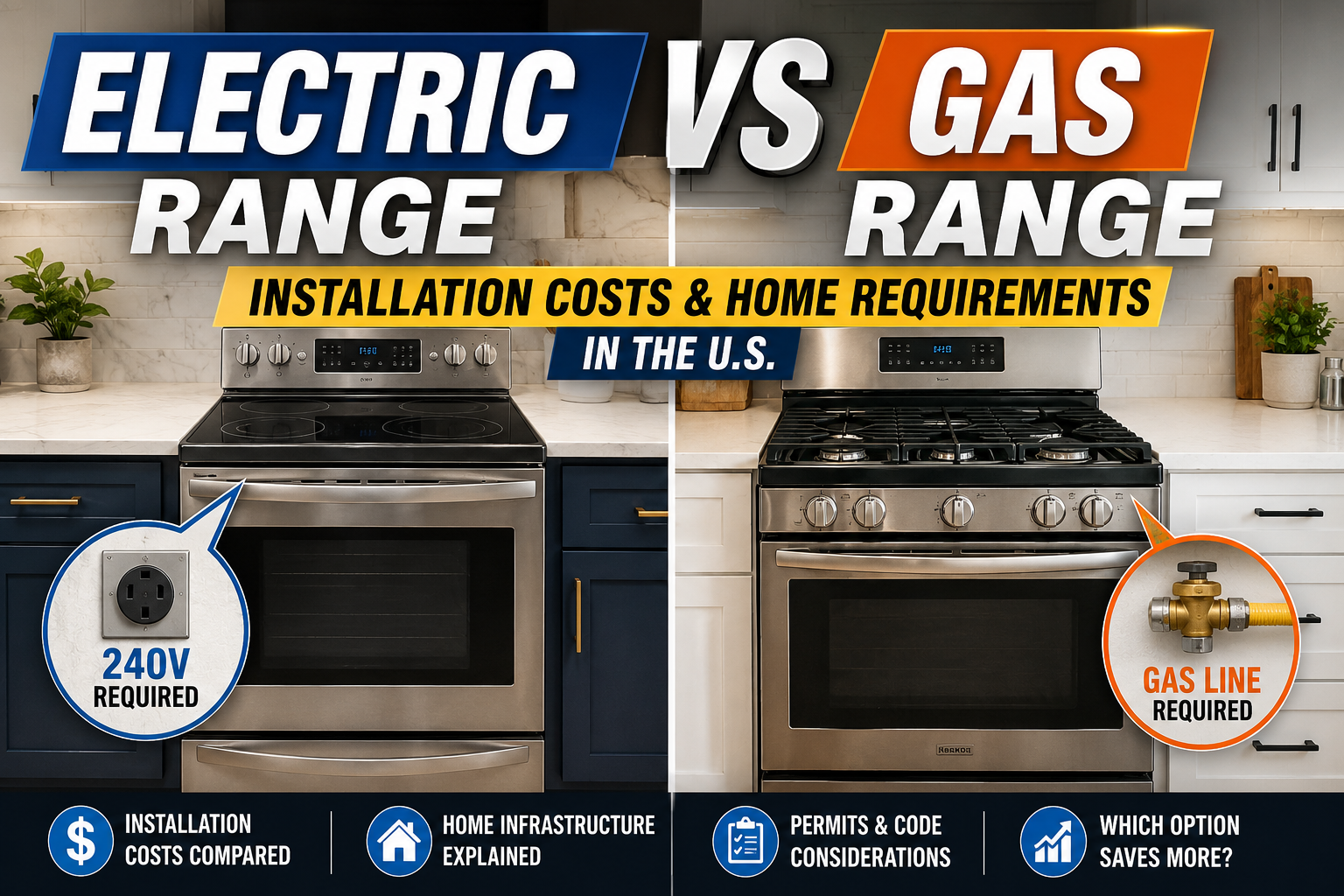
Choosing between an electric range and a gas range involves more than cooking performance. For many U.S. homeowners, the real deciding factor is whether the home already has the right infrastructure. Adding a new gas line or upgrading an electrical panel can increase installation costs far beyond the appliance’s purchase price.
Understanding the differences before buying can help you avoid unexpected expenses and choose the option that fits both your cooking style and your home’s existing setup.
Quick Answer
For most U.S. homeowners, an electric range is typically less expensive to install if the home already has a 240-volt outlet, while a gas range is often the better choice only if an existing gas line is already available. If major electrical upgrades or new gas piping are required, installation costs can easily exceed several hundred or even several thousand dollars.
Comparison Table
| Feature | Electric Range | Gas Range |
|---|---|---|
| Typical Appliance Price | $500–$2,500 | $600–$3,000 |
| Installation Difficulty | Usually easier | Depends on gas availability |
| Power Requirement | 240V dedicated circuit | Standard outlet plus gas connection |
| Gas Line Needed | No | Yes |
| Electrical Upgrade Risk | Moderate | Low |
| Cooking Heat Response | Slower than gas | Very fast |
| Power Outage Cooking | Usually unavailable | Some burners may still ignite manually |
| Best For | Homes with existing 240V outlet | Homes already connected to natural gas |
Typical Price Comparison
| Installation Item | Electric | Gas |
|---|---|---|
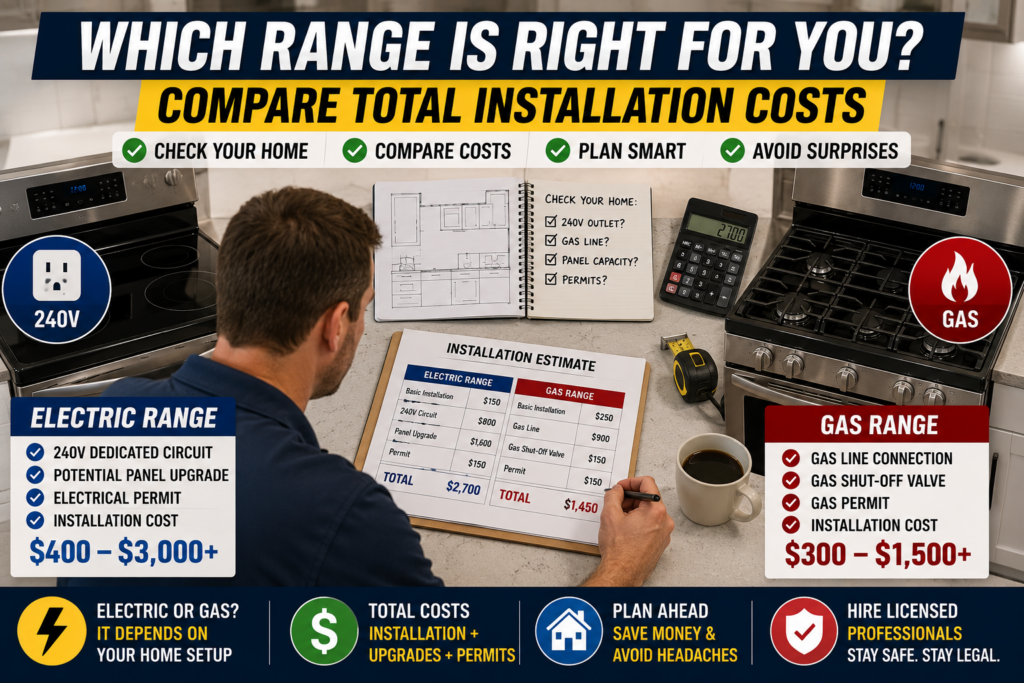
| Basic Installation | $100–$300 | $150–$400 |
| New 240V Circuit | $400–$1,200 | Not needed |
| Electrical Panel Upgrade | $1,000–$3,000+ | Rarely needed |
| New Gas Line Installation | Not needed | $300–$1,500+ |
| Gas Shut-Off Valve Installation | Not needed | $100–$300 |
Prices vary depending on location, labor rates, permit requirements, and the age of the home.
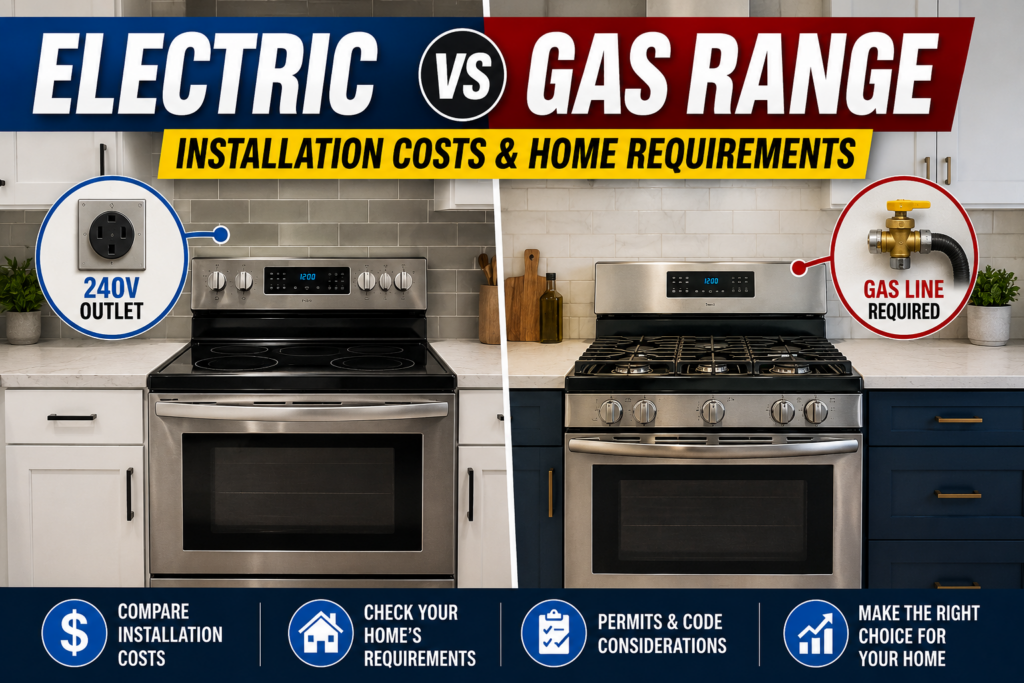
Alt Text:
Electric and gas ranges installed side by side in a modern American kitchen for comparison.
The Biggest Cost Isn’t Always the Appliance
Many homeowners compare only appliance prices. However, installation costs often determine which option becomes more affordable.
For example, buying a $700 gas range may seem like a bargain until you discover your kitchen has no natural gas connection. Installing a gas line through finished walls can quickly become the most expensive part of the project.
Likewise, purchasing an electric range for an older home without a proper 240-volt circuit may require significant electrical work before installation is even possible.
Before shopping, inspect what your kitchen already provides.
Understanding Your Home’s Existing Infrastructure
The easiest installation happens when your replacement appliance matches your current setup.
If your existing stove is electric, your kitchen likely already includes:
- A dedicated 240-volt outlet
- Appropriate wiring
- Correct breaker size
If replacing a gas range, you’ll usually find:
- Existing natural gas piping
- Gas shut-off valve
- Standard 120-volt outlet for ignition and controls
Changing fuel types almost always increases installation costs.
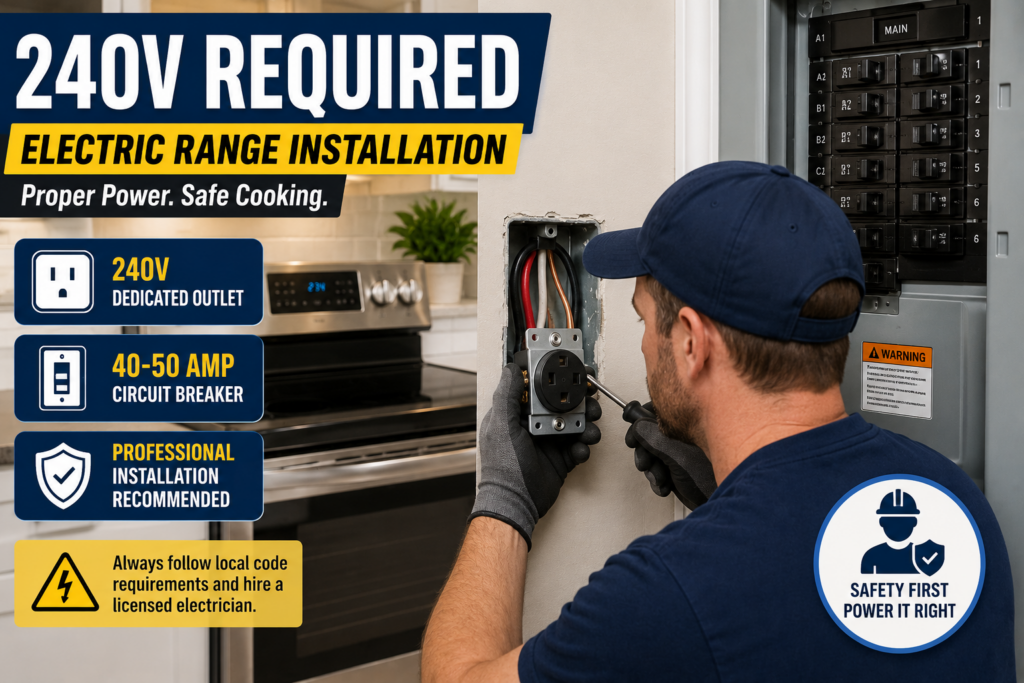
Alt Text:
A licensed electrician inspecting a 240-volt outlet behind an electric range.
Electric Range Installation Requirements
Electric ranges require more electrical power than standard kitchen appliances.
Most full-size models use:
- 240-volt dedicated circuit
- 40- or 50-amp breaker
- Four-prong outlet in newer homes
Older homes built decades ago sometimes still use three-prong outlets. While existing installations may remain legal under certain conditions, upgrading to modern wiring is often recommended when replacing appliances.
If your electrical panel has no available capacity, additional upgrades may be necessary.
These upgrades often include:
Installing a New Dedicated Circuit
Running new wiring from the electrical panel to the kitchen is one of the most common installation expenses.
Costs generally increase when:
- The electrical panel is far from the kitchen
- Walls require extensive cutting and repair
- Finished basements or crawl spaces are difficult to access
Upgrading the Electrical Panel
Older American homes with 100-amp service sometimes struggle to support newer electric appliances.
Adding an electric range alongside EV chargers, heat pumps, or electric dryers may require upgrading to a 200-amp service.
While this is a significant investment, many homeowners complete the upgrade as part of a broader home modernization project.
Gas Range Installation Requirements
Gas ranges need two separate connections:
- Natural gas supply
- Standard 120-volt outlet for ignition, oven controls, and lighting
If your kitchen already has a gas hookup, installation is often straightforward.
The challenge begins when no gas line exists.
Running new gas piping may involve:
- Opening walls
- Drilling through framing
- Extending existing gas distribution
- Pressure testing
- Permit inspections
The longer the distance from the gas meter, the higher the installation cost generally becomes.
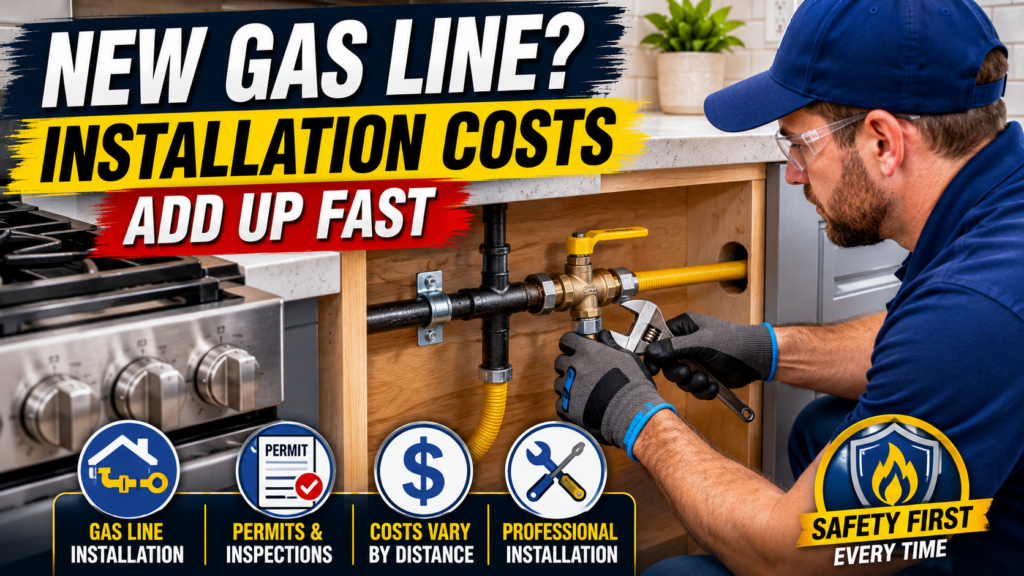
Alt Text:
New natural gas line being installed for a residential kitchen range.
Which Homes Usually Favor Electric?
Electric ranges tend to make more sense when:
- The home already has a modern 240-volt outlet.
- There is no natural gas service available.
- The homeowner wants a simpler installation.
- Future renovations include more all-electric appliances.
New construction in some regions is also shifting toward all-electric designs because they simplify infrastructure planning and can align with local energy policies.
When Gas Is Often the Better Choice
Gas ranges can be the practical option if:
- Your home already has natural gas service.
- An existing gas range is being replaced.
- You prefer instant flame control while cooking.
- Utility costs in your area make natural gas economical.
For these homes, installation may require little more than connecting the appliance, checking for leaks, and confirming safe operation.
Alt Text:
Homeowner comparing electrical panel capacity and natural gas connection before buying a kitchen range.
Safety and Permit Considerations
Whether you’re installing an electric or gas range, local building codes matter.
Many municipalities require permits for:
- New gas line installations
- Electrical panel upgrades
- New high-amperage circuits
Hiring licensed professionals helps ensure the installation meets code requirements and protects your homeowner’s insurance coverage.
Gas appliances should always be tested for leaks before use, while electric installations should be verified for proper voltage and grounding.
Can You Install Either Type Yourself?
Simple replacements may appear easy, but the answer depends on the project.
Electric Range
Replacing an existing electric range using the same outlet is relatively straightforward for experienced homeowners. However, installing new wiring, replacing breakers, or modifying electrical panels should always be handled by a licensed electrician.
Gas Range
Connecting a gas appliance involves more than attaching a flexible connector. Even a small gas leak can become dangerous. In most cases, professional installation is the safest option.
If your project includes new gas piping, permits and inspections are typically required.
Long-Term Ownership Costs
Installation is only one part of ownership.
Electric ranges generally have fewer fuel-related maintenance concerns because there are no burners, gas valves, or fuel connections to inspect.
Gas ranges may require occasional maintenance of burner ports, igniters, and gas connections, although these costs are usually modest.
Utility bills also vary by region. In some parts of the United States, natural gas remains less expensive than electricity. In other areas, efficient electric cooking may offer comparable operating costs.
Instead of focusing only on monthly utility bills, consider the total cost of ownership over the next 10 to 15 years.
Alt Text:
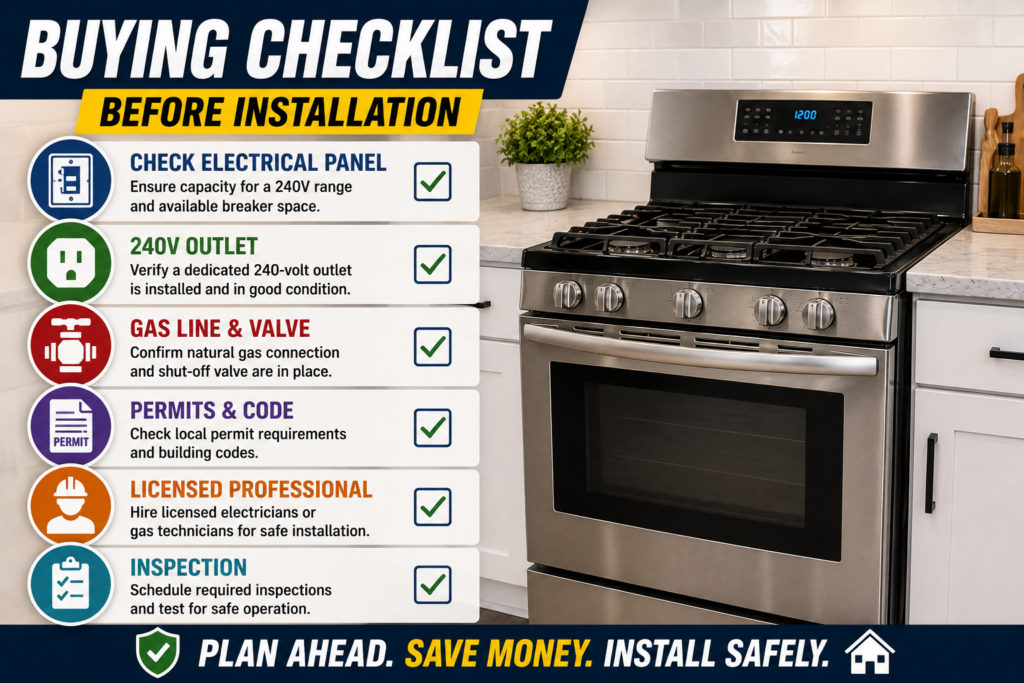
Checklist showing electric outlet, gas valve, permits, and installation planning before purchasing a range.
Winner by Category
| Category | Winner |
|---|---|
| Lowest Installation Cost (Existing Infrastructure) | Tie |
| Simplest Installation | Electric Range |
| Fastest Temperature Control | Gas Range |
| Homes Without Gas Service | Electric Range |
| Existing Gas Homes | Gas Range |
| Future Electrification Projects | Electric Range |
| Cooking Precision | Gas Range |
Who Should Buy Each Type?
Choose an Electric Range If:
- Your kitchen already has a 240-volt outlet.
- You want a simpler installation.
- Your home doesn’t have natural gas service.
- You’re planning to electrify more appliances in the future.
Choose a Gas Range If:
- Your home already has a gas line.
- You cook frequently and prefer instant flame adjustment.
- Installation requires minimal infrastructure changes.
- Natural gas prices are favorable in your area.
Overall Recommendation
Neither electric nor gas ranges are universally better. The smartest choice depends on your home’s existing infrastructure rather than cooking preferences alone.
If your kitchen is already equipped for electric service, staying electric often avoids expensive gas-line installation. Likewise, replacing an existing gas range with another gas model is frequently the most cost-effective solution.
Before purchasing either appliance, verify your electrical service, gas availability, local code requirements, and installation costs. Spending a few minutes planning ahead can prevent costly surprises after delivery.
Comparison Summary
An electric range is generally the easier option for homes that already have a dedicated 240-volt circuit, while a gas range makes the most sense when a natural gas connection already exists. The appliance price is only part of the equation—installation, permits, and infrastructure upgrades can significantly affect the total project cost. Evaluating your home’s existing utilities before shopping is the best way to make a confident, budget-friendly decision.
Frequently Asked Questions
Is it expensive to switch from gas to electric?
It can be. If your home lacks a 240-volt circuit or needs an electrical panel upgrade, the total installation cost may exceed the price of the appliance itself.
Does every electric range require a 240-volt outlet?
Yes. Most full-size electric ranges sold in the U.S. require a dedicated 240-volt circuit with the correct breaker size.
Can I install a gas range where there has never been one?
Yes, but you’ll likely need a new gas line, shut-off valve, permits, and professional installation. Costs vary based on the distance from the existing gas supply.
Which is cheaper to operate?
That depends on local utility rates. In some regions natural gas costs less, while in others electricity is competitive. Checking local energy prices provides the most accurate comparison.
Buying Checklist
- Verify whether your kitchen already has a 240-volt outlet or a natural gas connection.
- Request installation estimates before purchasing a new range.
- Check if your electrical panel has enough capacity for an electric model.
- Confirm whether permits are required in your city or county.
- Compare the total installed cost instead of appliance prices alone.
- Hire licensed professionals for gas lines or major electrical upgrades.
Related Reading:
• Is It Bad to Leave a Microwave Plugged In All the Time?
• Why Does My Microwave Turn On But Not Heat? Common Causes, Easy Fixes, and When to Replace It