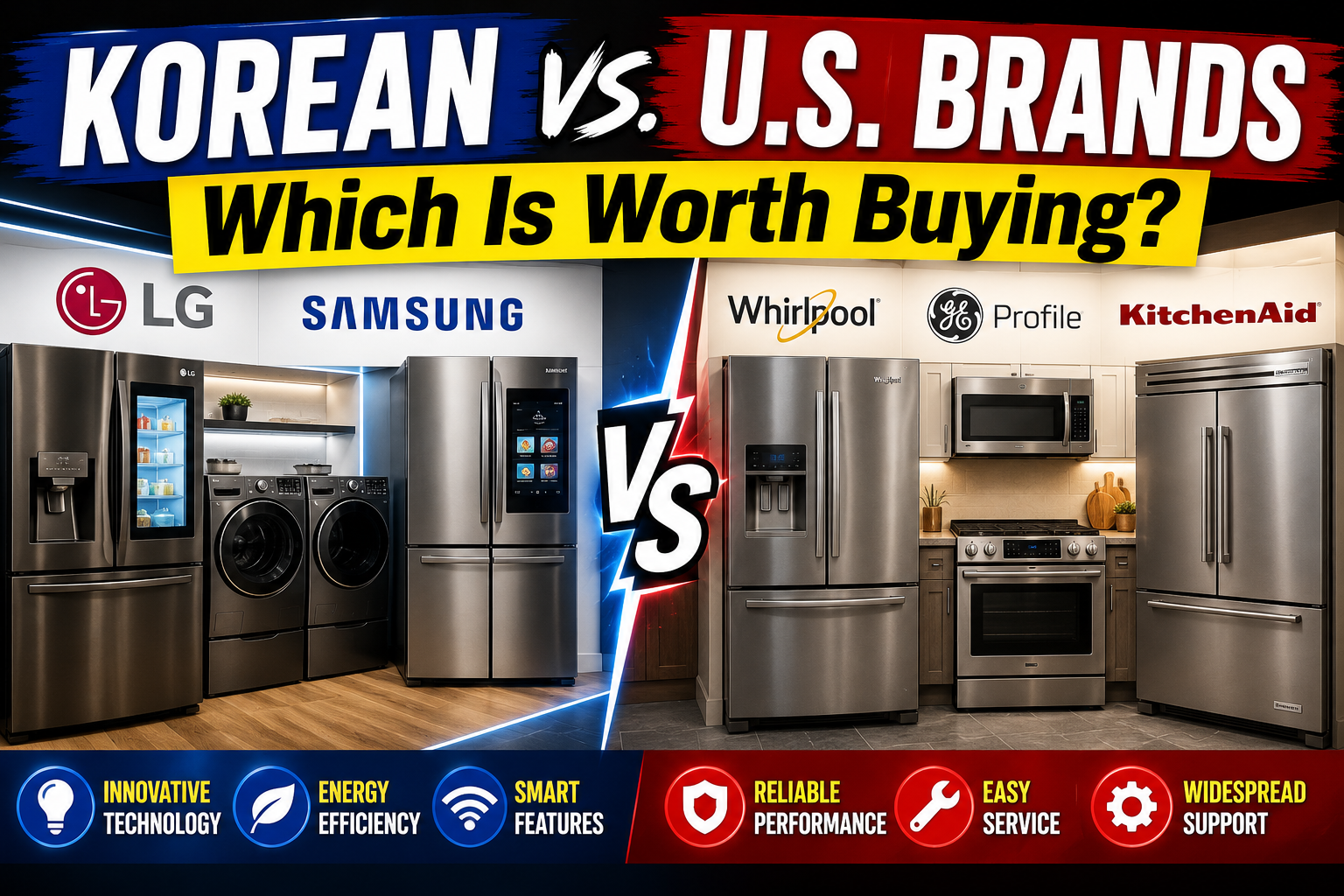
Wondering whether Korean appliances are a better investment than traditional American brands? You’re not alone. LG and Samsung have become two of the best-selling appliance manufacturers in the United States, competing directly with Whirlpool, GE Profile, Maytag, and KitchenAid. While Korean brands are known for innovative technology and sleek designs, U.S. brands continue to earn loyal customers through durability, service networks, and familiar ownership experiences.
For most American homeowners, Korean appliances are absolutely worth considering. LG consistently ranks among the strongest choices for reliability, energy efficiency, and innovation, while Samsung offers excellent smart-home features and modern styling. Traditional American brands like Whirlpool, GE Profile, and KitchenAid remain attractive for buyers who prioritize widespread service availability, simpler controls, and proven long-term ownership.
Quick Answer
LG and Samsung are excellent choices for American households, especially if you value energy efficiency, smart features, and contemporary design. LG generally competes with the most reliable premium brands, while Samsung offers strong value and technology. U.S. brands often have broader repair networks and simpler ownership, making them appealing for buyers focused on long-term service support.
| Category | Korean Brands (LG & Samsung) | U.S. Brands (Whirlpool, GE, KitchenAid, Maytag) |
|---|---|---|
| Innovation | Excellent | Very Good |
| Smart Features | Excellent | Good to Very Good |
| Energy Efficiency | Excellent | Very Good |
| Reliability | Very Good to Excellent | Very Good to Excellent |
| Service Availability | Very Good | Excellent |
| Design | Modern | Traditional to Modern |
| Best For | Technology-focused buyers | Long-term ownership |
Typical Price Comparison
- LG Refrigerators: $1,300–$4,000
- Samsung Refrigerators: $1,200–$4,200
- Whirlpool Refrigerators: $1,000–$3,500
- GE Profile Refrigerators: $1,600–$4,500
- KitchenAid Refrigerators: $2,000–$4,800
Pricing is similar across comparable product categories, with premium features having a greater impact on cost than the country of origin.

Alt Text: LG, Samsung, and leading American appliance brands displayed inside a modern appliance showroom.
Korean Appliances Have Become Mainstream in the U.S.
Twenty years ago, many American shoppers viewed Korean appliance brands as newcomers.
Today, that perception has changed dramatically.
LG and Samsung manufacture millions of appliances for North American customers, operate extensive U.S. service networks, and regularly appear among the country’s best-selling refrigerator, washer, dryer, and television brands.
Many models sold in America are also assembled in North American manufacturing facilities rather than being imported entirely from overseas.
For today’s buyer, the question is no longer whether Korean appliances are “good enough.”
Instead, it’s which brand best fits your lifestyle.
Innovation and Smart Technology
One area where Korean manufacturers consistently lead is innovation.
LG and Samsung often introduce new technologies before many competitors, including:
- AI-powered wash cycles
- Smart diagnostics
- Wi-Fi connectivity
- Mobile app controls
- Energy monitoring
- Voice assistant compatibility
- Advanced inverter compressors
Samsung’s SmartThings platform connects appliances with lighting, security devices, televisions, and smartphones, creating one of the most complete smart-home ecosystems available.
LG’s ThinQ platform focuses on predictive maintenance, remote control, energy management, and appliance diagnostics.
Many American brands have expanded their smart capabilities, but LG and Samsung generally remain ahead in connected-home functionality.

Alt Text: Smartphone controlling LG and Samsung smart appliances through connected home apps.
How Do They Compare in Reliability?
Reliability often matters more than feature lists.
LG has earned a strong reputation for dependable front-load washers, dryers, refrigerators, and kitchen appliances. Many homeowners choose LG because it balances modern technology with solid long-term performance.
Samsung has improved significantly over recent product generations. While older models occasionally faced criticism regarding certain components, many current appliances perform competitively with other major manufacturers when properly maintained.
Traditional American brands each have their own strengths:
- Whirlpool emphasizes simple, dependable designs.
- Maytag focuses on durability.
- KitchenAid targets premium kitchen performance.
- GE Profile blends innovation with broad service support.
No manufacturer is completely free from occasional repairs, making warranty coverage and local service availability just as important as brand reputation.

Alt Text: Appliance technician servicing refrigerators from multiple leading appliance brands.
Energy Efficiency and Operating Costs
Energy efficiency has become a major purchasing factor as utility costs continue to rise.
LG consistently performs well across Energy Star-certified appliances, particularly refrigerators, washing machines, and heat pump dryers.
Samsung also delivers impressive efficiency, especially in laundry appliances equipped with inverter motors and intelligent sensors that automatically adjust water and energy consumption.
Most premium American brands now offer comparable Energy Star models, meaning operating costs are often determined more by the individual appliance than the manufacturer itself.
Still, Korean brands frequently introduce efficiency improvements earlier than competitors, giving them a slight advantage in certain product categories.

Alt Text: Side-by-side comparison of a premium LG refrigerator and a Whirlpool refrigerator inside a modern American kitchen.
Service, Repairs, and Parts Availability
Buying an appliance isn’t only about how it performs on day one. It’s also about how easy it is to own over the next ten to fifteen years.
American brands generally maintain a slight advantage when it comes to nationwide service networks and replacement parts. Because Whirlpool, GE, Maytag, and KitchenAid have been established in the U.S. market for decades, finding authorized repair technicians is often straightforward, even in smaller cities.
LG has invested heavily in expanding its U.S. service infrastructure, and repair availability has improved considerably over the past several years.
Samsung also continues to grow its authorized service network, although repair experiences can vary depending on your location.
Before purchasing any appliance, it’s worth checking whether authorized service providers operate near your ZIP code. Excellent reliability becomes less valuable if qualified repairs aren’t easily available where you live.
Which Brand Offers Better Value?
Value isn’t simply about the lowest purchase price.
Instead, consider the total cost of ownership:
- Initial purchase price
- Expected lifespan
- Electricity and water usage
- Repair costs
- Warranty coverage
- Available features
LG frequently delivers one of the strongest value propositions by combining premium features with competitive pricing.
Samsung appeals to buyers who enjoy the latest technology without moving into luxury-brand pricing.
Whirlpool and GE often provide excellent long-term ownership value because of their extensive repair support and broad availability of replacement parts.
KitchenAid offers premium kitchen appliances for homeowners who prioritize cooking performance and upscale finishes.

Alt Text: American family comparing LG, Samsung, and U.S. appliances while shopping in a large appliance showroom.
Winner by Category
| Category | Winner |
|---|---|
| Smart Features | LG & Samsung |
| Energy Efficiency | LG |
| Design | Samsung |
| Service Network | U.S. Brands |
| Parts Availability | U.S. Brands |
| Laundry Appliances | LG |
| Kitchen Appliances | Tie |
| Overall Value | LG |
No single manufacturer dominates every category.
Korean brands lead in innovation and connected-home technology, while American manufacturers continue to excel in service accessibility and long-established ownership support.
Who Should Buy Korean Appliances?
LG or Samsung may be the best choice if you:
- Want advanced smart-home integration.
- Prefer modern, minimalist designs.
- Value energy efficiency.
- Enjoy technology that simplifies everyday tasks.
- Plan to build a connected smart home.
Who Should Buy American Brands?
Whirlpool, GE Profile, Maytag, or KitchenAid may be the better fit if you:
- Prefer simpler appliance controls.
- Want broad nationwide repair availability.
- Expect to keep appliances for many years.
- Value easy access to replacement parts.
- Prioritize long-term ownership over the newest technology.
Overall Recommendation
For most American households, Korean appliances are absolutely worth buying.
Best Overall: LG
LG consistently combines reliability, energy efficiency, excellent laundry performance, innovative features, and competitive pricing, making it one of the strongest appliance brands available in the United States.
Best for Smart Homes: Samsung
Samsung stands out for buyers who want seamless integration with connected devices, smartphone controls, and one of the most comprehensive smart-home ecosystems.
Best for Long-Term Service Support: Whirlpool and GE Profile
Homeowners who prioritize repair accessibility and established service networks may feel more comfortable choosing traditional American manufacturers.
Comparison Summary
The gap between Korean and American appliance brands has become much smaller than many shoppers realize.
LG and Samsung no longer compete as alternatives—they compete as industry leaders.
If innovation, efficiency, and smart technology matter most, Korean brands deserve serious consideration.
If your highest priorities are familiar ownership, widespread repair support, and proven service availability, American brands remain excellent choices.
The best appliance isn’t determined by where it’s designed. It’s the one that best matches your budget, cooking habits, laundry needs, and expectations for long-term ownership.
Frequently Asked Questions
Are LG and Samsung appliances reliable in the United States?
Yes. Both brands have established strong reputations in the U.S. market. LG is frequently recognized for dependable laundry appliances, while Samsung has improved reliability significantly across recent product generations.
Are Korean appliances harder to repair?
Not necessarily. Both LG and Samsung have expanded their U.S. service networks considerably. However, service availability can still vary by region, so checking local repair options before purchasing is a good idea.
Do Korean appliances last as long as American brands?
With proper maintenance, premium LG and Samsung appliances can provide lifespans comparable to major American brands. Regular cleaning and recommended maintenance have a greater impact on longevity than the country of origin.
Which brand is better for smart-home integration?
Samsung generally offers the most comprehensive smart-home experience through SmartThings, while LG’s ThinQ platform also provides excellent remote monitoring, diagnostics, and appliance management.
Appliance Buying Checklist
Before choosing between Korean and American appliance brands, consider these questions:
- Does my area have authorized repair service for this brand?
- Which smart features will I actually use?
- Is energy efficiency important for my utility costs?
- Am I buying a single appliance or matching an entire kitchen suite?
- How long do I expect to keep this appliance?
- Does this model offer the warranty and features that match my budget?
Related Reading:
• AC Mistakes That Cost You Money (And How to Avoid Them)
• Should You Unplug Appliances During a Storm? What Every Homeowner Should Know
• Appliance Maintenance Calendar: A Month-by-Month Guide to Make Your Home Appliances Last Longer
• The #1 Mistake That Shortens Appliance Lifespan (And How to Avoid It)
• Should You Turn Off Appliances Before Vacation? What to Unplug and What to Leave On