
How to Measure Your Space for a New Washing Machine Without Costly Mistakes
Nothing is more frustrating than having a brand-new washing machine delivered only to discover it won’t fit through the doorway or into the laundry space.
Many homeowners focus only on the washer’s width, but successful installation depends on much more than that. Door openings, utility connections, ventilation space, flooring, and even hallway corners can determine whether installation goes smoothly.
If you’re replacing an old washer or buying one for a new home, taking a few careful measurements before shopping can save hundreds of dollars in delivery fees, returns, or installation delays.
Quick Answer
Before buying a new washing machine, measure the available width, depth, and height of your laundry space, then compare those dimensions with the manufacturer’s installation specifications—not just the appliance size. Also measure doorways, hallways, staircases, and allow extra clearance for water hoses, drain lines, electrical connections, and vibration.
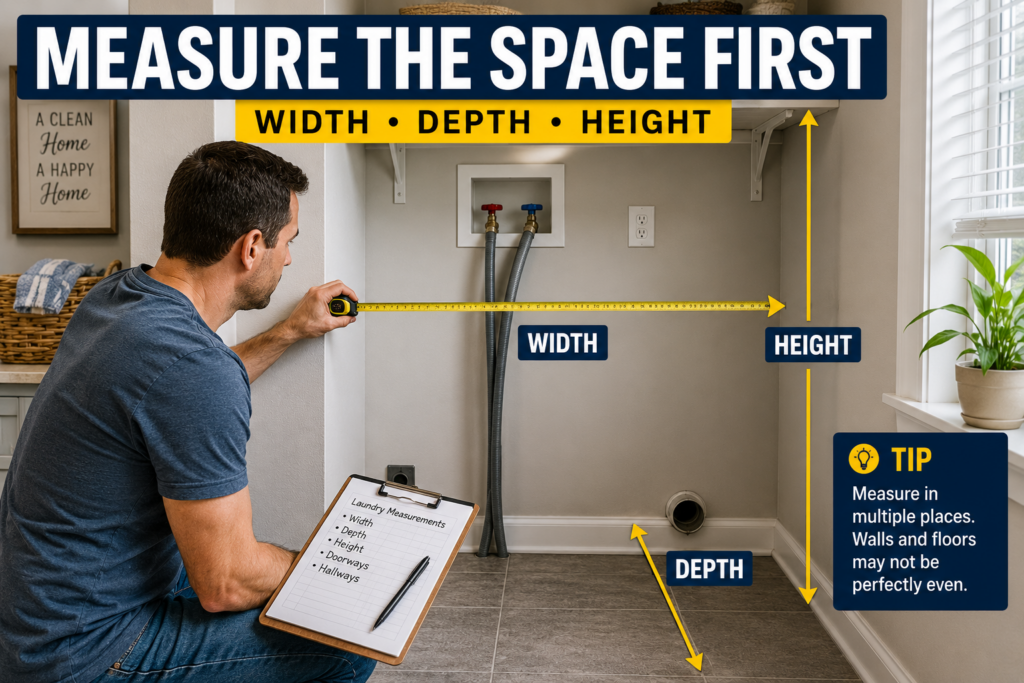
Alt Text: Homeowner measuring a laundry room with a tape measure before purchasing a new washing machine.
Start With the Laundry Space
Begin by measuring the location where the washing machine will actually sit.
Use a tape measure to record:
- Width from wall to wall
- Depth from the back wall to the front edge
- Height from the floor to any overhead cabinet or shelf
Measure in several places instead of assuming the walls are perfectly straight. Older homes sometimes have slight variations that become important when installing large appliances.
Write every measurement down immediately to avoid confusion later.
Remember that manufacturers publish both the appliance dimensions and the recommended installation dimensions. Always compare your measurements with the installation requirements rather than the cabinet size alone.
Don’t Forget the Clearance Space
A washer should never fit tightly against surrounding walls.
It needs room for:
- Water supply hoses
- Drain hose
- Power cord
- Vibration during spin cycles
- Air circulation
- Future maintenance
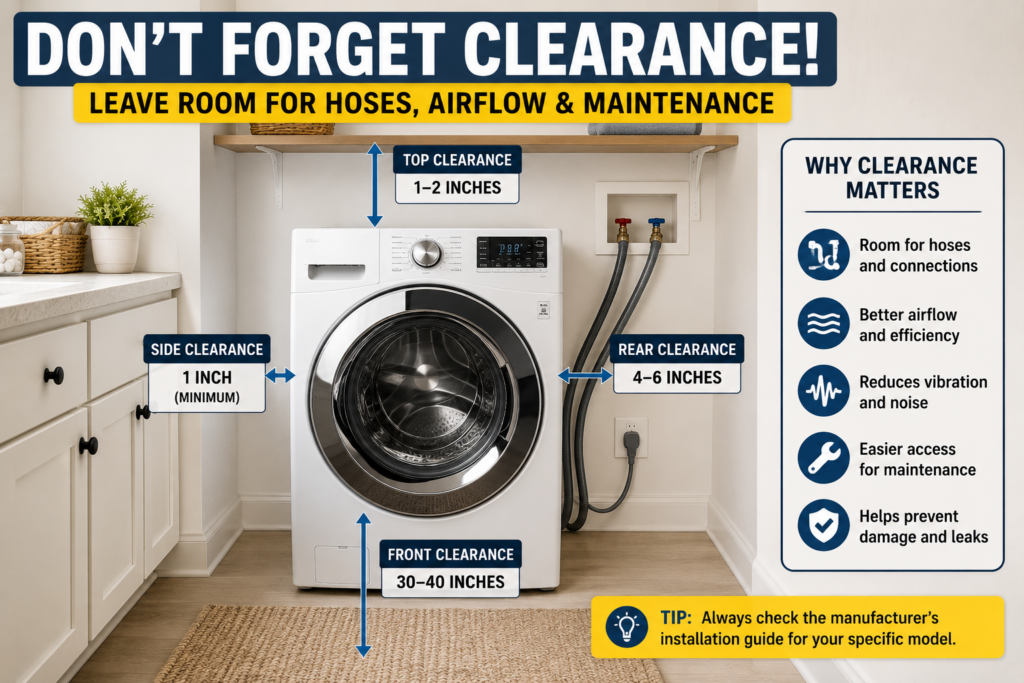
Alt Text: Diagram showing recommended clearance around a washing machine for hoses, airflow, and maintenance.
Although recommendations vary by model, many installers suggest leaving approximately:
| Area | Recommended Clearance |
|---|---|
| Behind washer | 4–6 inches |
| Each side | 1 inch or more |
| Above washer | 1–2 inches |
| Front (door swing or access) | 30–40 inches |
Front-load washers require enough room for the door to open completely. If you’re planning to stack a dryer above the washer, verify the required vertical clearance before ordering.
Measure the Entire Delivery Path
Many installation problems happen before the washer even reaches the laundry room.
Measure every area along the delivery route, including:
- Front door
- Interior doors
- Hallways
- Staircases
- Entry landings
- Tight corners
- Elevator openings (for apartments or condos)
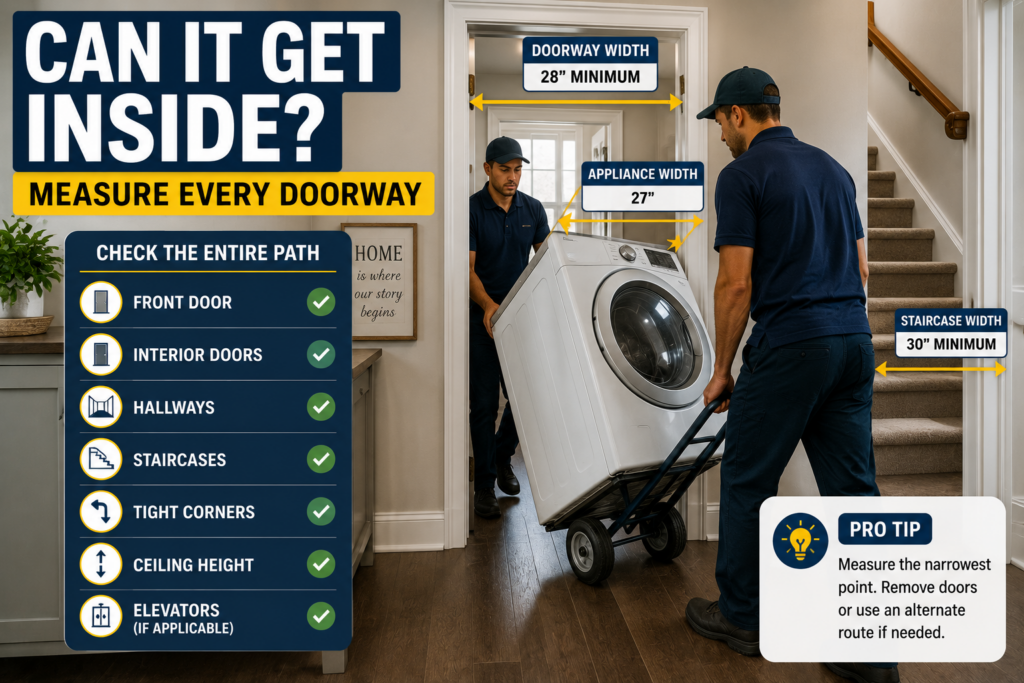
Alt Text: Delivery crew moving a washing machine through a narrow hallway inside an American home.
The narrowest point determines whether the appliance can be delivered safely.
For example, a first-time homeowner may have a spacious laundry room but a narrow basement staircase. In that case, delivery becomes the real challenge—not the installation space itself.
Don’t forget to account for handrails, trim, light fixtures, and low ceilings that could reduce available space during transport.
Top-Load vs. Front-Load Measurement Differences
Choosing between a top-load and front-load washer changes the amount of usable space you’ll need.
Top-load washers require additional overhead room so the lid can open fully. Overhead cabinets or shelving that seem harmless at first may interfere with daily use.
Front-load models usually need less vertical clearance but significantly more open floor space in front of the machine because the door swings outward.
If you plan to add storage cabinets, folding tables, or laundry baskets nearby, include those in your layout before making a purchase.
For apartment living where every inch matters, checking how the washer door opens can be just as important as measuring the appliance itself.
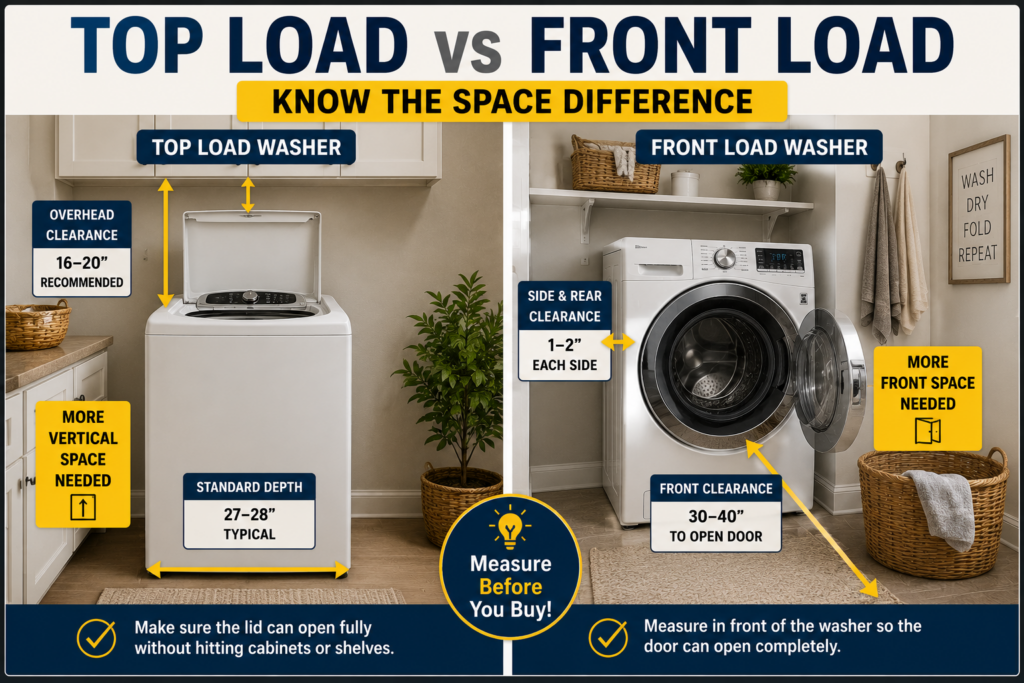
Alt Text: Side-by-side illustration comparing the space requirements of top-load and front-load washing machines.
Check Utility Connections Before You Buy
Even if the washer physically fits, the installation can become difficult if utility connections are poorly located.
Inspect the location of:
- Hot and cold water valves
- Drain standpipe
- Electrical outlet
- Gas connection (for stacked washer-dryer combinations that include a gas dryer)
Avoid positioning the appliance where hoses become sharply bent or compressed against the wall.
Longer water hoses are available, but using excessively long hoses simply to compensate for poor placement isn’t usually recommended unless approved by the manufacturer.
If your home has older plumbing or outdated shutoff valves, replacing those components before delivery can prevent leaks and make installation easier.
Measure for Pedestals or Stacked Laundry Systems
Many buyers decide to add storage pedestals after purchasing a washer.
Doing so increases the total height by roughly 12–16 inches, depending on the manufacturer.
Likewise, stacked laundry systems require enough ceiling height for:
- Washer
- Dryer
- Stacking kit
- Installation clearance
Always calculate the total installed height rather than the height of each appliance individually.
A family renovating a laundry room may also want space for overhead cabinets or shelving. Planning everything together helps avoid costly remodeling changes later.
Common Measuring Mistakes to Avoid
Some installation problems happen because homeowners overlook small details that become major obstacles on delivery day.
Common mistakes include:
- Measuring only the old washer instead of the available space.
- Ignoring baseboards or door trim.
- Forgetting the washer door or lid needs room to open.
- Skipping hallway and staircase measurements.
- Assuming all washers have the same dimensions.
- Not leaving enough room behind the machine for hoses and electrical connections.
- Forgetting future maintenance access.
Taking an extra ten minutes with a tape measure is far easier than arranging a return after delivery.
Final Thoughts
A washing machine that fits comfortably is easier to install, quieter during operation, and simpler to maintain over the years.
Instead of comparing appliance dimensions alone, think about the complete installation process—from the front door to the final hookup. Careful planning helps prevent unexpected expenses, protects your home during delivery, and gives you more confidence when choosing the right washer.
FAQ
How much space should be behind a washing machine?
Most installations work best with about 4–6 inches behind the washer to accommodate water hoses, the drain hose, and the power cord. Always check the manufacturer’s installation guide for your specific model.
Should I measure the old washer or the laundry space?
Measure the laundry space. Your existing washer may be smaller than modern models, and installation requirements often include additional clearance beyond the appliance’s physical dimensions.
Can a washing machine fit through a standard doorway?
Many standard residential doorways are wide enough, but some large-capacity washers may require removing the door from its hinges or using an alternate entry route. Always measure the narrowest point of the delivery path.
Do front-load washers need more space?
They usually require more floor clearance in front so the door can open fully, while top-load washers need additional vertical clearance above the machine.
Checklist
- Measure the width, depth, and height of the installation space.
- Compare your measurements with the manufacturer’s installation dimensions, not just product dimensions.
- Leave adequate clearance behind, beside, and above the washer.
- Measure every doorway, hallway, staircase, and tight corner on the delivery route.
- Verify the locations of water valves, the drain, and the electrical outlet.
- Decide whether you’ll use a pedestal or stack a dryer before purchasing.
- Confirm the washer door or lid can open without hitting walls or cabinets.
- Double-check every measurement before placing your order.
Related Reading:
• Whirlpool or Maytag Washer? Reliability, Repairs, and Value Compared
• LG vs Samsung Washing Machines: Best Choice for Big Families
• LG vs Maytag Dryers: Reliability, Repair Costs, and Everyday Use
• Samsung vs GE Washers: Which One Should You Buy?
• Should You Leave the Washer Door Open? Here’s Why It Matters