
Replacing a dishwasher seems simple until the new one arrives and doesn’t fit beneath the countertop or connect properly to the existing plumbing. Knowing how to measure for a dishwasher replacement before shopping helps you avoid installation delays, unexpected expenses, and the frustration of returning an appliance that almost fits.
While most built-in dishwashers follow standard dimensions, there are enough differences between models that taking a few accurate measurements is well worth the effort. You’ll also need to consider countertop height, cabinet opening, water connections, drain hoses, and electrical access.
With a tape measure and a few minutes of preparation, you can shop with confidence and greatly reduce the chance of installation surprises.
Quick Answer
To measure for a dishwasher replacement, record the cabinet opening width, height, and depth, then check countertop clearance, plumbing connections, electrical access, and door swing space. Compare your measurements with the manufacturer’s installation specifications—not just the appliance dimensions—to ensure the new dishwasher fits correctly.
Start With the Cabinet Opening, Not the Old Dishwasher
Many homeowners make the mistake of measuring only the dishwasher they’re replacing.
Instead, remove the lower kick plate if possible and measure the actual cabinet opening. Floors, countertops, and cabinets may have changed since the original appliance was installed.
Take measurements at several points because older kitchens are not always perfectly square.
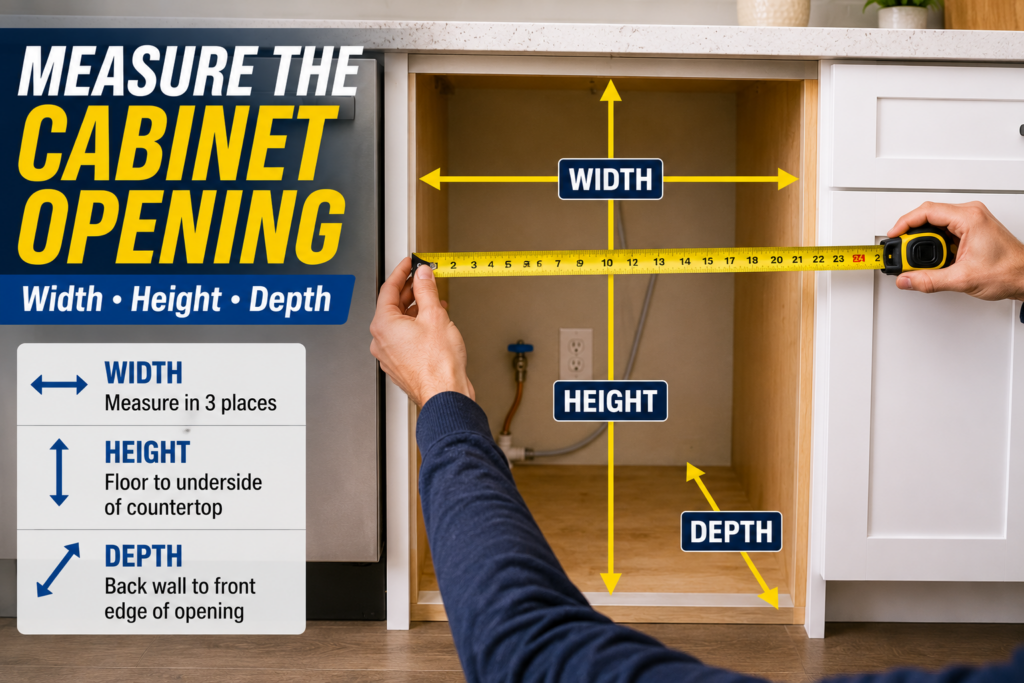
Alt Text:
Homeowner measuring the cabinet opening for a dishwasher replacement using a tape measure.
The Three Measurements That Matter Most
| Measurement | Why It’s Important |
|---|---|
| Width | Ensures the dishwasher fits between cabinets |
| Height | Confirms enough clearance under the countertop |
| Depth | Prevents the front of the dishwasher from protruding too far |
Width
Measure the opening from cabinet to cabinet in three locations:
- Near the floor
- Around the middle
- Just below the countertop
Use the smallest measurement when comparing dishwasher specifications.
Most standard American built-in dishwashers are designed for a 24-inch-wide opening, but always verify the manufacturer’s installation requirements.
Height
Measure from the finished floor to the underside of the countertop.
Remember that flooring installed after the original dishwasher may reduce available height. Tile, hardwood, or luxury vinyl flooring can slightly change the opening dimensions.
Adjustable dishwasher leveling legs can compensate for small differences, but only within the manufacturer’s specified range.
Depth
Measure from the back wall to the front edge of the cabinet opening.
Include any trim or decorative panels that may affect installation.
Most modern dishwashers are designed to align closely with standard cabinets, but handle designs and control panels may extend farther forward depending on the model.
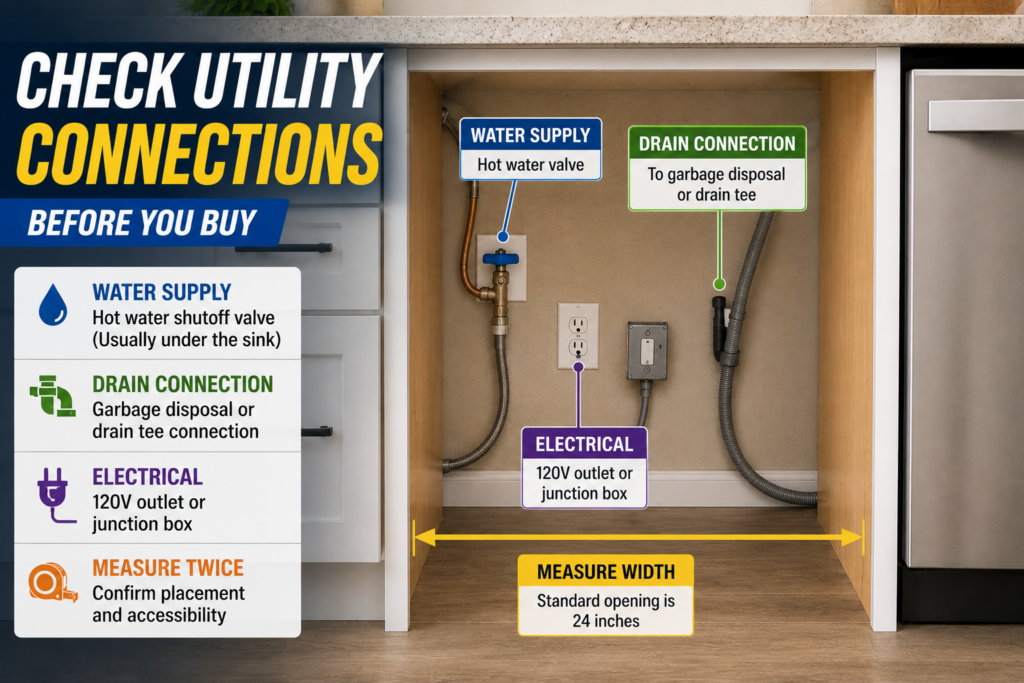
Alt Text:
Diagram showing dishwasher width, height, depth, and countertop clearance measurements.
Verify Plumbing and Electrical Connections Before Ordering
Replacing a dishwasher is easier when the new unit uses similar utility connections.
Before purchasing, locate and inspect:
- Hot water supply valve
- Drain hose connection
- Garbage disposal connection (if applicable)
- Electrical junction box or outlet
Older homes may require minor plumbing or electrical updates if the replacement dishwasher differs from the original installation.
Professional installation for a standard replacement typically ranges from $150 to $400, while plumbing or electrical modifications may increase the total cost depending on local labor rates.
Leave Enough Space for the Door to Open
A dishwasher that fits the cabinet opening can still create problems if the door cannot fully open.
Check for nearby obstacles such as:
- Kitchen islands
- Base cabinets
- Appliance handles
- Trash pull-outs
- Peninsula cabinets
The fully opened door should allow the lower rack to slide out comfortably without hitting surrounding fixtures.
For families with busy kitchens, this small detail has a big impact on everyday convenience.
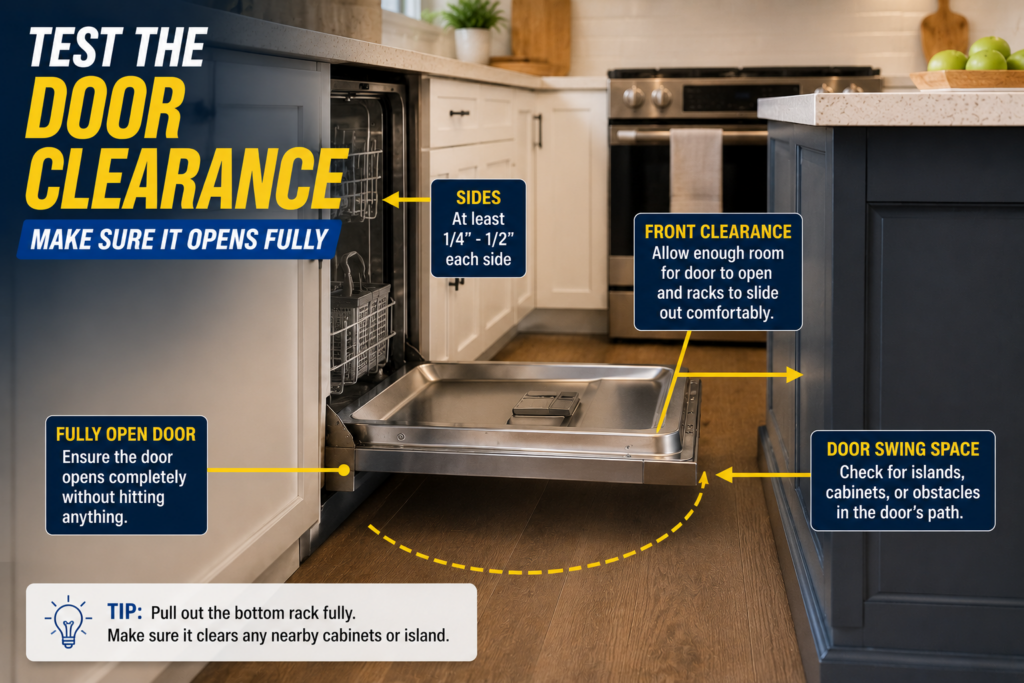
Alt Text:
Open dishwasher door showing proper clearance between cabinets and a nearby kitchen island.
Look Beyond Standard Dimensions
Even though many built-in dishwashers advertise standard sizing, installation specifications can vary slightly.
Some premium models require:
- Additional rear clearance
- Larger side spacing
- Different water line routing
- Extra room for insulation
- Specialized mounting brackets
Always download or review the manufacturer’s installation guide before making a purchase rather than relying solely on the product’s advertised dimensions.
Common Measuring Mistakes to Avoid
Replacing a dishwasher usually goes smoothly when buyers avoid a few common errors.
These include:
- Measuring only the existing appliance instead of the cabinet opening.
- Forgetting to account for new flooring.
- Ignoring countertop overhang.
- Skipping plumbing inspections.
- Assuming every 24-inch dishwasher has identical installation dimensions.
- Forgetting to measure door clearance.
Each of these mistakes can delay installation or require additional modifications after delivery.
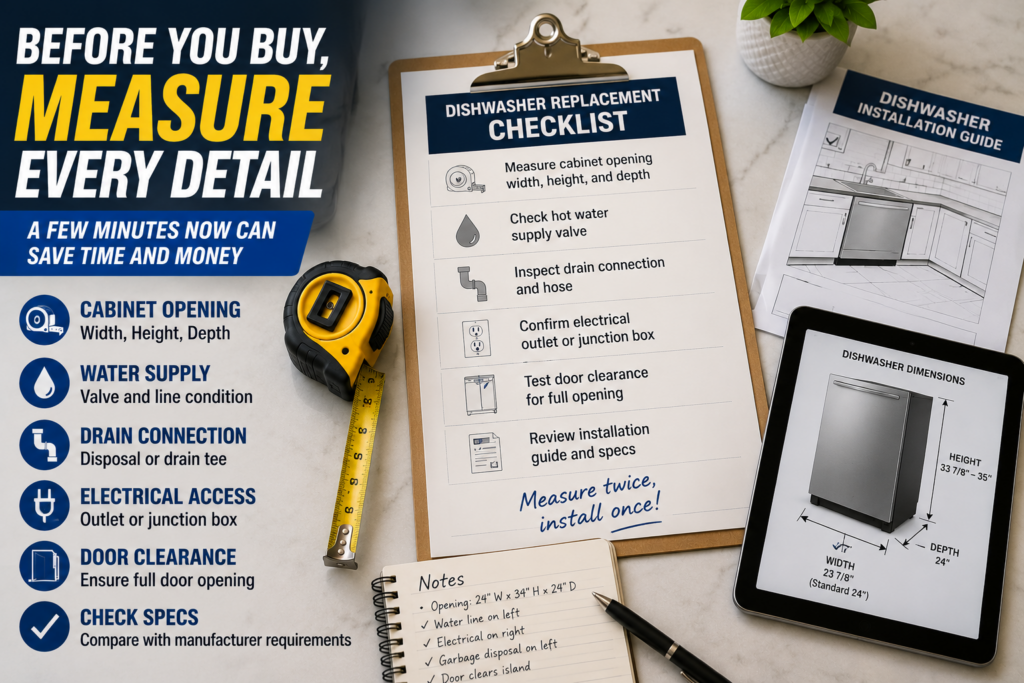
Alt Text:
Checklist with dishwasher measurements, plumbing checks, and installation planning tools.
DIY or Professional Installation?
If your replacement dishwasher uses the same water, drain, and electrical connections as the existing unit, many experienced homeowners can complete the installation themselves by following the manufacturer’s instructions and local building codes.
However, hiring a professional is often the better choice when:
- New plumbing lines are needed.
- Electrical wiring must be modified.
- Cabinets require trimming.
- Flooring changes have altered the opening.
- A leak from the previous dishwasher caused cabinet damage.
Professional installation also provides peace of mind, particularly if your new dishwasher includes advanced features or requires precise leveling for optimal performance.
Final Thoughts
A successful dishwasher replacement begins long before delivery day. Accurate measurements of the cabinet opening, countertop height, plumbing connections, and surrounding clearance help ensure the new appliance fits as expected.
Rather than assuming all built-in dishwashers are identical, compare your measurements with the manufacturer’s installation specifications. A few extra minutes spent measuring today can prevent unnecessary installation costs, delays, and returns tomorrow.
④ FAQ
Are all built-in dishwashers the same size?
Most built-in models are designed for a standard 24-inch cabinet opening, but installation dimensions and clearance requirements can vary slightly by manufacturer and model.
Should I measure the dishwasher or the cabinet?
Always measure the cabinet opening. Existing appliances may be slightly smaller or installed before flooring and countertops were updated.
What if my opening is slightly larger than the dishwasher?
Small gaps are common and are usually covered by the dishwasher’s trim or mounting design. Check the manufacturer’s installation guide for acceptable tolerances.
Do I need to disconnect the old dishwasher before measuring?
No. Most measurements can be taken without removing the appliance, although removing the kick plate can make certain measurements easier and more accurate.
⑤ Checklist
Dishwasher Replacement Measurement Checklist
- □ Measure cabinet width in three locations.
- □ Measure opening height from the finished floor.
- □ Measure cabinet depth.
- □ Inspect the water supply valve and drain connection.
- □ Confirm electrical outlet or junction box location.
- □ Check door swing clearance.
- □ Compare measurements with the manufacturer’s installation specifications.
- □ Verify adjustable leveling range.
- □ Confirm flooring won’t interfere with installation.
- □ Measure once more before placing your order.
Related Reading:
• How Long Do Dishwashers Last? Average Lifespan and When to Replace Yours
• LG vs Bosch Dishwashers: Which Is Worth Buying in
• Bosch vs Whirlpool Dishwashers: Which Is Better for Everyday Use?
• Top-Control vs. Front-Control Dishwashers: Which Is Better for Convenience and Cleaning Performance?