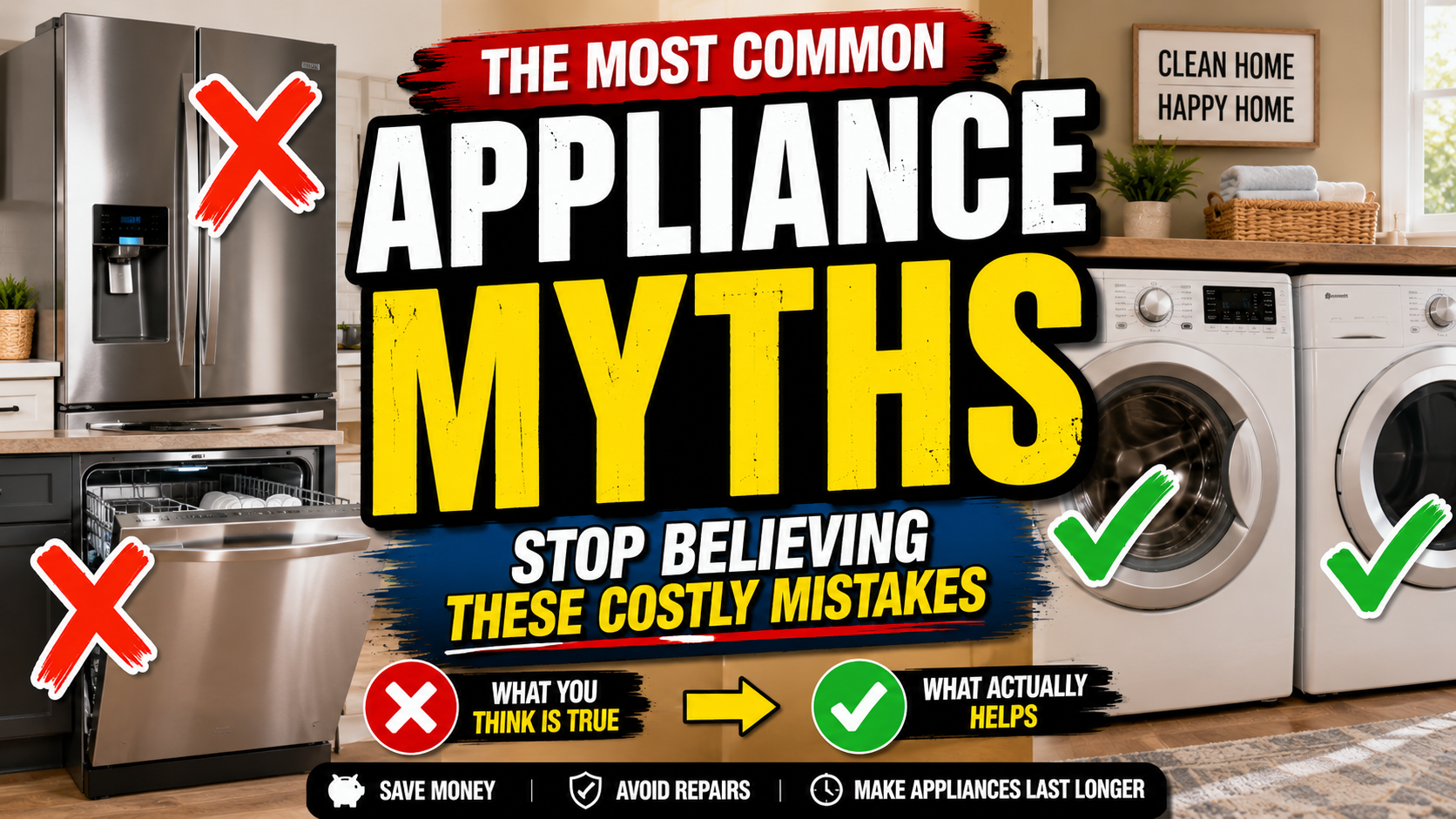
The Most Common Appliance Myths Homeowners Still Believe (And the Truth Behind Them)
Many homeowners follow appliance advice they learned years ago from family members, neighbors, or online discussions. Some of those tips were once common, while others have never been accurate. Believing the wrong advice can shorten an appliance’s lifespan, waste electricity, or even lead to unnecessary repairs.
The truth is that today’s refrigerators, washing machines, dryers, dishwashers, and microwaves are designed differently than older models. Knowing which appliance myths are false can help you save money and avoid maintenance mistakes.
Let’s separate fact from fiction and look at the myths that continue to confuse homeowners across the United States.
Myth #1: A Refrigerator Runs Better When It’s Completely Full
A moderately stocked refrigerator actually performs better than an empty one because the food helps stabilize temperatures.
However, stuffing every shelf with groceries blocks air circulation.
Poor airflow forces the compressor to work harder and can lead to uneven cooling.
Aim for a refrigerator that’s about 70–80% full rather than completely packed.
Myth #2: More Detergent Means Cleaner Clothes
Using extra detergent is one of the most common laundry mistakes.
Modern high-efficiency washers require surprisingly small amounts of detergent.
Too much soap leaves residue inside the drum, traps odors, and can reduce cleaning performance over time.
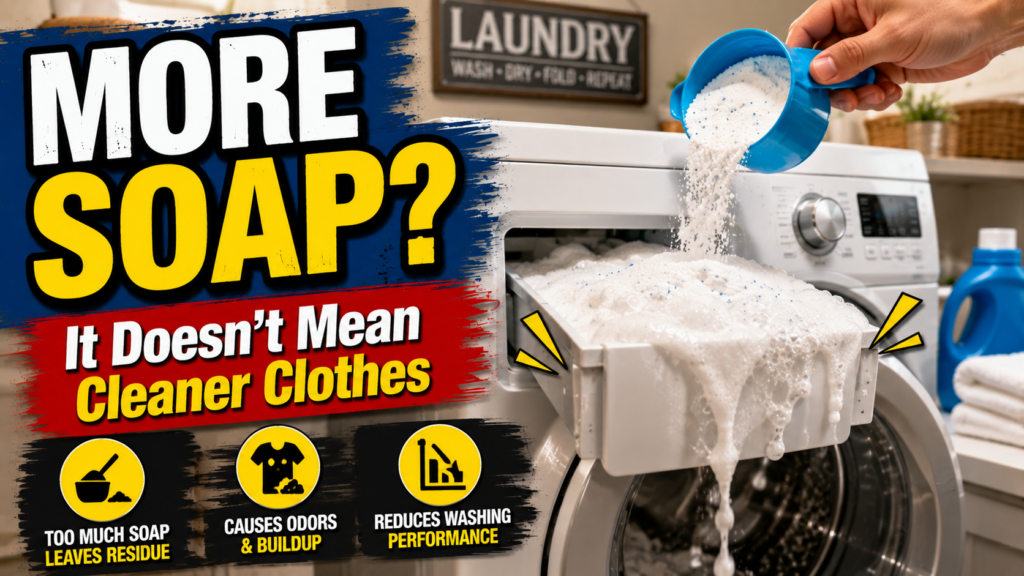
If clothes still don’t seem clean, increasing detergent is rarely the solution. Cleaning the washer and avoiding overloaded loads usually makes a bigger difference.
Myth #3: Dishwasher Pre-Rinsing Is Always Necessary
Many people still rinse every dish before loading the dishwasher.
Modern dishwashers are designed to detect food particles during the wash cycle.
Completely spotless dishes may actually reduce cleaning performance because some detergents activate more effectively when light food residue is present.
Simply scrape off large food scraps and let the dishwasher do the rest.
Myth #4: Dryer Sheets Never Cause Problems
Dryer sheets reduce static, but they also leave behind a wax-like coating.
Over time this residue can collect on:
- Moisture sensors
- Lint screens
- Interior surfaces
Cleaning the lint screen with warm water and dish soap every few weeks helps restore proper airflow.

Myth #5: Leaving Appliances Plugged In Always Wastes a Lot of Electricity
Standby power exists, but most modern appliances consume very little electricity while idle.
For example, refrigerators should remain plugged in continuously because unplugging them regularly creates temperature fluctuations that can affect food safety.
If you’re trying to lower your utility bill, replacing worn door seals or cleaning condenser coils usually saves more energy than constantly unplugging appliances.
Myth #6: Loud Noises Always Mean an Appliance Is About to Fail
Some noises are completely normal.
Refrigerators click during defrost cycles.
Ice makers crack as ice drops into the bin.
Dishwashers change sound as spray arms rotate.
The concern begins when a familiar sound suddenly becomes much louder or changes in rhythm.
Myth #7: Every Appliance Can Be Repaired Forever
Repairs don’t always make financial sense.
Once repair costs approach roughly half the price of a comparable replacement, many homeowners begin comparing long-term value instead of simply fixing the existing appliance.
Older units may also use more electricity than newer ENERGY STAR® models, increasing monthly operating costs.
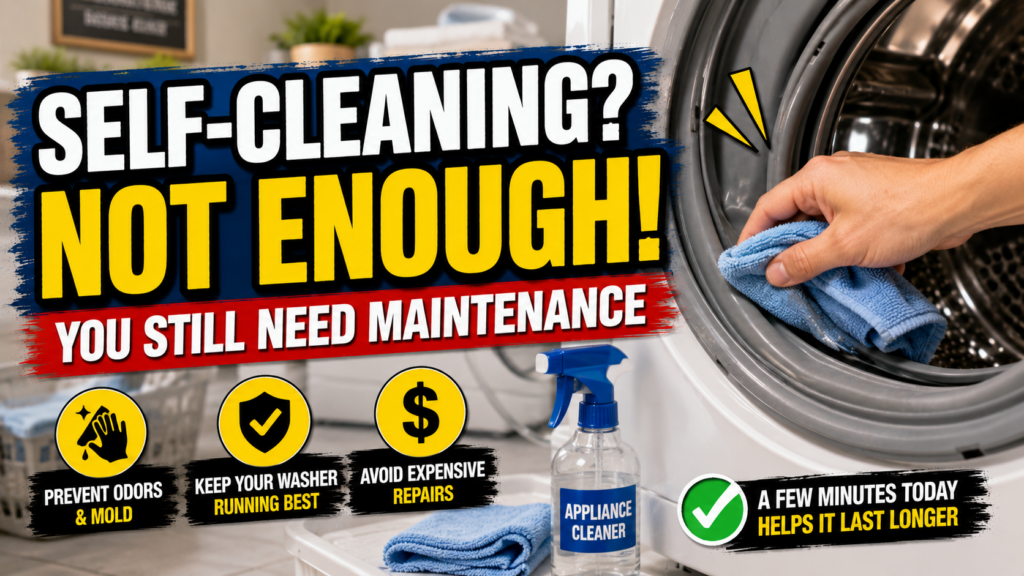
Myth #8: Self-Cleaning Cycles Eliminate All Maintenance
A self-cleaning oven still benefits from occasional manual cleaning.
Dishwashers with self-cleaning filters still require inspections.
Washing machines with tub-clean cycles still need door seals wiped down.
Automatic cleaning features reduce maintenance, but they don’t eliminate it.
Myth #9: Small Leaks Can Wait
A slow drip under a dishwasher or washing machine may seem harmless.
In reality, even a minor leak can damage flooring, cabinets, or subfloors over time.
Many insurance claims begin with leaks that homeowners ignored for months.
Addressing a loose hose or worn gasket early is almost always less expensive than repairing water damage later.
Myth #10: Annual Maintenance Isn’t Necessary Until Something Breaks
Waiting for a problem to appear is usually the most expensive approach.

Simple maintenance such as:
- Cleaning refrigerator condenser coils
- Vacuuming dryer vents
- Replacing water filters
- Inspecting washer hoses
- Cleaning dishwasher filters
can help appliances operate more efficiently and last longer.
Real-World Examples
A homeowner in Arizona believed adding extra detergent would make heavily soiled work clothes cleaner. Instead, detergent buildup caused persistent odors inside the washer. After switching to the recommended amount and running a cleaning cycle, both the odor and cleaning performance improved.
Another family in a Michigan townhouse pre-rinsed every dish before loading the dishwasher. After learning that their newer dishwasher performed best with light food residue, they reduced water use and shortened kitchen cleanup without sacrificing clean dishes.
DIY or Call a Professional?
| Situation | DIY | Professional |
|---|---|---|
| Cleaning condenser coils | Yes | No |
| Replacing water filter | Yes | No |
| Cleaning dryer vent (basic) | Yes | Sometimes |
| Persistent appliance leak | Limited | Often |
| Electrical issues | No | Yes |
| Refrigerant or gas repairs | No | Yes |
Estimated Maintenance Costs
Typical U.S. service costs include:
- Dryer vent cleaning: $100–$250
- Refrigerator coil cleaning service: $100–$200
- Dishwasher inspection: $100–$200
- Washer hose replacement: $100–$250
- Appliance diagnostic visit: $90–$150
Prices vary depending on location, appliance type, and labor rates.
FAQ
Is it bad to leave appliances plugged in all the time?
Most major appliances are designed to remain plugged in. Constantly unplugging them usually provides little benefit and may create unnecessary inconvenience.
Should I rinse dishes before putting them in the dishwasher?
Scraping off large food scraps is usually enough for most modern dishwashers. Heavy pre-rinsing is rarely necessary.
Does more detergent clean better?
No. Excess detergent often leaves residue and may actually reduce washing performance.
How often should appliances receive maintenance?
Basic cleaning and inspections every six to twelve months help prevent many common problems.
Home Appliance Myth Checklist
- Don’t overload your refrigerator.
- Measure detergent instead of guessing.
- Skip unnecessary dish pre-rinsing.
- Wash lint screens periodically with soap.
- Don’t ignore small leaks.
- Clean filters and coils regularly.
- Learn which appliance sounds are normal.
- Compare repair costs before fixing older appliances.
Final Thoughts
Many appliance myths persist because they were once true for older machines or have simply been repeated for years. Modern appliances are designed differently, and following outdated advice can waste energy, increase wear, or lead to unnecessary repairs.
Replacing myths with practical maintenance habits is one of the easiest ways to reduce repair costs and help your appliances perform reliably for years.
Related Reading:
• 10 Appliance Sounds You Should Never Ignore (And What They Usually Mean)
• Preparing Your Home Appliances Before Moving: A Complete Checklist to Prevent Damage
• 10 Appliances That Waste Electricity Without You Knowing (And How to Lower Your Power Bill)
• Not Every Clicking Sound Means Something Is Broken
• Should You Repair or Replace Your Appliance? A Homeowner’s Decision Guide