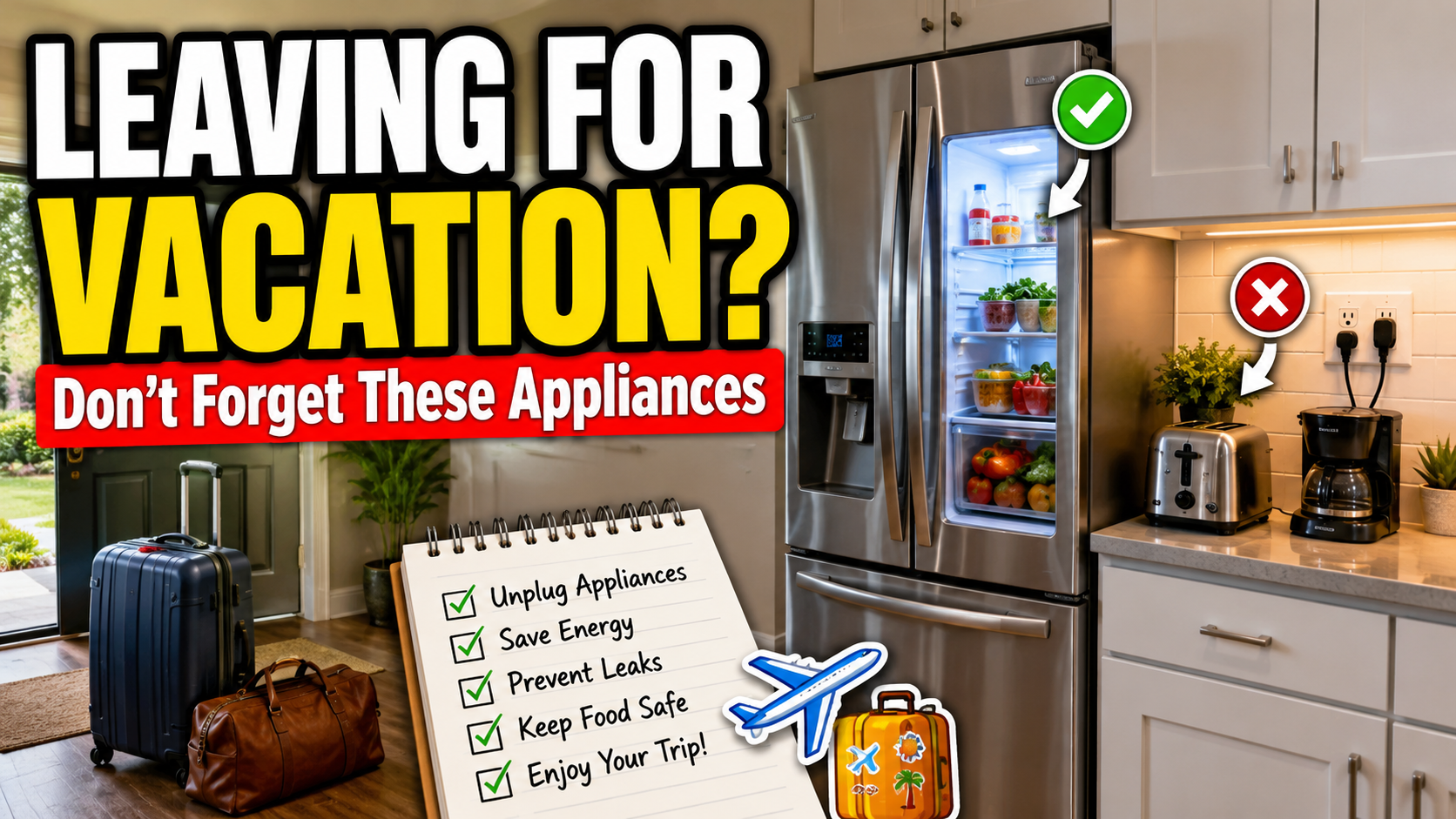
Should You Turn Off Appliances Before Vacation? What to Unplug and What to Leave On
If you’re leaving home for a vacation, it’s natural to wonder whether you should unplug your appliances or leave them running. The answer depends on the type of appliance and how long you’ll be away. Some appliances should stay on to protect your home and food, while others can be unplugged to reduce energy use and eliminate unnecessary electrical risks.
Preparing your appliances before a trip takes only a few minutes and can help prevent spoiled food, water damage, and higher utility bills.
A Quick Answer
For most vacations, leave your refrigerator running if it contains food, but unplug small countertop appliances that won’t be used. Turn off the water supply to washing machines and dishwashers if you’ll be away for an extended period, and unplug electronics that draw standby power when practical.
A simple vacation checklist is usually enough to keep your home safe while reducing unnecessary energy consumption.
How Long Will You Be Away?
The length of your trip makes a difference.
If you’re gone for just a weekend, there is little reason to make major changes beyond unplugging small appliances.
For vacations lasting one to three weeks, spending a little more time preparing your home can help reduce the chance of leaks, electrical issues, or wasted electricity.
Long-term travel may require additional steps such as shutting off the home’s main water supply or adjusting HVAC settings.
Appliances You Should Usually Leave On
Some appliances are designed to operate continuously.
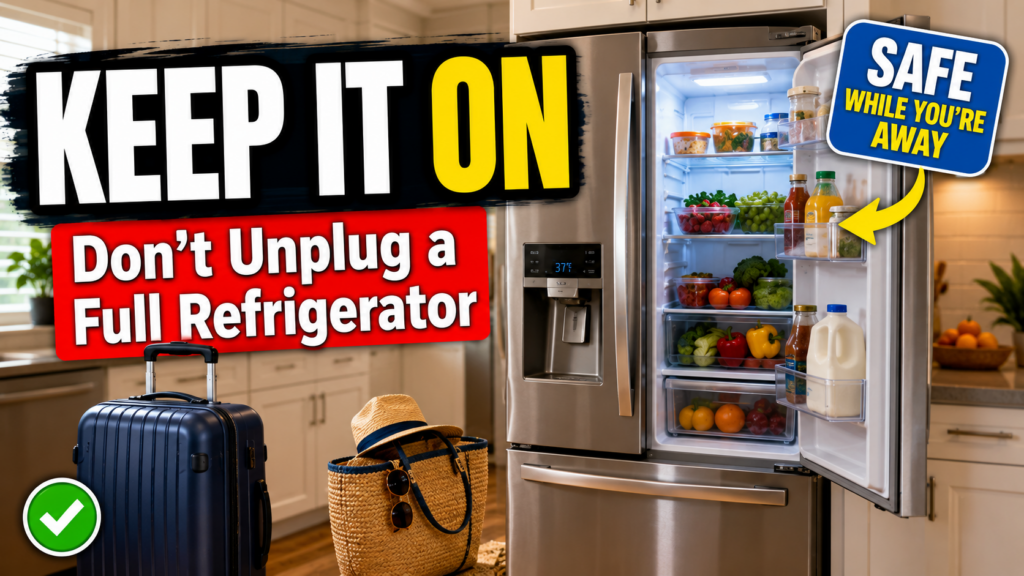
Refrigerator
Leave it running if food remains inside.
Turning it off while full can result in spoiled food, unpleasant odors, and mold growth.
If you’ll be away for several weeks and the refrigerator will be empty, clean it thoroughly, unplug it, and leave the doors slightly open to allow air circulation.
Freezer
A full freezer can safely remain on during vacation.
Keeping the door closed helps maintain the internal temperature if a temporary power outage occurs.
Security Systems and Smart Home Devices
Alarm systems, Wi-Fi routers, smart cameras, and smart thermostats should usually remain powered.
These devices help monitor your home while you’re away.
Appliances You Can Unplug
Small appliances continue to draw standby power even when they’re turned off.
Although the electricity use is generally modest, unplugging them can reduce unnecessary power consumption.
Examples include:
- Coffee makers
- Toasters
- Air fryers
- Blenders
- Electric kettles
- Stand mixers
- Countertop microwaves (if not needed)
Bundling cords neatly before leaving also helps keep the kitchen organized.
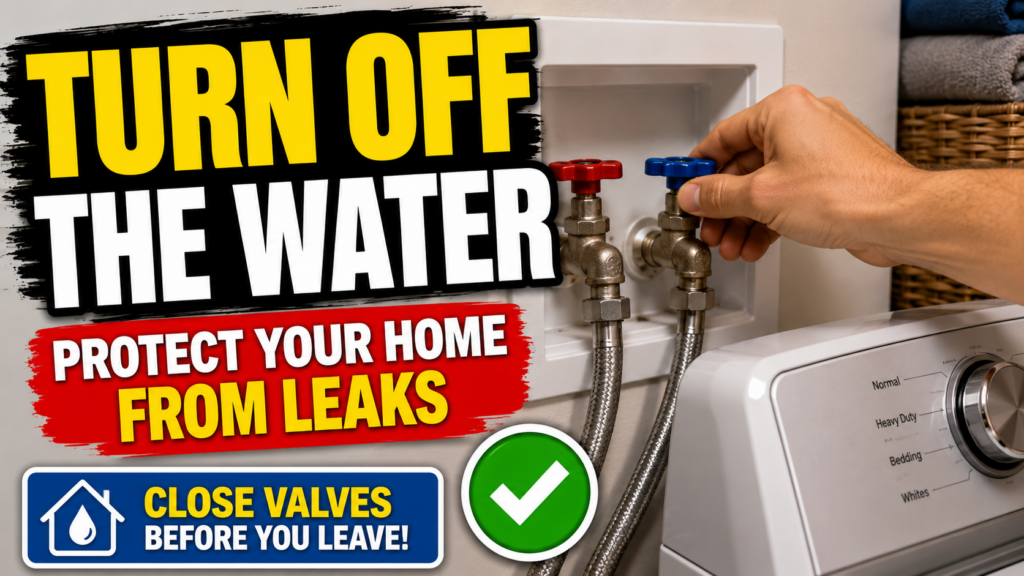
Don’t Forget the Washing Machine
Many homeowners overlook their washer before traveling.
Turn off both hot and cold water supply valves if you’ll be away for more than a few days.
This simple step reduces the risk of a burst hose causing significant water damage while no one is home.
It’s one of the easiest precautions you can take before leaving.
Should You Turn Off the Dishwasher?
If the dishwasher will not be used during your trip:
- Run the last load.
- Empty the dishwasher.
- Leave the door slightly open.
If your dishwasher has its own shutoff valve, many homeowners also choose to turn off the water supply before extended vacations.
Dryer Safety Before Leaving
Clean the lint filter before your trip.
If you’ve been postponing dryer vent cleaning, vacation is a good reminder to schedule it after you return.
Never leave the dryer running while you’re away from home.
What About the Water Heater?
For short vacations, many modern water heaters have a “Vacation” mode.
Using this setting saves energy while keeping the system ready when you return.
If your unit doesn’t include this feature and you’ll be gone for an extended period, lowering the thermostat may reduce energy use.
Always follow the manufacturer’s instructions.
Air Conditioner and Heating System
You don’t need to completely turn off your HVAC system.
Instead:
- Raise the air conditioner temperature during summer.
- Lower the heating temperature during winter.
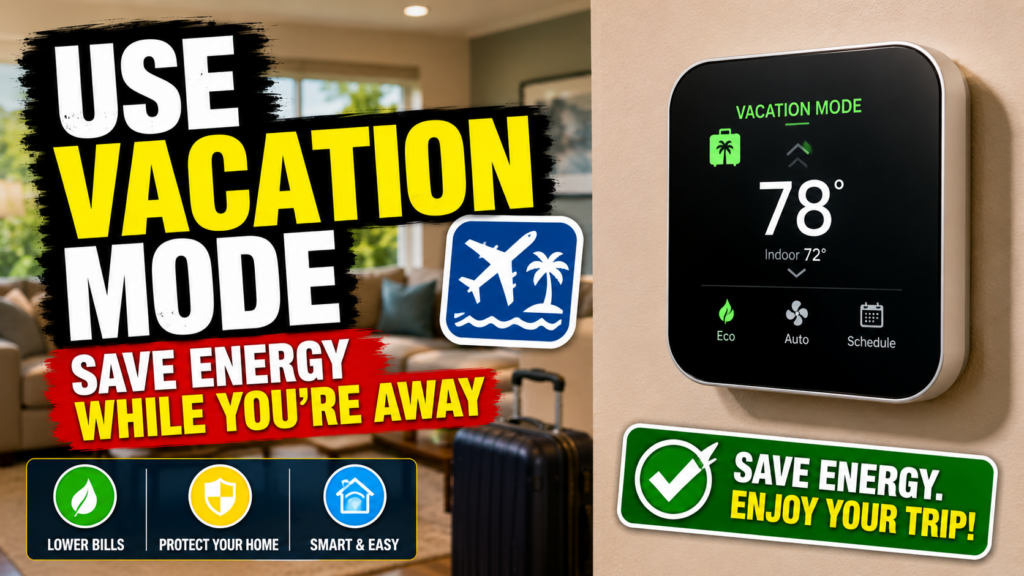
Smart thermostats make this especially easy because you can adjust settings remotely if your plans change.
Common Vacation Mistakes
Many homeowners focus only on electricity and forget about water.
Some of the most common mistakes include:
- Leaving washing machine valves open.
- Forgetting food in the refrigerator.
- Leaving the dishwasher full of dirty dishes.
- Ignoring expired water filters.
- Leaving chargers plugged into outlets unnecessarily.
Most of these problems can be avoided with a five-minute walkthrough before leaving.
Real-World Examples
A homeowner in Florida left for a two-week vacation without turning off the washing machine water valves. During the trip, an aging hose developed a leak that damaged the laundry room floor. Replacing the hose beforehand would have cost only a few dollars.
Another family traveling from Colorado emptied their refrigerator before a month-long trip, unplugged it, cleaned the interior, and left the doors slightly open. They returned to a fresh, odor-free appliance instead of dealing with mold and unpleasant smells.
DIY or Professional Help?
| Task | DIY | Professional Needed |
|---|---|---|
| Unplug small appliances | Yes | No |
| Turn off washer water valves | Yes | No |
| Empty and clean refrigerator | Yes | No |
| Adjust thermostat | Yes | No |
| Replace damaged washer hoses | Sometimes | Sometimes |
| Electrical panel work | No | Yes |
Estimated Costs
Typical U.S. maintenance costs include:
- Washer hose replacement: $100–$250
- Smart thermostat installation: $150–$400
- Dryer vent cleaning: $100–$250
- Refrigerator deep cleaning service: $100–$200
Costs vary depending on your location and appliance model.
FAQ
Should I unplug my refrigerator while on vacation?
Only if it will be completely empty and you’ll be away for an extended period. Otherwise, leave it running.
Should I unplug my microwave?
Yes, if it’s a countertop microwave and won’t be used. Built-in microwaves are commonly left connected.
Is it safe to leave the air conditioner on?
Yes. Raising the thermostat to an energy-saving temperature is usually better than shutting the system off completely.
Should I shut off the home’s water supply?
For long vacations, many homeowners choose to do so for added protection against leaks. Whether it’s practical depends on your plumbing setup and household needs.
Vacation Appliance Checklist

- Empty the trash.
- Check the refrigerator.
- Turn off washer water valves.
- Empty the dishwasher.
- Clean the dryer lint filter.
- Adjust the thermostat.
- Unplug small appliances.
- Confirm smart security devices are connected.
- Lock windows and doors.
- Do one final walkthrough before leaving.
Final Thoughts
Preparing your appliances before vacation doesn’t require much time, but it can help prevent expensive surprises while you’re away. A few simple steps—such as shutting off water valves, unplugging unused appliances, and adjusting your thermostat—can protect your home and reduce unnecessary energy use.
Whether you’re leaving for a long weekend or an extended trip, spending a few extra minutes on your appliances before you leave can make coming home much more enjoyable.
Related Reading:
• The Most Common Appliance Myths Homeowners Still Believe (And the Truth Behind Them)
• 10 Appliance Sounds You Should Never Ignore (And What They Usually Mean)
• Preparing Your Home Appliances Before Moving: A Complete Checklist to Prevent Damage
• 10 Appliances That Waste Electricity Without You Knowing (And How to Lower Your Power Bill)