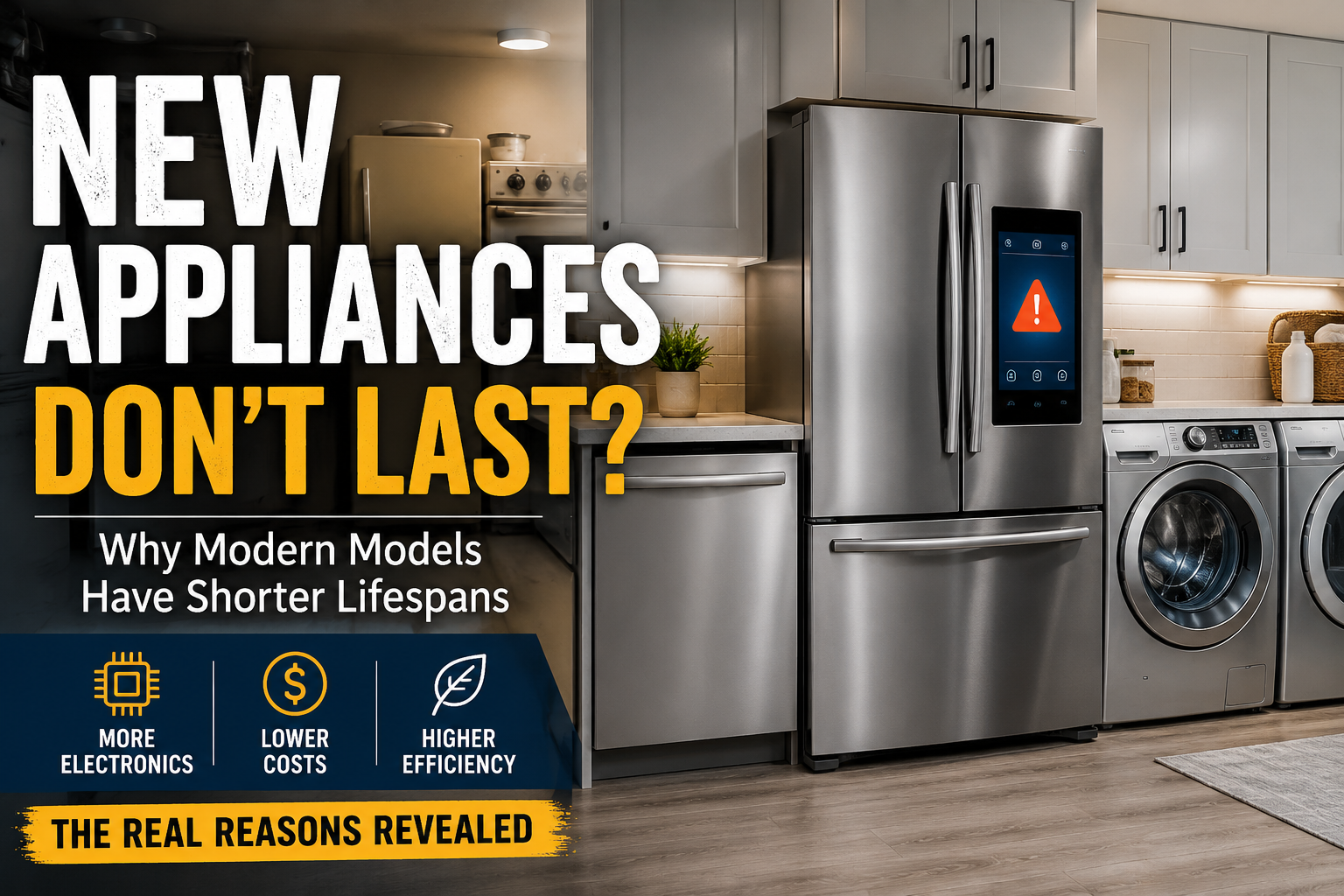
Why New Appliances Don’t Last as Long as Older Models
Many homeowners are surprised when a brand-new refrigerator, dishwasher, or washing machine develops problems after only a few years. If you’ve ever wondered why new appliances don’t last as long as older models, you’re not imagining things. While today’s appliances offer better energy efficiency, smart features, and quieter operation, many are not designed with the same long-term durability as products built decades ago.
The good news is that a shorter average lifespan doesn’t necessarily mean every modern appliance is unreliable. Understanding what has changed—and how to shop and maintain appliances wisely—can help you get many more years from your investment.
Quick Answer
Modern appliances generally don’t last as long as older models because they prioritize energy efficiency, lower manufacturing costs, advanced electronics, and lighter materials over maximum durability. While many appliances now average 10–15 years instead of 20+ years, proper maintenance, correct installation, and choosing models based on reliability rather than features can significantly extend their lifespan.
Alt Text: Modern stainless steel kitchen appliances showing refrigerator, dishwasher, and oven in a contemporary American home.
Why Older Appliances Often Lasted Longer
Ask almost anyone who owned appliances from the 1980s or 1990s, and you’ll probably hear stories about refrigerators running for 25 years or washers that seemed almost impossible to break.
There are several reasons those older machines earned that reputation.
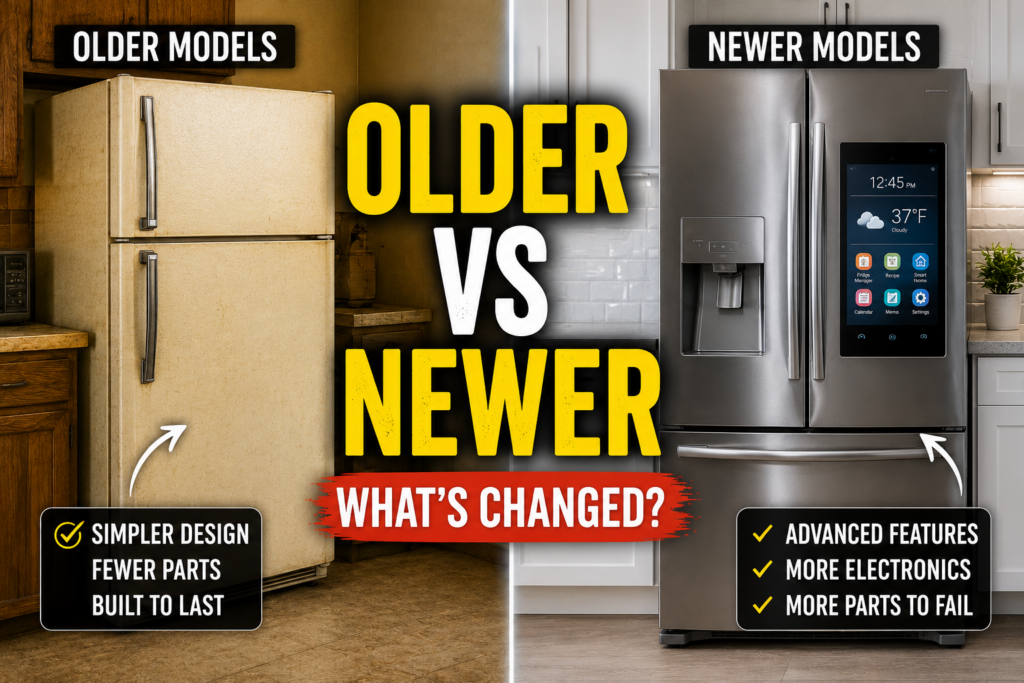
Simpler Mechanical Designs
Older appliances relied more heavily on mechanical controls than electronic systems.
A refrigerator thermostat, washing machine timer, or dryer control knob contained relatively few components. With fewer parts that could fail, there were simply fewer opportunities for breakdowns.
Today’s appliances often contain:
- Multiple circuit boards
- Touchscreen controls
- Wi-Fi modules
- Digital sensors
- Software-controlled operating systems
Each feature adds convenience but also introduces another potential failure point.
Heavier Construction
Many older appliances used thicker steel cabinets, heavier motors, and more robust internal components.
Modern manufacturing focuses on reducing shipping costs, improving efficiency, and lowering production expenses. As a result, lighter materials have become far more common.
Lighter doesn’t automatically mean poor quality, but it often reduces long-term durability under heavy daily use.
Energy Efficiency Changed Appliance Design
One of the biggest reasons modern appliances are built differently is federal energy efficiency standards.
Manufacturers must meet increasingly strict requirements for electricity and water consumption.
For example:
- Refrigerators use far less electricity than models built 25 years ago.
- Dishwashers clean with significantly less water.
- Washing machines use advanced sensors to reduce energy use.
- Dryers include moisture sensors to shorten drying cycles.
These improvements save homeowners hundreds of dollars over time.
However, achieving those savings often requires more sophisticated electronics, sensors, valves, and control systems that eventually wear out.
Rather than making appliances weaker, efficiency standards have simply made them much more complex.
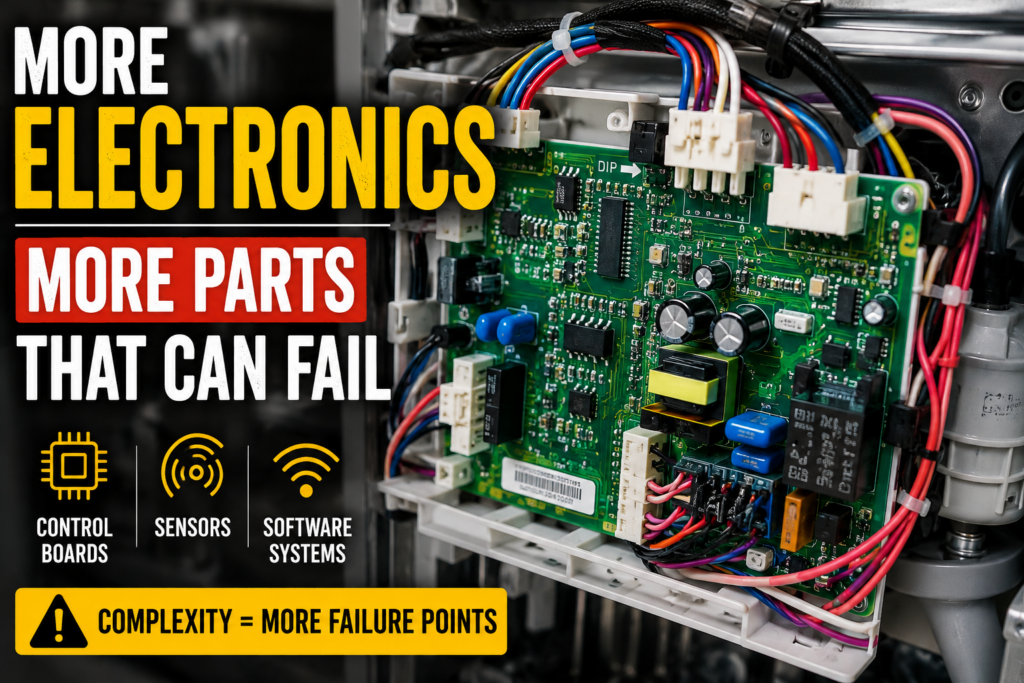
Alt Text: Close-up of an appliance electronic control board and wiring inside a modern household appliance.
Electronics Have Become the Weakest Link
One of the most common repair issues today involves electronic control boards.
Instead of replacing a simple mechanical switch, technicians often replace an expensive computer module.
Common electronic failures include:
- Power surges
- Moisture damage
- Failed capacitors
- Software errors
- Sensor failures
Ironically, the mechanical parts inside many appliances may still be perfectly functional while the electronic controller causes the entire unit to stop working.
This is especially common in:
- Refrigerators
- Dishwashers
- Front-load washers
- Smart ovens
- High-end ranges
Consumers Expect More Features
Modern buyers often compare appliances based on convenience rather than durability alone.
Manufacturers compete by adding features like:
- Smart phone connectivity
- Voice assistant compatibility
- Internal cameras
- Touch displays
- Automatic dispensers
- Multiple cooling zones
- AI-powered wash cycles
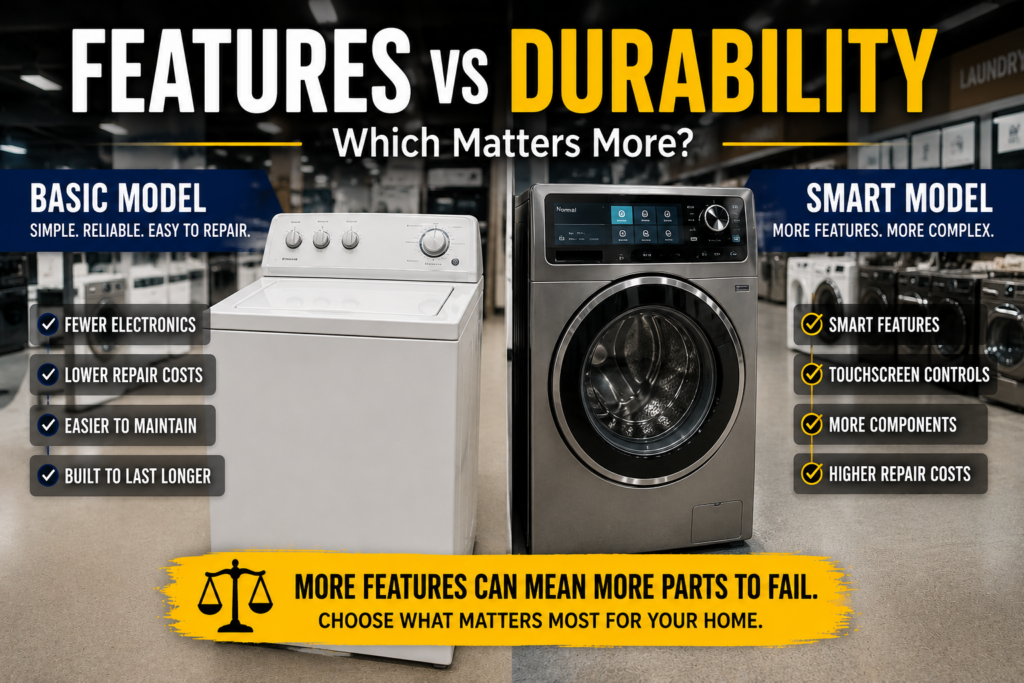
While these additions improve the user experience, they also increase design complexity.
Every extra feature introduces more components that require maintenance or may eventually fail.
For homeowners who prioritize longevity over technology, choosing a simpler model can sometimes be the better long-term investment.
Alt Text: Homeowner comparing a basic appliance with a feature-rich smart appliance in a retail showroom.
Manufacturing Priorities Have Shifted
Global competition has dramatically changed appliance manufacturing over the past two decades.
Companies now balance several competing goals:
- Lower production costs
- Competitive retail pricing
- Energy efficiency
- Smart technology
- Faster product development
That doesn’t necessarily mean manufacturers intentionally build appliances to fail.
Instead, they must produce products that meet consumer expectations while remaining affordable in a highly competitive market.
If manufacturers built every refrigerator to last 30 years using premium materials, the purchase price would likely be much higher than most shoppers are willing to pay.
Is Planned Obsolescence Really Happening?
The phrase “planned obsolescence” appears frequently in online discussions.
In reality, the situation is more complicated.
There is little evidence that manufacturers deliberately design appliances to fail after a specific number of years.
Instead, shorter lifespans usually result from a combination of factors:
- More electronics
- Lower-cost materials
- Increased efficiency requirements
- Consumer demand for lower prices
- Greater product complexity
These factors naturally reduce the average service life compared with older, simpler machines.
Average Lifespan of Today’s Major Appliances
While every home is different, these averages reflect what many American homeowners can reasonably expect.
| Appliance | Typical Lifespan |
|---|---|
| Refrigerator | 10–15 years |
| Dishwasher | 9–12 years |
| Washing Machine | 10–14 years |
| Dryer | 12–15 years |
| Electric Range | 13–15 years |
| Gas Range | 15–18 years |
| Microwave | 7–10 years |
Regular maintenance can add several years beyond these averages.
Can You Make Modern Appliances Last Longer?
Absolutely.
Although today’s appliances may have more sensitive electronics, proper care still has a major impact on longevity.
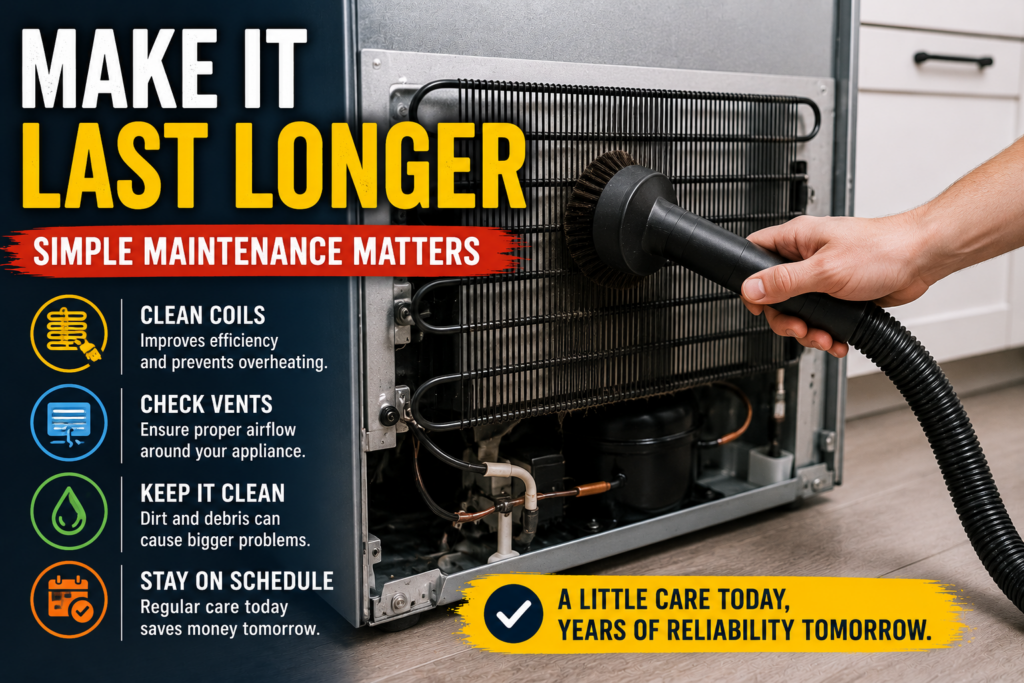
Alt Text: Cleaning refrigerator condenser coils with a vacuum brush to improve appliance lifespan.
Keep Them Clean
Dust buildup is one of the biggest causes of overheating.
Examples include:
- Vacuum refrigerator condenser coils annually.
- Clean dryer vents after every load and inspect the vent system regularly.
- Remove dishwasher food debris from filters.
- Wash washing machine door seals and detergent drawers.
Avoid Overloading
Many appliance failures happen because machines operate under excessive strain.
Avoid:
- Stuffing washers completely full
- Overloading dryers
- Blocking refrigerator air vents
- Packing dishwashers so tightly that spray arms cannot rotate
Proper loading reduces wear on motors, bearings, and pumps.
Protect Electronics
Because modern appliances rely heavily on circuit boards, electrical protection is more important than ever.
Consider:
- Whole-home surge protection
- Quality surge protectors where appropriate
- Stable household voltage
- Prompt repair after lightning-related electrical events
Follow Maintenance Recommendations
Skipping routine maintenance may not cause immediate problems, but small issues often become expensive repairs later.
Simple yearly maintenance usually costs little compared with replacing a major appliance.
Should You Repair or Replace?
When an appliance develops problems after several years, replacement isn’t always the best answer.
Consider repairing if:
- The appliance is relatively young.
- The repair costs less than about half the price of a comparable replacement.
- The problem involves a single replaceable component.
- The appliance has otherwise performed reliably.
Replacement often makes more financial sense when:
- Multiple major components have failed.
- Repair costs approach the price of a new unit.
- Replacement parts are discontinued.
- Energy savings and improved performance justify upgrading.
Choosing based on total ownership cost—not just repair price—usually leads to the best long-term decision.
Frequently Asked Questions
Why did appliances from the 1980s seem to last forever?
Older appliances were generally simpler, heavier, and relied less on electronics. Fewer components meant fewer opportunities for failures, although they typically consumed much more electricity and water.
Do smart appliances break more often?
Not necessarily, but smart appliances contain additional electronic components that can fail independently of the mechanical parts. More features usually mean more potential repair points.
Are expensive appliances always more durable?
Higher prices often include premium finishes, additional features, or larger capacities rather than dramatically longer lifespans. Reliability varies by model, maintenance, and usage.
Is it worth repairing a 10-year-old appliance?
It depends on the repair cost, overall condition, and expected remaining lifespan. A relatively inexpensive repair can be worthwhile if the appliance has been dependable and no other major issues are present.
Homeowner Checklist
- Inspect and clean appliance filters on a regular schedule.
- Vacuum refrigerator condenser coils at least once a year.
- Avoid consistently overloading washers, dryers, and dishwashers.
- Protect sensitive electronics with appropriate surge protection.
- Compare repair costs with replacement value before making a decision.
- Choose reliability and serviceability over unnecessary smart features when buying your next appliance.
Related Reading:
• Are Korean Appliances Worth Buying in America? LG and Samsung vs U.S. Brands
• AC Mistakes That Cost You Money (And How to Avoid Them)
• Should You Unplug Appliances During a Storm? What Every Homeowner Should Know
• Appliance Maintenance Calendar: A Month-by-Month Guide to Make Your Home Appliances Last Longer
• The #1 Mistake That Shortens Appliance Lifespan (And How to Avoid It)