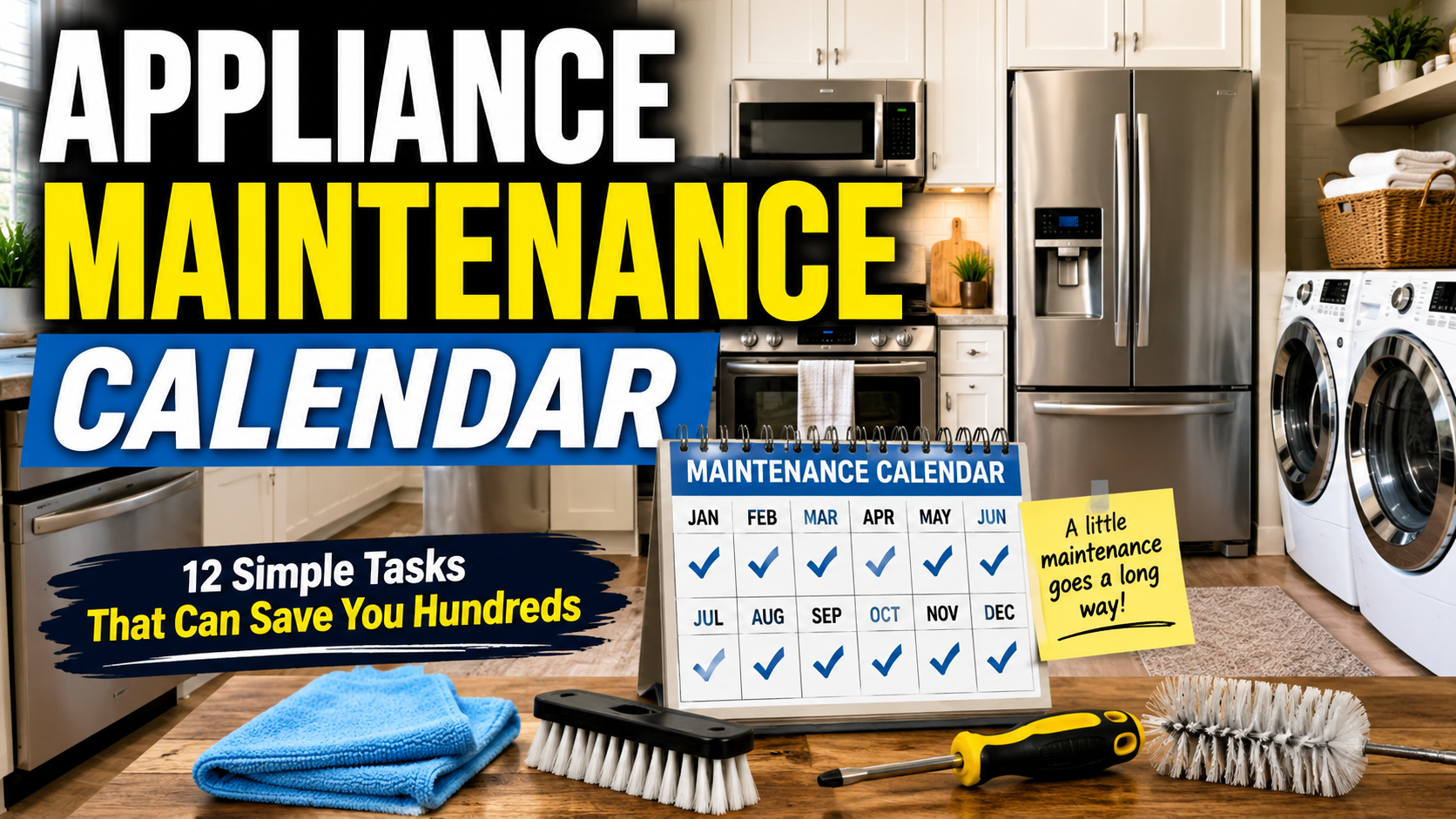
Appliance Maintenance Calendar: A Month-by-Month Guide to Make Your Home Appliances Last Longer
Keeping up with an appliance maintenance calendar is one of the easiest ways to avoid expensive repairs and extend the life of the appliances you rely on every day. Most maintenance tasks take less than 30 minutes, require only basic tools, and can improve energy efficiency while reducing unexpected breakdowns.
Instead of waiting until something stops working, a simple month-by-month routine helps catch small problems before they become costly repairs. Whether you live in an apartment, condo, townhouse, or single-family home, this schedule can help you keep your kitchen and laundry appliances running efficiently all year.
Why an Appliance Maintenance Calendar Matters
Many homeowners assume appliances simply wear out with age. In reality, lack of routine maintenance causes many failures that could have been prevented.
Dirty filters, clogged vents, blocked condenser coils, mineral buildup, and loose water connections gradually reduce efficiency. Your appliances work harder, consume more electricity, and eventually develop expensive problems.
A yearly maintenance schedule spreads these small tasks throughout the year so nothing gets overlooked.
Instead of spending hundreds or thousands of dollars on emergency repairs, you’ll spend a few minutes each month protecting your investment.
January: Start the Year With Your Refrigerator
Winter is a great time to inspect the refrigerator because holiday cooking often means the appliance has been working overtime.
Check the condenser coils behind or underneath the refrigerator. Dust buildup makes the compressor work much harder than necessary.

Use a vacuum with a brush attachment or a coil cleaning brush.
While you’re there:
- Inspect door gaskets for cracks
- Make sure doors seal tightly
- Verify the refrigerator temperature stays between 37°F and 40°F
- Confirm the freezer stays near 0°F
Time: 20–30 minutes
Difficulty: Easy
Tools: Vacuum, soft brush, microfiber cloth
February: Give Your Dishwasher Some Attention
Hard water minerals, grease, and food particles slowly build up inside the dishwasher.
Run an empty cleaning cycle using a dishwasher cleaner or white vinegar.
Remove the bottom filter and rinse away trapped debris.
Spray arms should also spin freely. If water holes look clogged, clear them carefully with a toothpick.
Many people replace dishes before realizing poor cleaning performance often starts with a dirty filter.
March: Prepare Your Washer for Spring Laundry
Front-load and top-load washers both benefit from routine cleaning.
Leave the door open after each load to reduce moisture.
Clean the detergent dispenser and inspect the rubber door gasket for mold.
Run the washer’s cleaning cycle using a washing machine cleaner.
If your laundry room is in a basement where humidity stays high, consider using a dehumidifier to reduce moisture around the appliance.
April: Dryer Safety Month
A clogged dryer vent is one of the most common maintenance issues homeowners overlook.
Even if you clean the lint screen after every load, lint still collects inside the vent hose.

Disconnect the dryer carefully.
Vacuum behind the appliance.
Inspect the exhaust hose.
Clean the exterior vent where air exits your home.
Better airflow shortens drying times, lowers utility bills, and reduces fire risk.
DIY? Yes
Time: About 30 minutes
May: Check Your Air Conditioner Before Summer
Don’t wait until the first heat wave.
Replace or clean HVAC filters before temperatures climb.
Walk around the outdoor condenser unit and remove leaves, weeds, or debris blocking airflow.
Listen for unusual sounds when the system starts.
Weak airflow or uneven cooling may indicate dirty coils or duct problems that deserve professional inspection before peak summer demand.
June: Inspect Your Refrigerator Water System
If your refrigerator has a water dispenser or ice maker, June is a good reminder to inspect the water supply.
Replace the water filter if recommended by the manufacturer.
Look behind the refrigerator for slow leaks or moisture around the water line.
Small leaks often go unnoticed until flooring becomes damaged.
Replacing a water filter usually takes less than ten minutes and improves both water quality and ice production.
July: Clean Small Kitchen Appliances
Summer entertaining often means coffee makers, air fryers, blenders, and microwaves see heavy use.
Remove grease from air fryer baskets.
Descale coffee makers.
Clean microwave vents and wipe food splatters before they harden.
These quick cleaning sessions help maintain performance while preventing odors.
August: Check Your Garbage Disposal
Many homeowners only think about the garbage disposal after it develops a problem.
Avoid putting grease, bones, coffee grounds, or fibrous vegetables into the disposal.
Run cold water before, during, and after operation.
If odors develop, grinding citrus peels with ice cubes can freshen the unit without harsh chemicals.
September: Prepare for Fall Cooking
Holiday cooking season is approaching.
Clean your oven thoroughly before baked-on grease becomes difficult to remove.

Inspect oven door seals.
Test all burners.
Replace range hood filters if they are covered with grease.
Proper ventilation helps remove smoke and cooking odors while protecting nearby cabinets.
October: Water Heater Check
Sediment naturally collects inside water heaters over time.
If you’re comfortable performing basic maintenance, flushing part of the tank can improve efficiency.
Always follow the manufacturer’s instructions.
If the water heater makes popping noises or delivers inconsistent hot water, a professional inspection may be worthwhile.
Typical professional maintenance costs range from $100–$250, depending on your location and the service provided.
November: Prepare for Holiday Appliance Use
This is the busiest month for many kitchens.
Check refrigerator shelves for proper airflow.
Avoid overpacking the freezer.
Inspect extension cords used with countertop appliances.
Many holiday appliance failures happen because refrigerators cannot circulate cold air properly when overloaded.
December: End-of-Year Whole-Home Inspection
Take one afternoon to walk through your home.
Inspect:
- Refrigerator
- Dishwasher
- Washer
- Dryer
- Oven
- Microwave
- Garbage disposal
- HVAC system

Look for:
- Water leaks
- Strange noises
- Rust
- Loose hoses
- Damaged power cords
- Excess vibration
Write down anything that should be repaired early next year before it becomes an emergency.
DIY vs. Professional Maintenance
Not every maintenance task should be handled yourself.
DIY jobs include:
- Cleaning filters
- Vacuuming condenser coils
- Replacing refrigerator water filters
- Cleaning dryer vents
- Wiping door seals
- Removing dust from appliances
Professional maintenance is recommended for:
- Refrigerant issues
- Electrical repairs
- Gas appliance servicing
- Compressor replacement
- HVAC refrigerant work
- Internal dishwasher or washer repairs
Attempting advanced repairs without proper training can create safety hazards and often increases repair costs later.
Common Maintenance Mistakes
Many homeowners accidentally shorten appliance life by making simple mistakes.
Some of the most common include:
- Skipping dryer vent cleaning because the lint screen looks clean
- Blocking refrigerator air vents with food containers
- Using too much detergent in high-efficiency washers
- Ignoring small water leaks
- Forgetting to replace HVAC filters
- Waiting until an appliance stops working before inspecting it
A small maintenance habit repeated every month usually prevents much larger problems later.
Real-Life Examples
A homeowner in a suburban single-family home noticed the refrigerator seemed louder than usual. During the January maintenance check, they discovered the condenser coils were completely covered in pet hair. After cleaning them, the refrigerator cooled more efficiently, and the compressor cycled less often, helping reduce monthly electricity use.
In another case, a family living in a condo found their dryer needed two full cycles to dry towels. Rather than replacing the dryer, they cleaned a heavily clogged vent hose. Drying times returned to normal the same day, avoiding what could have been an unnecessary appliance purchase.
FAQ
How often should appliances be maintained?
Most major appliances benefit from a quick inspection every month and a more thorough cleaning once or twice a year.
Which appliance needs the most maintenance?
Dryers and refrigerators usually require the most routine attention because lint buildup and dirty condenser coils directly affect efficiency and safety.
Does maintenance really extend appliance lifespan?
Yes. Routine cleaning, proper airflow, replacing filters, and addressing small issues early can significantly reduce wear on major components.
Is professional maintenance worth the cost?
For HVAC systems, gas appliances, and complex repairs, professional service can prevent larger failures and may improve energy efficiency enough to offset part of the maintenance cost.
Annual Appliance Maintenance Checklist
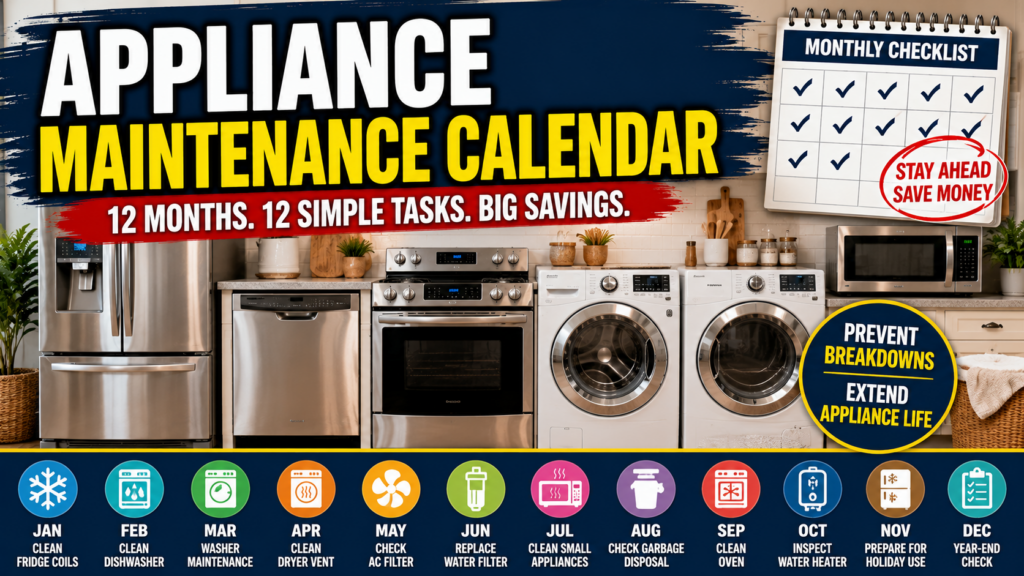
- Clean refrigerator condenser coils
- Check refrigerator door seals
- Replace refrigerator water filter
- Clean dishwasher filter
- Inspect spray arms
- Run washer cleaning cycle
- Clean washer gasket
- Vacuum dryer vent
- Replace HVAC filter
- Clean range hood filter
- Inspect garbage disposal
- Check water lines for leaks
- Test appliance temperatures
- Look for unusual noises or vibrations
- Schedule professional service if needed
Final Thoughts
A well-planned appliance maintenance calendar doesn’t require expensive tools or advanced repair skills. Small, consistent tasks spread throughout the year help appliances run more efficiently, lower energy costs, and reduce the chance of unexpected breakdowns.
By spending just a few minutes each month, you can protect some of the most expensive equipment in your home and avoid many repairs that are entirely preventable.
Related Reading:
• The #1 Mistake That Shortens Appliance Lifespan (And How to Avoid It)
• Should You Turn Off Appliances Before Vacation? What to Unplug and What to Leave On
• The Most Common Appliance Myths Homeowners Still Believe (And the Truth Behind Them)
• 10 Appliance Sounds You Should Never Ignore (And What They Usually Mean)
• Preparing Your Home Appliances Before Moving: A Complete Checklist to Prevent Damage