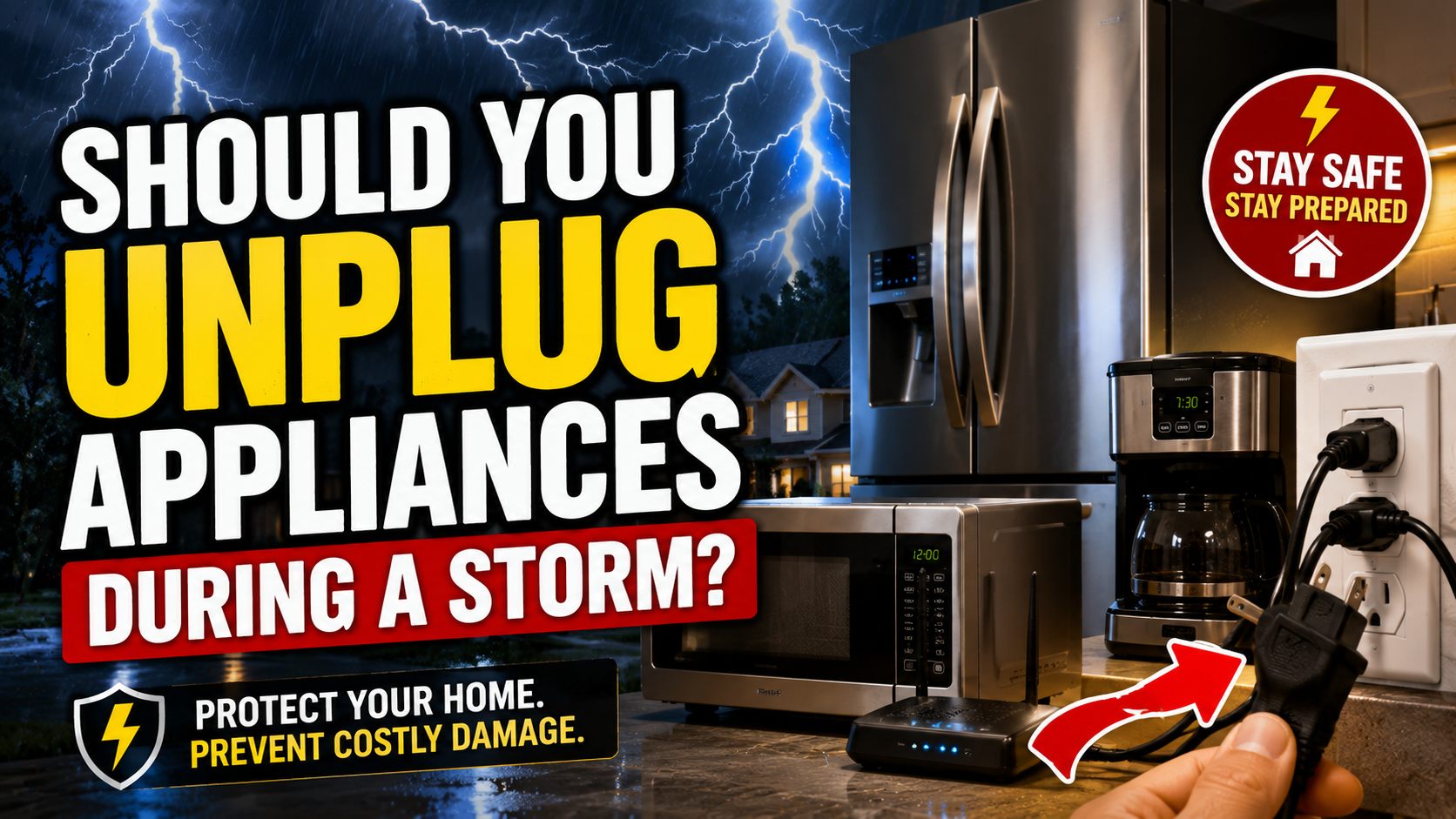
Should You Unplug Appliances During a Storm? What Every Homeowner Should Know
Thunderstorms can produce powerful lightning strikes capable of sending damaging electrical surges through your home’s wiring. Unplugging appliances during a storm is one of the most effective ways to protect sensitive electronics when a severe thunderstorm is approaching and it can be done safely before the storm arrives. While whole-house surge protectors and quality surge strips offer valuable protection, physically unplugging valuable devices provides the highest level of defense against lightning-related power surges.
Many homeowners wonder whether unplugging everything is necessary or if surge protectors are enough. The answer depends on the type of appliance, the severity of the storm, and whether the equipment contains sensitive electronic components.
How Lightning Can Damage Household Appliances
A direct lightning strike doesn’t have to hit your house to cause damage.
Lightning that strikes nearby utility lines or transformers can send a high-voltage surge through the electrical system. Even a brief surge lasting only a fraction of a second may damage electronic control boards inside modern appliances.
Today’s refrigerators, dishwashers, washing machines, dryers, and HVAC systems contain computerized components that are far more sensitive than older mechanical appliances.
Repairing a damaged control board often costs between $200 and $700, depending on the appliance and model.
Which Appliances Should You Unplug?
Not every appliance needs to be unplugged before every storm.
Focus first on electronics and appliances that contain expensive circuit boards.
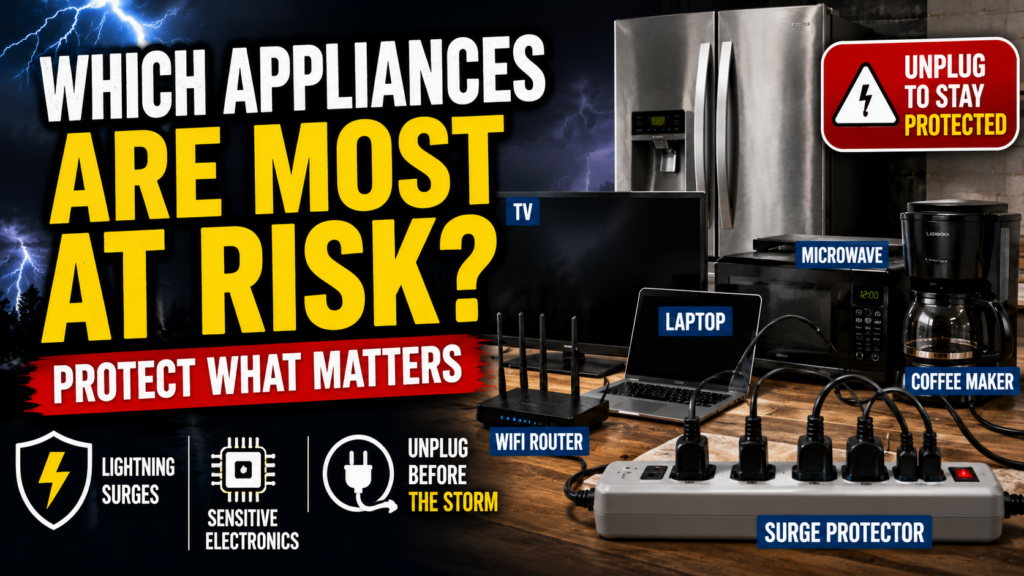
High-priority appliances include:
- Televisions
- Desktop computers
- Gaming consoles
- Wi-Fi routers and modems
- Microwaves
- Air fryers
- Coffee makers with digital displays
- Portable air conditioners
- Small countertop appliances
Large built-in appliances such as refrigerators and freezers can also be vulnerable, but unplugging them isn’t always practical, especially if doing so could affect food safety.
Are Surge Protectors Enough?
Many homeowners believe surge protectors completely eliminate lightning damage.
They don’t.
Quality surge protectors help absorb many everyday electrical surges caused by utility switching or minor disturbances. However, a nearby lightning strike can generate far more energy than many consumer-grade surge protectors are designed to handle.
Whole-house surge protection installed at the electrical panel provides another layer of defense but still cannot guarantee complete protection from a direct lightning strike.
The safest option for portable electronics remains unplugging them before severe weather arrives.
Never Unplug Appliances During an Active Storm
One common mistake is waiting until lightning is already overhead.
Doing so can actually increase your personal risk.
If thunder is already audible or lightning is visible nearby, avoid touching electrical outlets, extension cords, or plugged-in appliances.
Instead, stay indoors and wait until the storm has completely passed.
If you plan to unplug appliances, do it before severe weather reaches your area.
What About Refrigerators and Freezers?
Many people hesitate to unplug refrigerators because of food safety concerns.
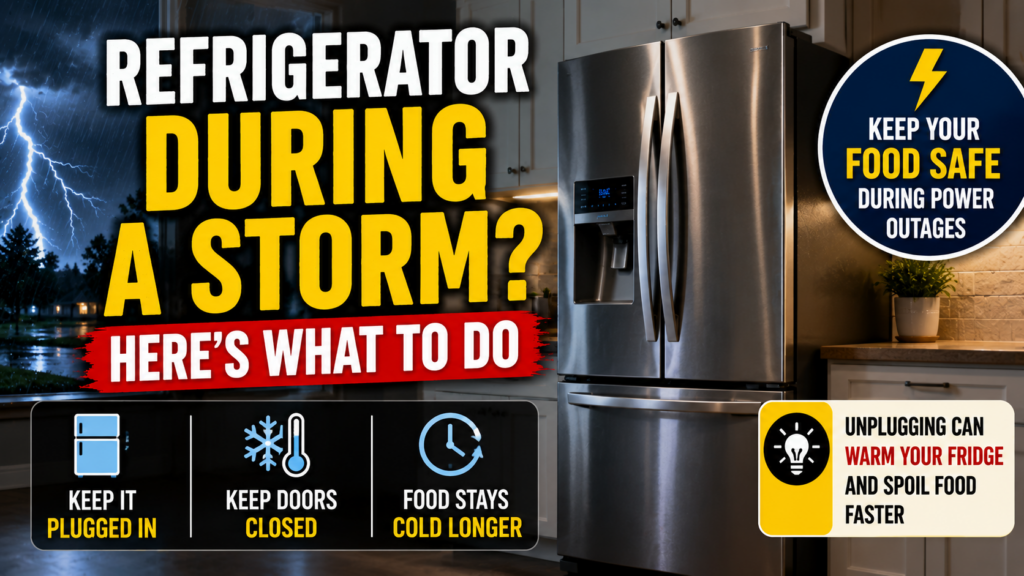
In most situations, leaving the refrigerator plugged in is the better choice.
An unopened refrigerator usually keeps food cold for about four hours during a power outage, while a full freezer can maintain a safe temperature for approximately 48 hours if the door remains closed.
If a severe storm is expected but no evacuation is necessary, keeping refrigerator doors closed is often more important than unplugging the appliance.
Protecting HVAC Systems
Heating and cooling systems represent one of the largest investments in many American homes.
Outdoor condenser units are particularly vulnerable because they connect to both electrical wiring and thermostat control circuits.
Installing a professionally rated whole-house surge protector is often recommended for homes in areas that experience frequent thunderstorms.
Annual HVAC inspections may also identify damaged electrical connections before they become larger problems.
Extra Protection for Smart Appliances
Modern smart appliances connect to Wi-Fi and often include touchscreens, sensors, and internet-enabled control boards.
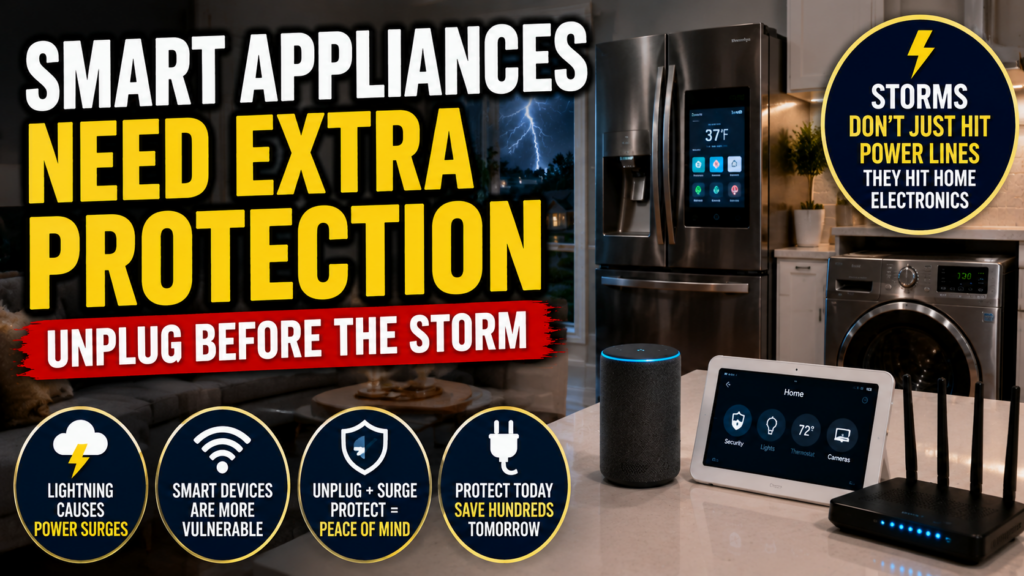
These additional electronic components make surge protection even more valuable.
If possible:
- Use quality surge protectors.
- Keep firmware updated.
- Back up smart home settings when available.
- Disconnect portable smart appliances before severe storms.
Real-Life Examples
A homeowner in Florida unplugged computers, televisions, and gaming consoles before an afternoon thunderstorm. Although lightning caused a neighborhood power outage, none of the unplugged electronics suffered damage when electricity was restored.
In another case, a family left several countertop appliances connected during a severe storm. After power returned, a digital microwave display no longer worked even though the appliance still heated food. Replacing the electronic control board cost several hundred dollars.
A homeowner in the Midwest installed a whole-house surge protector after replacing an expensive HVAC control board following a lightning-related power surge. Later storms caused no additional equipment damage.
DIY vs. Professional Protection
Several protective measures are easy for homeowners.
DIY options include:
- Unplug portable electronics before storms.
- Use certified surge protectors.
- Keep extension cords in good condition.
- Replace damaged power strips.
Professional services include:
- Whole-house surge protector installation
- Electrical panel inspection
- Grounding system evaluation
- Lightning protection systems
Professional installation generally ranges from $300 to $900, depending on your home’s electrical system and local labor rates.
Common Mistakes to Avoid
Many homeowners unintentionally increase the risk of appliance damage.
Avoid these common mistakes:
- Waiting until lightning is already nearby before unplugging appliances.
- Assuming every power strip provides surge protection.
- Plugging expensive electronics into worn-out extension cords.
- Ignoring repeated power fluctuations.
- Forgetting to protect internet equipment such as routers and modems.
A small investment in surge protection often costs far less than replacing damaged electronics.
FAQ
Should I unplug appliances every time it rains?
No. Unplugging is generally recommended only when severe thunderstorms or lightning are expected.
Can lightning damage appliances that are turned off?
Yes. An appliance can still be damaged if it remains plugged into an outlet during a significant electrical surge.
Is a surge protector better than unplugging?
A surge protector provides excellent everyday protection, but physically unplugging an appliance offers the greatest protection against lightning-related surges.
Should I unplug my refrigerator during a storm?
Usually no. Keeping the refrigerator running helps preserve food. If power goes out, avoid opening the doors unnecessarily.
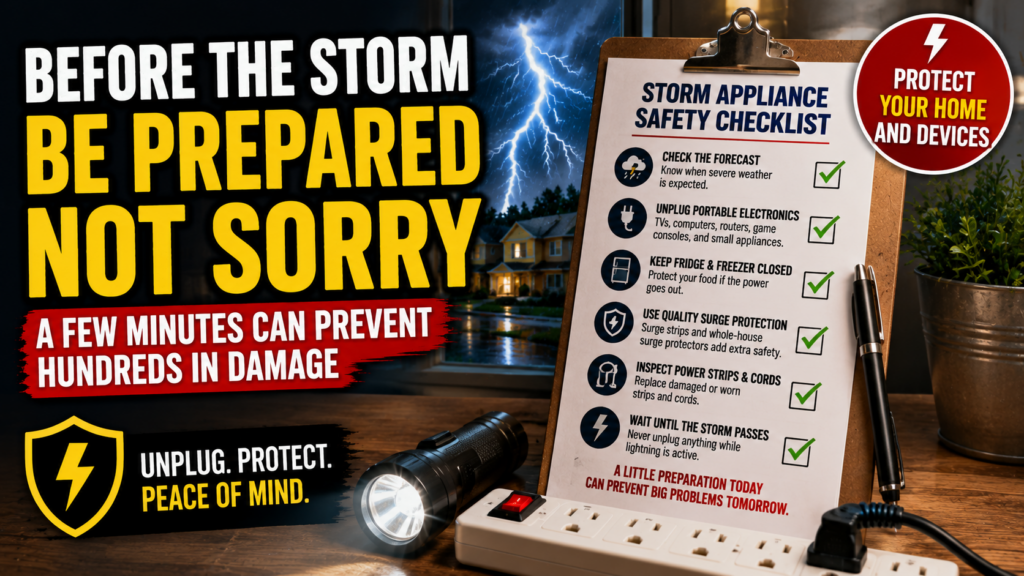
Storm Appliance Protection Checklist
- Monitor weather forecasts before severe storms.
- Unplug portable electronics before lightning arrives.
- Leave refrigerators and freezers closed if power is lost.
- Use certified surge protectors for valuable electronics.
- Consider installing a whole-house surge protector.
- Inspect damaged power strips after major surges.
- Never unplug appliances while lightning is actively occurring.
- Schedule an electrical inspection if repeated surge damage occurs.
Final Thoughts
Lightning-related power surges can damage appliances in seconds, but preparing before a storm greatly reduces the risk. Focus on unplugging portable electronics ahead of severe weather, use quality surge protection for everyday defense, and avoid handling electrical equipment once lightning is nearby.
A few minutes of preparation before the storm arrives can help protect some of the most expensive appliances and electronics in your home.
Related Reading:
• Appliance Maintenance Calendar: A Month-by-Month Guide to Make Your Home Appliances Last Longer
• The #1 Mistake That Shortens Appliance Lifespan (And How to Avoid It)
• Should You Turn Off Appliances Before Vacation? What to Unplug and What to Leave On
• The Most Common Appliance Myths Homeowners Still Believe (And the Truth Behind Them)
• 10 Appliance Sounds You Should Never Ignore (And What They Usually Mean)