
Wondering how long dishwashers last? Learn the average dishwasher lifespan, warning signs of failure, maintenance tips, repair costs, and when replacing your dishwasher makes more sense than fixing it.
How Long Do Dishwashers Last?
A dishwasher is one of the hardest-working appliances in an American kitchen, often running several times each week. Whether you’re a first-time homeowner or replacing an aging appliance, understanding how long dishwashers last can help you avoid unexpected breakdowns and make smarter repair decisions.
The average dishwasher lasts between 9 and 12 years, although the actual lifespan depends on how often it’s used, water quality, maintenance habits, and the quality of the appliance itself. Some premium models continue operating well beyond 15 years, while heavily used machines may begin developing problems much sooner.
Quick Answer
Most dishwashers last 9 to 12 years under normal household use. Regular cleaning, proper loading, and timely replacement of worn parts can extend their lifespan. If repairs approach half the cost of a new dishwasher or the unit is over 10 years old with recurring problems, replacement often becomes the better long-term investment.
Average Dishwasher Lifespan
While every home uses appliances differently, most manufacturers and appliance professionals generally expect a dishwasher to fall within these ranges.
| Dishwasher Age | What You Can Expect |
|---|---|
| 0–5 Years | Normal operation with minimal repairs |
| 6–9 Years | Occasional maintenance or replacement of small parts |
| 10–12 Years | More frequent repairs may become necessary |
| 13+ Years | Efficiency declines and major component failures become more common |
Daily use in a busy family of four places much more stress on a dishwasher than occasional use in a smaller household. Likewise, hard water deposits and poor maintenance can significantly shorten appliance life.
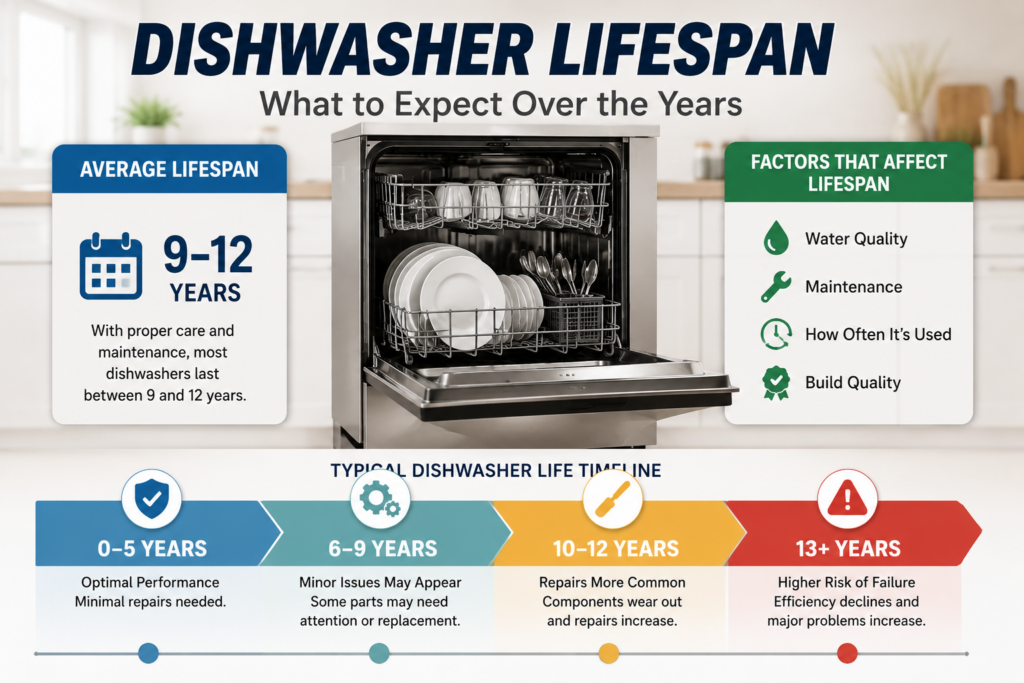
Alt Text: Modern dishwasher with lifespan timeline showing average years of use
What Usually Causes a Dishwasher to Wear Out?
Many homeowners assume the motor is the first part to fail, but several components experience wear over time.
Common reasons dishwashers reach the end of their lifespan include:
- Circulation pump failure
- Drain pump problems
- Heating element wear
- Electronic control board issues
- Door seal deterioration
- Mineral buildup from hard water
- Spray arm clogging
- Rust developing inside older tubs
In areas with hard water, mineral deposits often reduce cleaning performance years before the appliance completely stops working.
Regular cleaning helps prevent many of these issues from becoming expensive repairs.
Habits That Can Add Years to Your Dishwasher
Simple maintenance often has a much greater impact than many homeowners realize.
Instead of waiting until performance drops, adopting a few routine habits can keep internal components cleaner and reduce unnecessary strain.
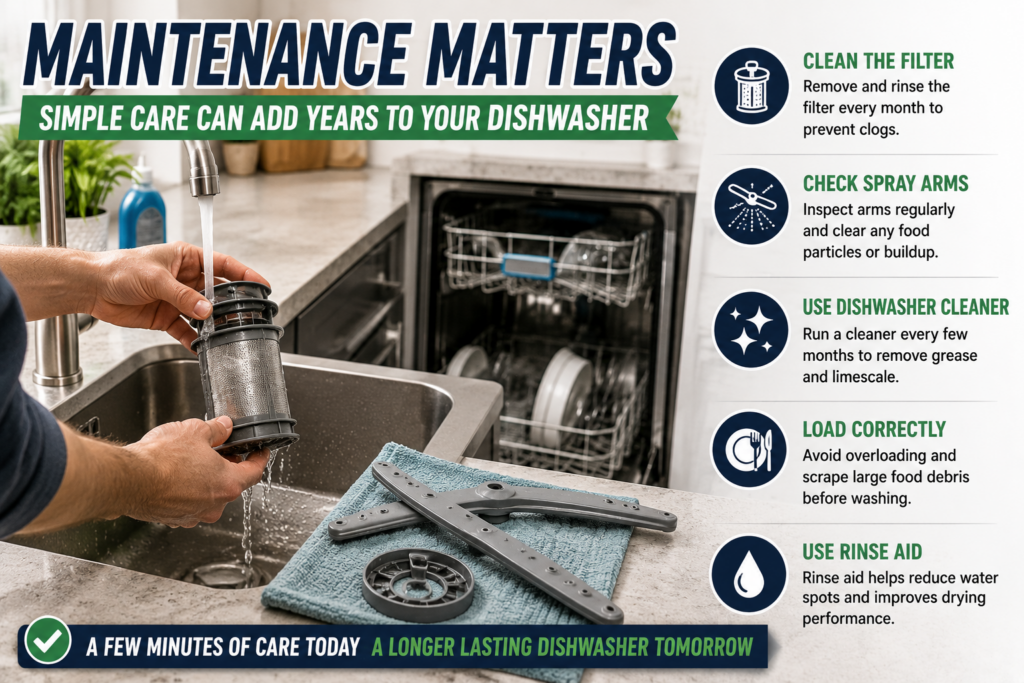
Alt Text: Homeowner cleaning a dishwasher filter and spray arms in a kitchen sink
Consider these maintenance practices:
- Clean the filter every month.
- Inspect spray arms for food particles.
- Use dishwasher cleaner every few months.
- Avoid overloading dishes.
- Scrape large food debris before loading.
- Check the door gasket for damage.
- Leave the door slightly open after a cycle to reduce moisture buildup.
These small tasks require only a few minutes but may extend the appliance’s useful life considerably.
Water quality also matters. Homes with hard water may benefit from rinse aids or water-softening systems that reduce mineral accumulation.
Warning Signs Your Dishwasher May Be Near the End
Dishwashers rarely stop working without warning.
Instead, performance often declines gradually over several months.
Watch for these symptoms:
- Dishes remain dirty after normal cycles.
- Water stays in the bottom after washing.
- Unusual grinding or humming noises.
- Frequent leaks around the door.
- Cycles take much longer than before.
- Burning odors during operation.
- Rust appearing inside the tub.
- Repeated error codes despite resets.
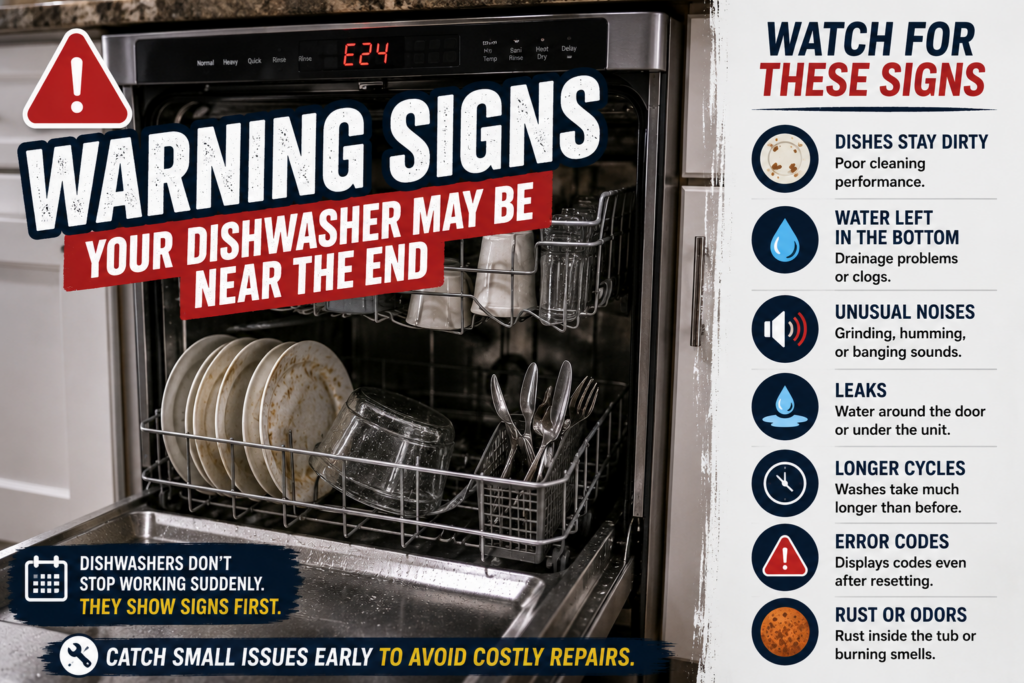
Alt Text: Dishwasher displaying an error code with dirty dishes still inside after a wash cycle
A single repair doesn’t necessarily mean replacement is needed. However, several problems occurring within a short period usually indicate the appliance is reaching the end of its service life.
Should You Repair or Replace?
The decision often depends on both the dishwasher’s age and the repair cost.
Here is a practical guideline many appliance technicians use:
- Under 6 years old: Repair is often worthwhile.
- Between 6 and 10 years: Compare repair cost with replacement price.
- Over 10 years: Replacement becomes more attractive if major components fail.
For example, replacing a door latch or water inlet valve is relatively inexpensive.
On the other hand, replacing a circulation motor, electronic control board, or multiple major components can become costly.
Professional dishwasher repairs commonly range from $150 to $450, depending on the failed part, labor rates, and location. New dishwashers generally cost between $500 and $1,200 before installation, although premium models may cost significantly more.
For many homeowners, replacing an older dishwasher with a newer ENERGY STAR-certified model may also reduce water and electricity usage over time.

Alt Text: Side-by-side comparison of repairing an old dishwasher versus installing a new energy-efficient model
Can a Dishwasher Last Longer Than 15 Years?
Yes—but it isn’t the norm.
Some well-maintained dishwashers continue operating for 15 years or longer, especially when they receive regular maintenance and are used moderately.
Factors that improve longevity include:
- Soft water
- Consistent filter cleaning
- Avoiding overloaded racks
- Promptly repairing small issues
- Using quality detergent
- Running appropriate wash cycles
Even if an older dishwasher still functions, declining efficiency and increasing repair frequency may eventually outweigh the benefit of keeping it.
Final Thoughts
A dishwasher is designed to provide years of reliable service, but no appliance lasts forever.
Understanding the average lifespan allows homeowners to budget for future replacement instead of being surprised by sudden failures. Routine maintenance remains the most effective way to maximize performance while delaying expensive repairs.
If your dishwasher is approaching the 10-year mark and repairs are becoming more frequent, comparing replacement costs with future maintenance expenses may help you make the most economical decision for your home.
FAQ
How long do most dishwashers last?
Most residential dishwashers last between 9 and 12 years, although lifespan varies depending on usage, maintenance, water quality, and model quality.
Is it worth repairing a 10-year-old dishwasher?
It depends on the repair cost. Minor repairs may still be worthwhile, but expensive component failures often make replacement the better long-term choice.
How often should I clean my dishwasher?
Cleaning the filter once a month and running a dishwasher cleaner every few months helps maintain cleaning performance and reduces wear.
What shortens a dishwasher’s lifespan?
Hard water, clogged filters, overloading, skipped maintenance, and ignoring small repairs are among the most common factors that shorten dishwasher life.
Dishwasher Maintenance Checklist
- Clean the filter every month.
- Remove food debris before loading dishes.
- Inspect spray arms regularly.
- Use rinse aid if recommended.
- Run a dishwasher cleaner every few months.
- Check the door seal for cracks or leaks.
- Watch for unusual noises or longer cycle times.
- Address minor repairs before they become major failures.
Related Reading:
• LG vs Bosch Dishwashers: Which Is Worth Buying in
• Bosch vs Whirlpool Dishwashers: Which Is Better for Everyday Use?
• Top-Control vs. Front-Control Dishwashers: Which Is Better for Convenience and Cleaning Performance?
• Samsung vs KitchenAid Dishwashers: Which Cleans Better?
• Why Is My Dishwasher Not Draining? Common Causes and Easy Fixes