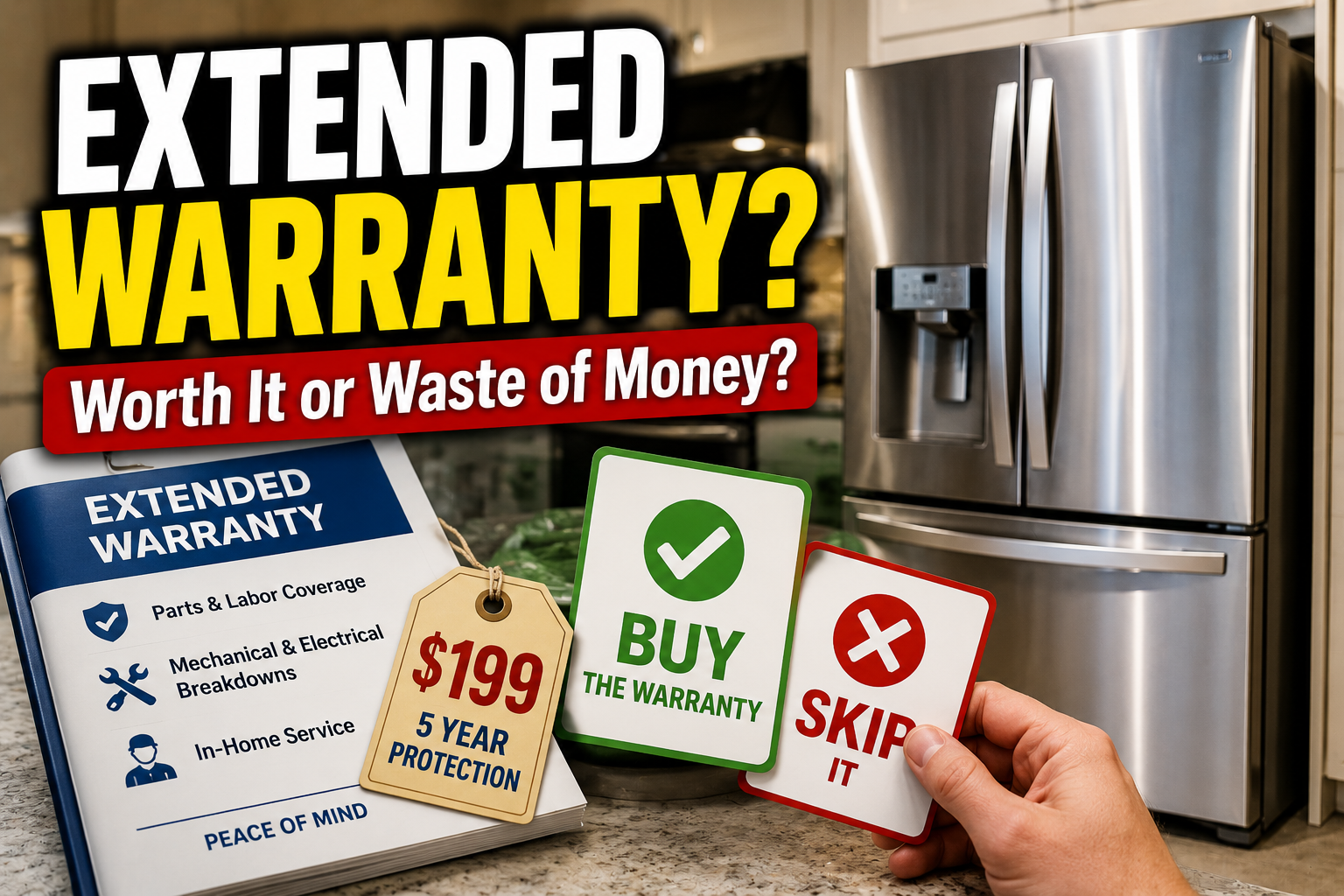
Should You Buy an Extended Warranty for a Refrigerator? A Smart Buyer’s Guide
Meta Description
Should you buy an extended warranty for a refrigerator? Learn when an appliance protection plan is worth the cost, when to skip it, average repair costs, and how to make the smartest buying decision.
Buying a new refrigerator is one of the biggest appliance purchases most homeowners make. Along with choosing the right size, style, and features, you’ll probably face another decision at checkout: Should you buy an extended warranty for a refrigerator?
Sales associates often recommend an appliance protection plan, explaining that modern refrigerators are expensive to repair. While that’s true in some cases, an extended warranty isn’t automatically the best choice for everyone.
The right decision depends on the refrigerator you purchased, its features, expected repair costs, and your comfort with financial risk.
Quick Answer
For many homeowners, an extended warranty is worth considering for expensive refrigerators with ice makers, water dispensers, smart technology, or multiple cooling systems. Budget models with fewer electronic components often don’t justify the extra cost. Compare the warranty price with potential repair expenses before deciding.

Alt Text: Customer deciding whether to purchase an extended warranty while buying a refrigerator.
What Is an Extended Warranty?
An extended warranty—sometimes called an appliance protection plan or service plan—is optional coverage that begins after the manufacturer’s standard warranty expires.
Unlike the original warranty, which is included with the purchase price, an extended warranty requires an additional payment.
Coverage may include:
- Mechanical failures
- Electrical component failures
- Labor charges
- Replacement parts
- In-home service visits
However, every plan has exclusions, so reading the coverage details is essential before purchasing.
What Does the Manufacturer’s Warranty Already Cover?
Many buyers don’t realize their refrigerator already includes some protection.
Most new refrigerators sold in the United States include:
- One year of comprehensive warranty coverage
- Longer compressor coverage, often five to ten years for certain components
- Factory defects in materials or workmanship
Keep in mind that long-term compressor warranties often cover only the part itself. Labor costs may no longer be included after the first year.
Understanding what comes with your refrigerator helps prevent paying twice for similar coverage.

Alt Text: Comparison between a manufacturer’s warranty and an extended appliance protection plan.
When an Extended Warranty Makes Sense
Not every refrigerator carries the same repair risk.
An extended warranty may provide better value if you purchased:
- A premium refrigerator costing more than about $2,000
- A French door model with multiple electronic controls
- A refrigerator with dual ice makers
- A built-in refrigerator
- A smart refrigerator with Wi-Fi features
- A model with water dispensers, touch screens, or specialty cooling zones
These refrigerators contain more electronic components and specialized parts that can increase repair costs.
If a single repair could cost several hundred dollars, paying upfront for additional protection may provide peace of mind.
When You Can Probably Skip It
In many situations, purchasing additional coverage isn’t necessary.
You may not need an extended warranty if:
- Your refrigerator is an entry-level model.
- Replacement parts are relatively inexpensive.
- You already have emergency savings for unexpected repairs.
- Your credit card automatically extends the manufacturer’s warranty.
- You plan to replace the refrigerator within several years.
For lower-priced refrigerators, the warranty can represent a significant percentage of the purchase price.

Alt Text: Refrigerator technician repairing an ice maker inside a modern French door refrigerator.
How Much Can Refrigerator Repairs Cost?
Repair costs vary depending on the problem and where you live, but these general ranges help put warranty pricing into perspective.
Common repairs may include:
| Repair | Typical Cost |
|---|---|
| Ice maker repair | $150–$400 |
| Control board replacement | $250–$700 |
| Compressor replacement | $600–$1,200+ |
| Evaporator fan motor | $150–$400 |
| Water inlet valve | $150–$350 |
Many extended warranties cost between $100 and $300, depending on the refrigerator’s price and the length of coverage.
For premium refrigerators, one major repair can exceed the cost of the protection plan. For basic models, paying for repairs out of pocket may still be less expensive over the appliance’s lifetime.
Questions to Ask Before You Buy
Instead of automatically accepting or declining the warranty, ask a few practical questions.
- How long is the manufacturer’s warranty?
- Does the extended warranty begin immediately or after the factory warranty ends?
- Are labor charges fully covered?
- Is there a service call fee?
- Does the plan provide replacement if repairs aren’t possible?
- Are accidental damage and cosmetic issues excluded?
Knowing these answers helps you compare plans more objectively rather than making a rushed decision at checkout.

Alt Text: Homeowner reviewing a refrigerator warranty contract before making a purchase.
Consider Your Risk, Not Just the Price
Two people buying the same refrigerator may reach different conclusions.
For someone who prefers predictable expenses, paying for an extended warranty can provide reassurance.
Someone comfortable covering occasional repair costs from savings may decide the warranty isn’t necessary.
The best decision depends on your financial situation, the refrigerator’s complexity, and how long you expect to keep it.
Final Thoughts
An extended warranty isn’t automatically a waste of money, nor is it always a smart investment.
It becomes more valuable as refrigerators become more expensive and feature-rich. Simpler models generally have lower repair costs, making self-insuring through personal savings a reasonable alternative.
Before purchasing any protection plan, compare the warranty price with likely repair costs, understand what is already covered, and read the exclusions carefully.
Frequently Asked Questions
Do refrigerator extended warranties cover accidental damage?
Usually not. Most plans cover mechanical and electrical failures rather than accidental damage, cosmetic scratches, or misuse.
Can I buy an extended warranty after purchasing my refrigerator?
Sometimes. Many retailers and manufacturers allow customers to purchase additional coverage within a limited period after the original purchase.
Are retailer warranties and manufacturer extended warranties the same?
Not always. Coverage, service providers, deductibles, replacement policies, and exclusions can differ significantly.
Is an extended warranty transferable if I sell my home?
Some plans are transferable, while others end with the original purchaser. Always review the warranty terms before relying on this benefit.
Refrigerator Warranty Buying Checklist
- Compare the warranty cost with the refrigerator’s purchase price.
- Review what the manufacturer’s warranty already includes.
- Check whether your credit card offers extended warranty benefits.
- Estimate how long you expect to own the refrigerator.
- Read exclusions, deductibles, and labor coverage before purchasing.
- Choose the plan only if the potential repair costs justify the added expense.
Related Reading:
• Why Your Electric Bill Increased After Buying a New Refrigerator (And How to Lower It)
• Refrigerator Water Filter Replacement Guide: When to Replace It and How to Do It Right
• Refrigerator Water Dispenser Not Working? 8 Common Causes and Easy Fixes
• Why Is My Freezer Icing Up? Common Causes, Easy Fixes, and When to Worry
• Why Does My Refrigerator Freeze Food in the Fresh Food Section?