Why Your Electric Bill Increased After Buying a New Refrigerator (And How to Lower It)
Meta Description
Wondering why your electric bill increased after buying a new refrigerator? Learn the most common reasons, how to identify the real cause, and practical ways to reduce energy use without sacrificing performance.
If your electric bill increased after buying a new refrigerator, you’re probably asking the same question many homeowners do: Isn’t a new refrigerator supposed to use less electricity?
In many cases, it does. Modern refrigerators are generally more energy-efficient than older models. However, it’s surprisingly common to notice a higher electric bill during the first one or two months after installation. That doesn’t necessarily mean the refrigerator is defective.
The increase is often caused by installation conditions, household habits, seasonal weather, or choosing a larger refrigerator than the one it replaced. Understanding these factors can help you determine whether your energy usage is normal or if something needs attention.
Quick Answer
A new refrigerator can temporarily increase your electric bill because it works harder during its first days of operation, cools a larger storage space, or operates in warmer conditions. Improper installation, poor ventilation, frequent door openings, and incorrect temperature settings can also increase electricity consumption. Most issues are easy to identify and fix.

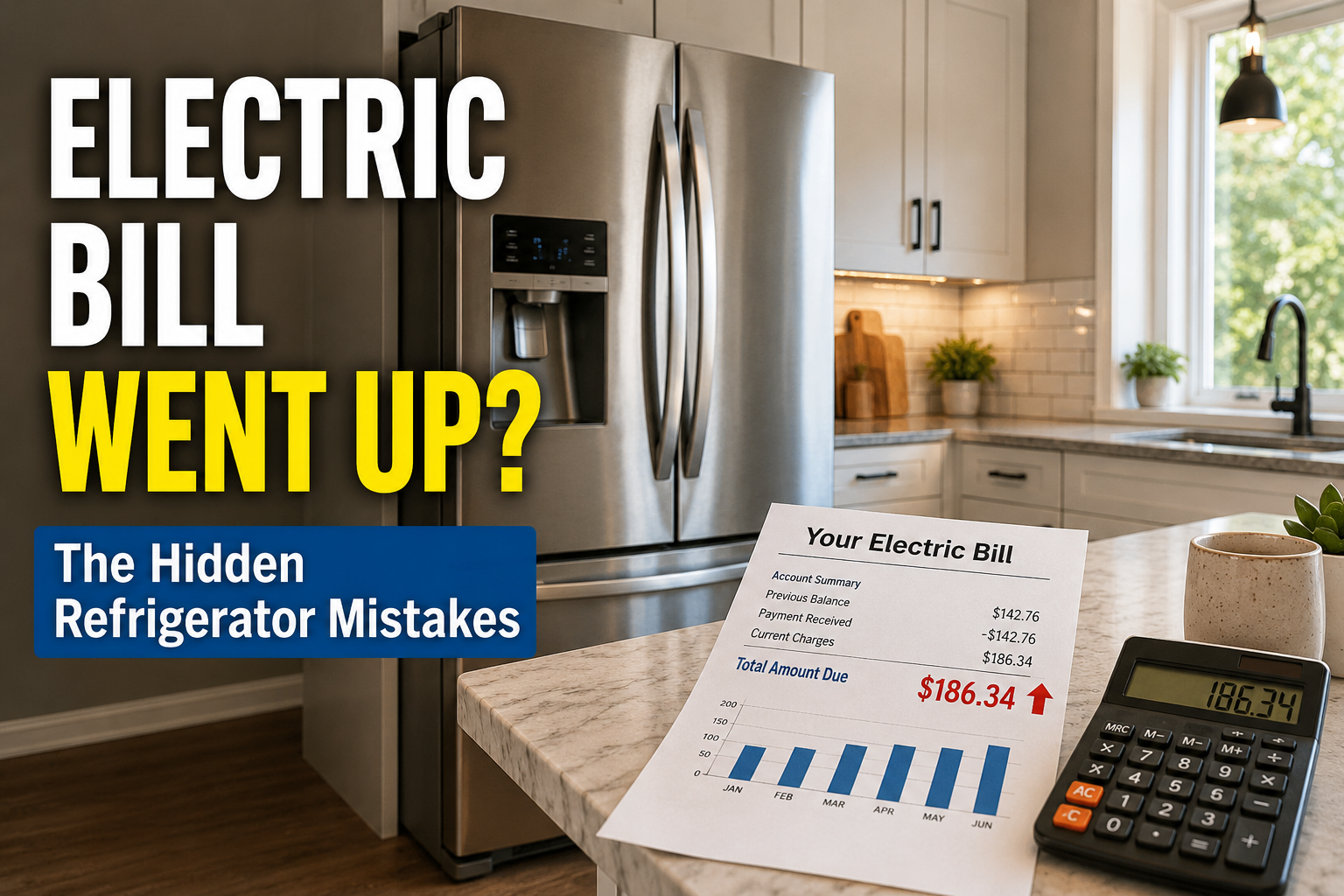
Alt Text: New stainless steel refrigerator installed in a modern kitchen with an electric bill on the countertop.
A New Refrigerator Doesn’t Always Mean Lower Energy Use
Many homeowners assume replacing an older refrigerator guarantees immediate energy savings. While newer models are usually more efficient, total electricity usage depends on much more than the appliance’s age.
For example, replacing an 18-cubic-foot refrigerator with a 27-cubic-foot French door model adds significantly more cooling space. Even with better efficiency, the larger compressor may run longer simply because it has more interior volume to keep cold.
Features that improve convenience can also add modest energy consumption, including:
- Ice makers
- Water dispensers
- Multiple cooling zones
- Smart Wi-Fi connectivity
- Convertible freezer compartments
These features don’t necessarily make the refrigerator inefficient, but they can increase overall electricity use compared with a simpler model.
The First Few Days Often Use More Electricity
Many new refrigerators consume more electricity during the first 24 to 72 hours.
After delivery, the refrigerator must cool every internal surface, shelf, drawer, and insulation panel. If groceries are added immediately, the compressor also works to cool all those room-temperature items.
This initial cooling period is temporary. Once the refrigerator reaches stable temperatures, energy consumption usually settles into its normal operating range.

Alt Text: Refrigerator installed too close to the wall with limited airflow behind the appliance.
Poor Airflow Can Make Any Refrigerator Work Harder
One of the most overlooked causes of higher electricity use is inadequate ventilation.
The condenser releases heat from the refrigerator. If warm air cannot escape, the compressor has to run longer to maintain safe food temperatures.
Check that your refrigerator has enough clearance:
- Leave several inches behind the refrigerator if recommended by the manufacturer.
- Avoid pushing the appliance tightly against the wall.
- Keep ventilation grills free of dust and debris.
- Do not block top or bottom air vents.
Even a high-efficiency refrigerator loses efficiency when heat becomes trapped around it.
Summer Weather Can Make the Difference
Many homeowners install new appliances during spring or summer renovations.
If your electric bill increases shortly afterward, the refrigerator may not be the only reason.
Higher outdoor temperatures cause:
- Longer refrigerator compressor cycles
- Increased air conditioner usage
- More frequent door openings
- Warmer groceries entering the refrigerator
Because several appliances work harder during hot weather, it’s easy to blame the newest appliance when seasonal energy demand is actually responsible.

Alt Text: Refrigerator thermometer showing recommended temperature settings.
Double-Check Your Temperature Settings
Factory settings are not always ideal.
Setting the refrigerator colder than necessary forces the compressor to run more often without providing meaningful food safety benefits.
A good starting point is:
- Refrigerator: 37°F (3°C)
- Freezer: 0°F (-18°C)
Using colder settings simply increases electricity usage while offering little practical advantage.
Household Habits May Have Changed Too
Sometimes the refrigerator isn’t using dramatically more electricity—the household simply uses it differently.
Common examples include:
- Shopping in bulk and storing more food
- Opening the doors more frequently
- Leaving doors open while unloading groceries
- Adding warm leftovers before they cool
- Frequently using the ice dispenser
Small daily habits can noticeably affect compressor run time over an entire month.

Alt Text: Family organizing groceries efficiently inside a refrigerator to improve airflow.
Is Something Actually Wrong With the Refrigerator?
A higher electric bill doesn’t automatically indicate a mechanical problem, but certain warning signs deserve attention.
Watch for:
- Compressor running almost continuously
- Excessive frost inside the freezer
- Door gasket not sealing properly
- Unusual clicking or buzzing sounds
- Exterior sides becoming unusually hot
- Interior temperatures that fluctuate frequently
If these symptoms appear together, inspection or warranty service may be appropriate rather than assuming higher energy use is normal.
How Much Electricity Should a Refrigerator Use?
Actual energy use depends on size, features, and household conditions.
Many modern refrigerators consume approximately 300–800 kWh per year.
Depending on local electricity rates across the United States, that often translates to roughly $50–$160 annually for the refrigerator itself.
If your monthly utility bill increased far beyond what this range would suggest, other appliances or seasonal changes are likely contributing as well.
Simple Ways to Reduce Refrigerator Energy Costs
You don’t need to replace your refrigerator again to improve efficiency.
A few practical adjustments often reduce unnecessary electricity use:
- Keep refrigerator and freezer temperatures at recommended settings.
- Allow leftovers to cool before storing them.
- Clean condenser coils when accessible.
- Check door seals regularly.
- Avoid overfilling air circulation pathways.
- Minimize unnecessary door openings.
These habits help the refrigerator maintain stable temperatures while reducing compressor workload.
When Should You Be Concerned?
If your electric bill remains unusually high for several months and you’ve ruled out seasonal weather, HVAC usage, and changes in household routines, it’s worth investigating further.
Start by comparing your current utility usage with the same month from the previous year. Many utility companies provide online usage history that makes this comparison easy.
If electricity consumption remains significantly above normal and the refrigerator shows signs of continuous operation or cooling problems, contact the manufacturer while the warranty is still active.
Frequently Asked Questions
How long does a new refrigerator take to reach normal energy use?
Most refrigerators stabilize within one to three days after installation. Large grocery loads may extend this period slightly.
Can a larger refrigerator increase my electric bill even if it’s Energy Star certified?
Yes. A larger refrigerator can still use more total electricity than a smaller older model, even while being more efficient per cubic foot.
Should I unplug my refrigerator to save electricity when I’m away?
No. Unless the refrigerator will be empty and unused for an extended period, unplugging it can create food safety issues and moisture problems.
Does filling a refrigerator completely save electricity?
A moderately full refrigerator helps retain cold temperatures, but overpacking blocks airflow and can reduce efficiency.
Refrigerator Energy Checklist
- Check refrigerator temperature (37°F) and freezer temperature (0°F).
- Verify adequate clearance around the refrigerator for ventilation.
- Inspect door gaskets for leaks or gaps.
- Keep condenser coils clean if accessible.
- Compare this month’s electricity usage with the same month last year.
- Monitor whether the compressor runs constantly or only intermittently.
Related Reading:
• Refrigerator Water Filter Replacement Guide: When to Replace It and How to Do It Right
• Refrigerator Water Dispenser Not Working? 8 Common Causes and Easy Fixes
• Why Is My Freezer Icing Up? Common Causes, Easy Fixes, and When to Worry
• Why Does My Refrigerator Freeze Food in the Fresh Food Section?
• Why Is My Refrigerator Running Constantly? Causes, Fixes, and When to Worry